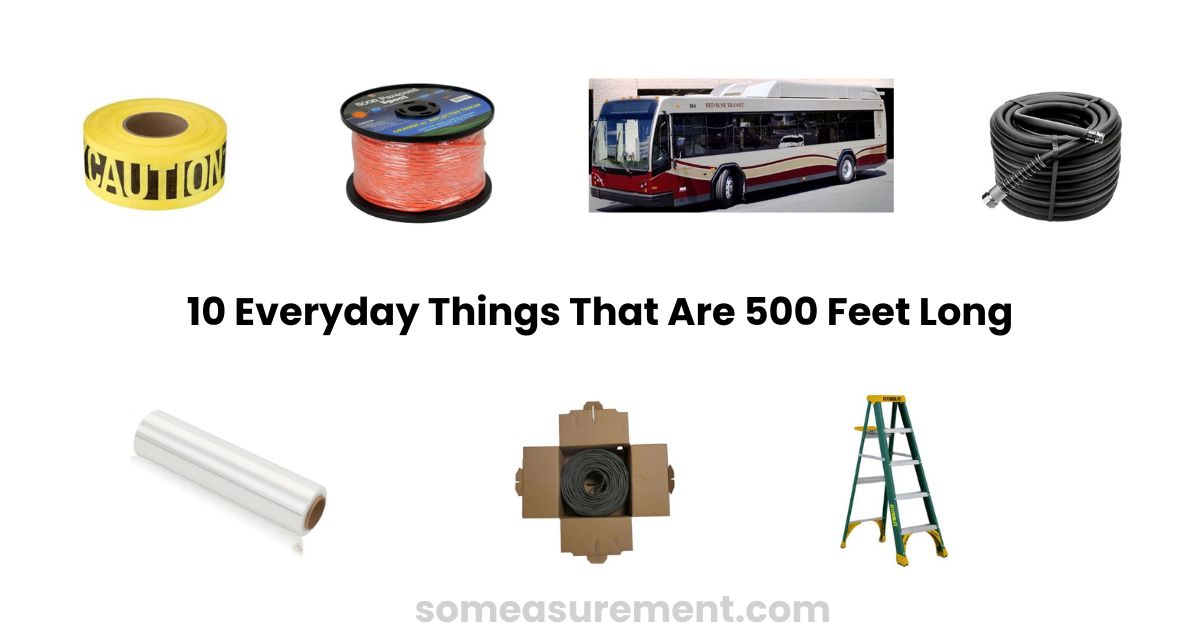
500 feet equals 6000 inches, exactly 152.4 meters, and 166.667 yards, rounded. The examples below are size comparisons, not universal dimensions. Check the stated product length and distinguish height, width, interior space, and overall length. Count steps only after measuring your own step length.
500 feet is 152.4 meters. Picture ten full-size city buses parked end to end on a straight road — that’s your distance. You can see clearly from one end to the other, but you couldn’t hold a normal conversation across it without shouting.
That’s the number. Now let’s make it real.
What 500 Feet Feels Like on Foot
At a relaxed walking pace — the kind where you’re not rushing — you’ll cross 500 feet in about 90 seconds to 2 minutes. It’s not a long walk. It’s the distance from a parking lot entrance to the store door in a large shopping center. Close enough to feel nearby, far enough that you’d rather not make the trip twice if you forgot something.
Jogging lightly? You’ll cover it in well under a minute. In a car doing 30 mph, 500 feet disappears in roughly 11 seconds. That’s worth knowing if you’re ever near a school zone or an emergency vehicle situation where distance markers matter.
The 500 Feet Conversions — Clean and Simple
| Unit | Value |
| Meters | 152.4 m |
| Kilometers | 0.1524 km |
| Miles | 0.0947 mi |
| Yards | 166.67 yd |
| Centimeters | 15,240 cm |
How Many Blocks Is 500 Feet?
Depends on the city. In most American cities, a standard block runs between 250 and 300 feet. So 500 feet sits at roughly one and a half to two blocks.
New York City throws a wrench in this. Avenue blocks run around 800 feet north to south, while street blocks run about 250 feet east to west. In NYC, 500 feet could be two street blocks or barely more than half an avenue block — same city, wildly different answer depending on which direction you’re walking.
Safe shorthand: two blocks in most places.
10 Daily-Use Things That Are 500 Feet Long
These aren’t trivia items pulled from thin air. Each one is a real product sold or built at this exact length, or a real-world arrangement that hits 500 feet precisely.
| Object | Category | Dimension (Feet) |
| Standard spool of paracord (550 cord) | Outdoor Gear | 500 ft |
| Contractor roll of caution tape | Safety Equipment | 500 ft |
| Bulk box of Cat6 Ethernet cable | Electrical & Networking | 500 ft |
| Industrial stretch wrap roll | Packaging Supplies | 500 ft |
| Steel picture hanging wire spool | Hardware | 500 ft |
| Contractor-grade irrigation hose | Landscaping | 500 ft |
| 100 standard 5-foot step ladders (end to end) | Construction | 500 ft |
| Commercial plotter paper roll | Office & Printing | 500 ft |
| Five 100-foot zip lines (combined) | Recreation | 500 ft |
| Ten city transit buses (end to end) | Transportation | 500 ft |
1. A Standard Spool of Paracord (550 Cord)
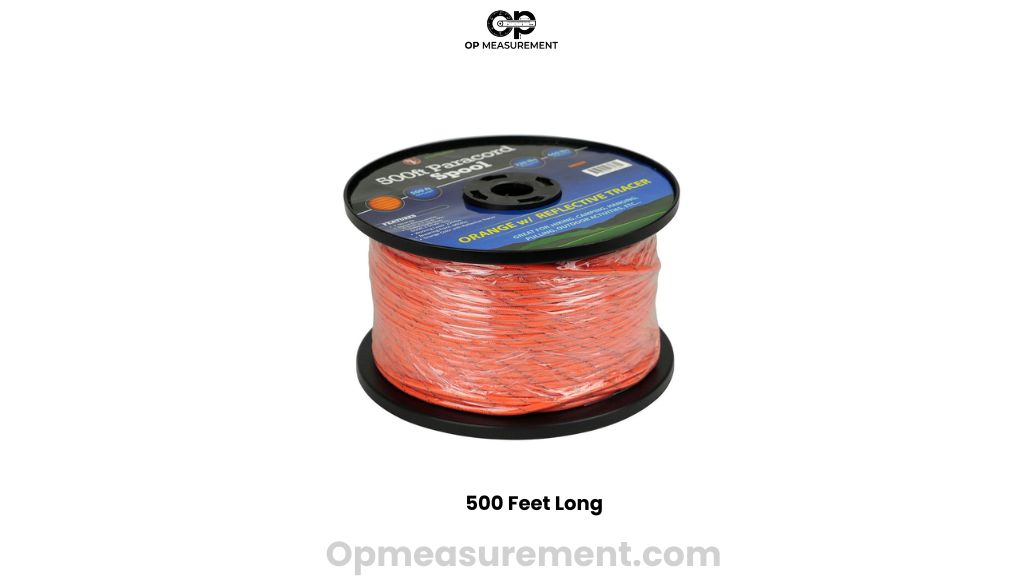
Walk into any outdoor or camping gear store and you’ll find 550 paracord sold in exactly 500-foot spools. This is the same nylon utility cord used in hammocks, survival kits, and bushcraft setups worldwide. Manufacturers settled on 500 feet as the standard retail length because it’s enough for serious field use without the spool becoming too heavy or bulky to handle.
Unroll one of these spools across a flat field and you’ll have a genuine 500-foot line to walk alongside. Most people are surprised by how far it actually goes — what sounds like “just a spool of rope” covers nearly a city block and a half.
2. A Contractor Roll of Caution Tape
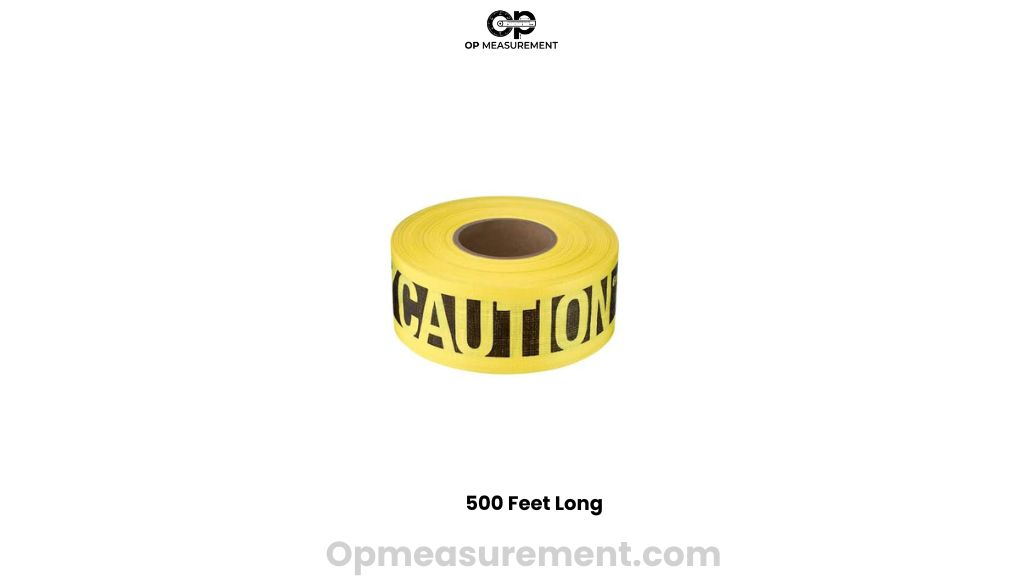
That bright yellow plastic tape at construction sites and accident scenes — the kind that reads “CAUTION / DO NOT ENTER” — comes in a single sealed roll of exactly 500 feet. Police departments, road crews, and construction supervisors use this standardized length because it lets them cordon off a predictable area without measuring anything.
One roll can wrap around a large building perimeter or block off an entire intersection with tape to spare. When you see one of those yellow rolls being pulled from a toolbox, you’re looking at 500 feet of material folded onto a small plastic core.
3. A Bulk Box of Cat6 Ethernet Cable
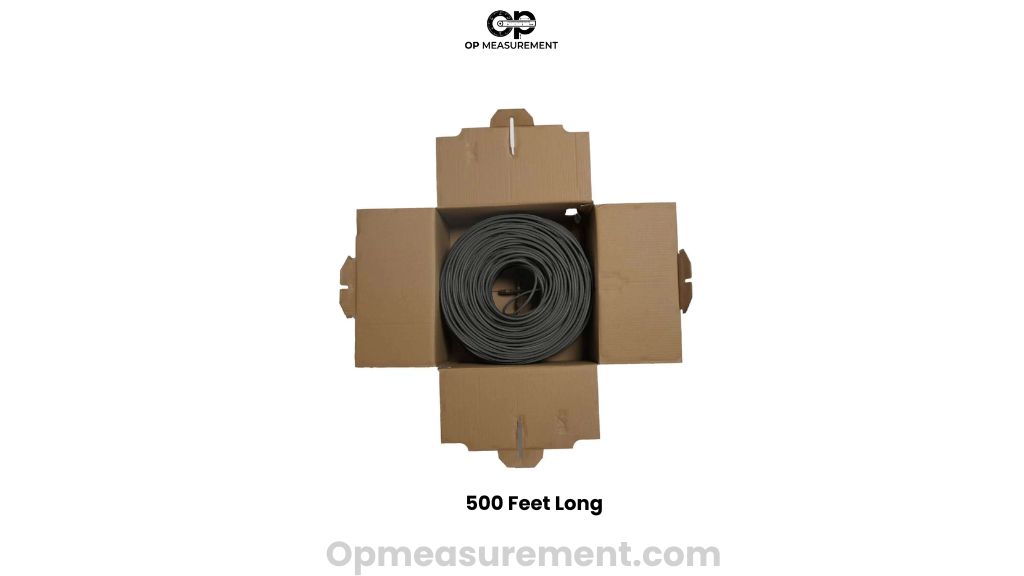
A cable box marked 500 feet contains that nominal total length. It is not the maximum length of a single Ethernet connection. Standard copper Ethernet channels are commonly limited to 100 meters (about 328 feet), with installation requirements affecting usable runs.
A single pull-box of this cable could wire every room in a mid-sized office building on one floor. Network technicians often use the box itself as a rough distance gauge: if the cable runs out, they know they’ve gone 500 feet.
4. A Large Roll of Industrial Stretch Wrap
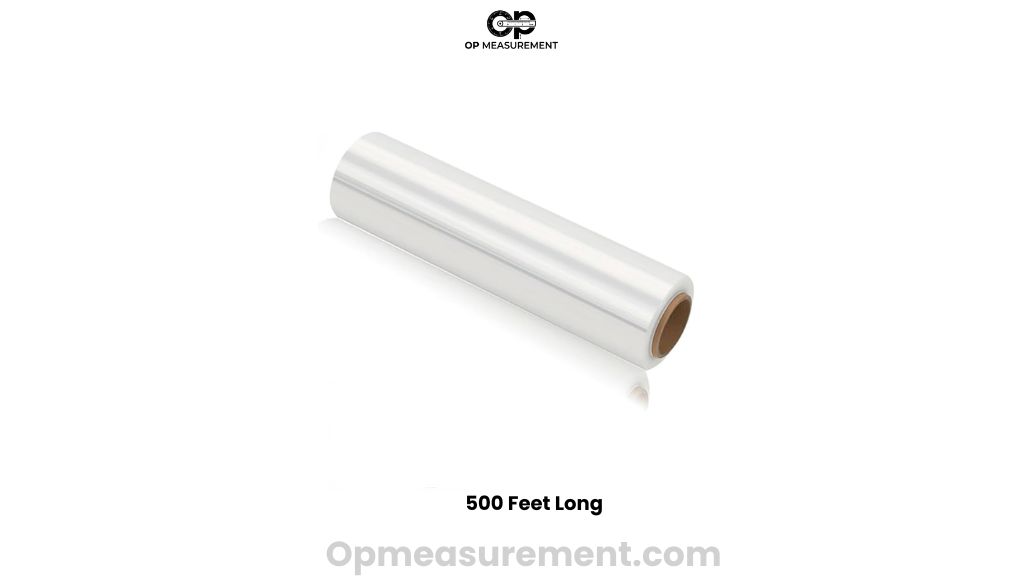
The heavy plastic cling film movers use to wrap furniture, appliances, and shipping pallets comes in 500-foot handheld rolls. The material is thin but incredibly long — one roll is enough to wrap dozens of pieces of furniture before running out.
Stretch wrap at this length became an industry standard because it matches the typical needs of a single-day moving job or a full pallet-wrapping station. Unroll one in a parking lot and the distance it covers will surprise you.
5. A Spool of Steel Picture Hanging Wire
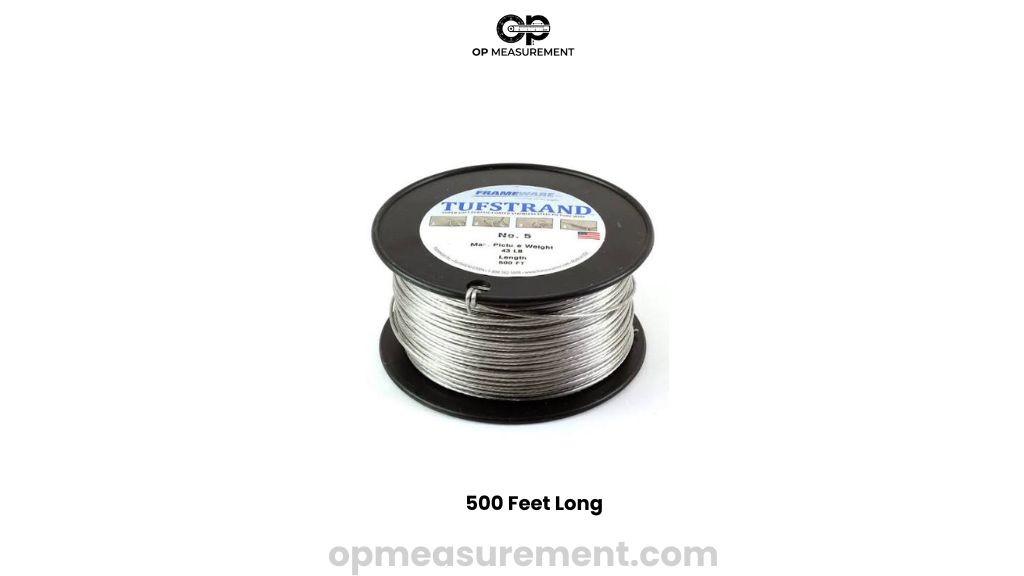
Framing shops and hardware stores carry braided stainless steel picture-hanging wire in 500-foot retail spools. This wire is strong enough to support heavy mirrors and large framed artwork, and it’s sold at this length because a small shop can work through a spool over several months without reordering constantly.
Stretched taut across open ground, a single spool of this wire marks out exactly 500 feet in a straight line. It’s one of the more precise and practical ways to physically visualize the distance if you have access to a spool and some open space.
Read more: How Long Is 20 Feet?
6. A Contractor-Grade Garden Hose
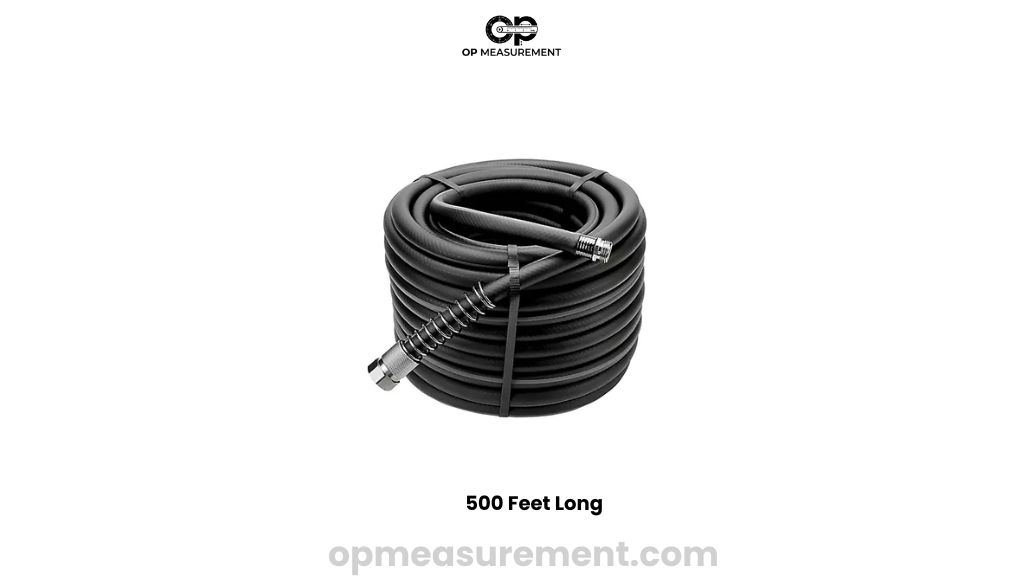
Commercial irrigation hoses used on farms, sports fields, and large residential properties are sold in 500-foot reels. These aren’t the lightweight green hoses from a garden center — they’re heavy rubber or reinforced PVC hoses built to handle continuous water pressure across long distances.
One 500-foot reel can water an entire row of crops on a small farm or reach from a building’s exterior spigot to the far end of a large property. Landscaping crews often use the reel length as a rough field measurement when planning irrigation layouts.
7. 100 Standard 5-Foot Step Ladders
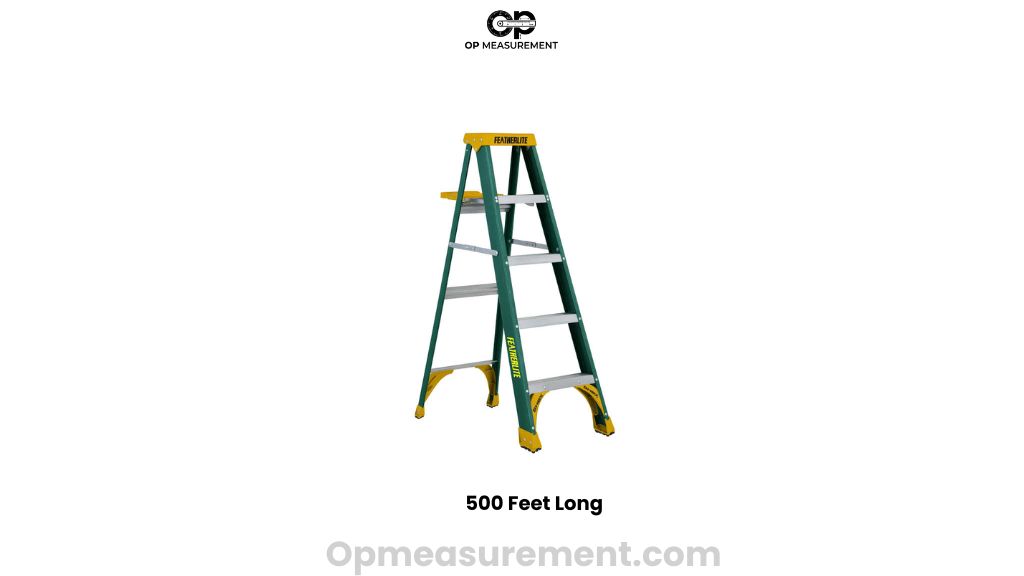
A typical aluminum step ladder sold at hardware stores stands 5 feet tall when closed. Lay 100 of them flat on the ground, end to end, and you’ve covered exactly 500 feet. It’s an odd image, but it works as a mental anchor — especially for contractors and tradespeople who handle ladders every day.
This comparison is more useful than it sounds. If you work in construction and you’re trying to estimate 500 feet on a job site without a long tape, picturing that column of ladders gives your brain a tangible chain to follow.
8. A Commercial Plotter Paper Roll
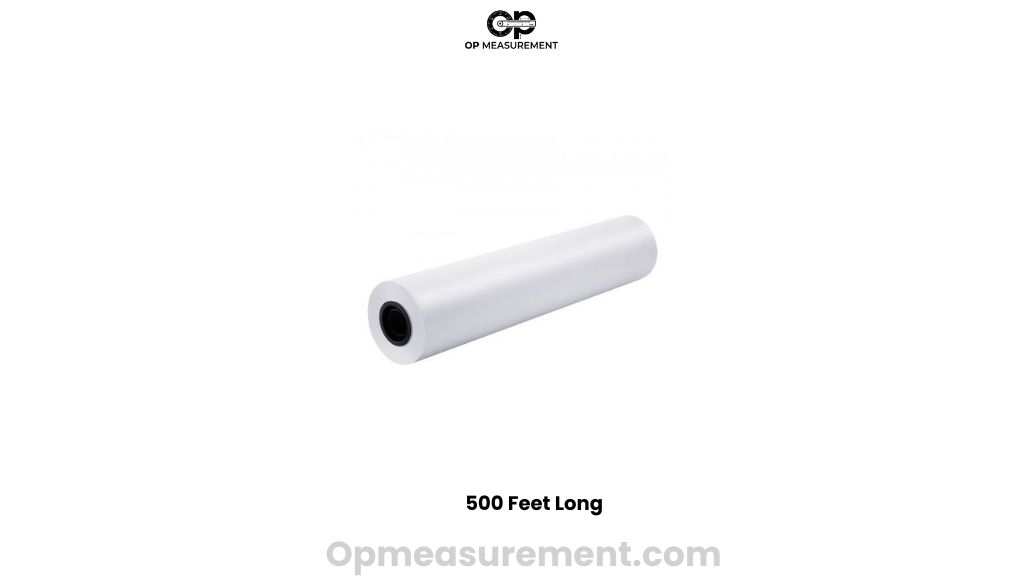
Architectural firms and engineering offices run large-format printers called plotters, and one of the standard roll sizes for these machines holds exactly 500 feet of paper. A single roll feeds hundreds of full-size blueprint prints — floor plans, site maps, structural drawings — before running out.
These rolls are heavy, wide, and substantial. The 500-foot length became a standard because it balances storage practicality with production volume. An office doing daily blueprint printing can work through an entire roll in a week of heavy use.
Read more: How Far Is 300 Feet?
9. Five Standard 100-Foot Zip Lines
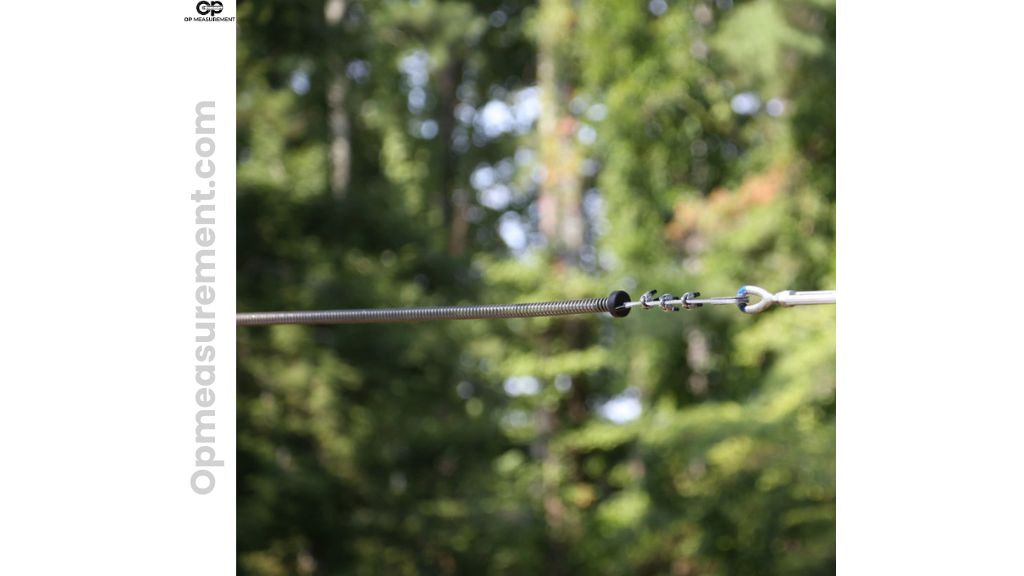
Entry-level backyard zip lines and beginner adventure-course cables are typically sold in 100-foot kits. String five of them together in sequence and you’ve got a 500-foot run. Serious zip line operators use this exact length as a starting point for beginner courses before scaling up to longer, faster lines.
Visualizing five consecutive zip line rides gives you a real sense of the distance as something you travel through, not just observe. Each ride ends, you walk to the next platform, and you go again — five times covers 500 feet.
10. Ten City Transit Buses
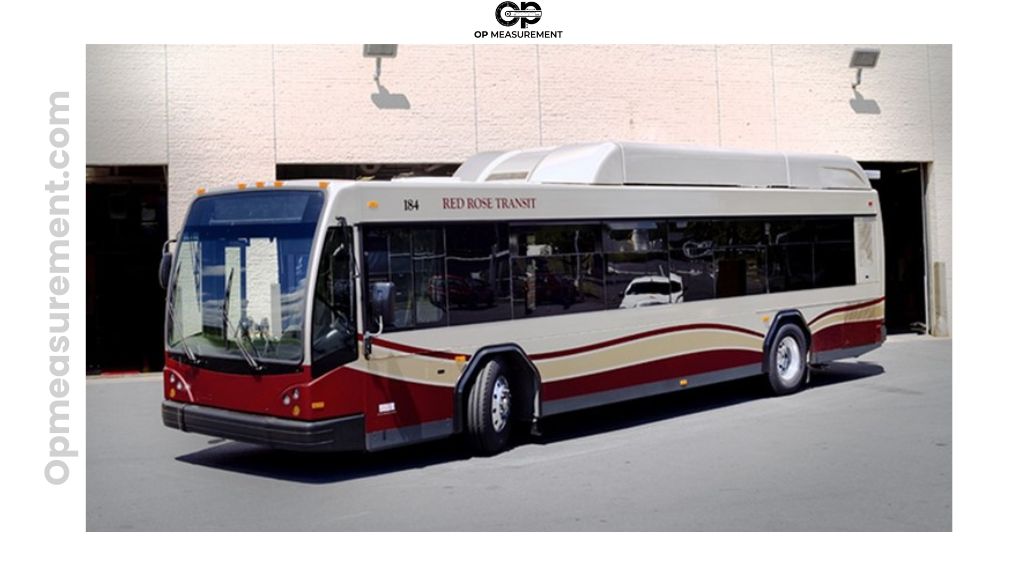
Full-size public transit buses run about 40 to 45 feet in most cities, with the common standard model hitting close to 50 feet. Ten of those parked bumper to bumper reach 500 feet. If you’ve ever stood at a bus stop and watched a city bus pull away, you’ve seen roughly 50 feet in motion — scale that up ten times.
This is one of the most useful real-world comparisons because most people have seen city buses from close range. The sheer length of a single bus is already striking. Ten of them in a straight line stretches farther than most people would expect.
Read also: How Long Is 10 Feet?
How to Estimate 500 Feet Without Any Tools
Count Your Steps
The average adult step covers about 2.5 feet. To walk 500 feet, you need roughly 200 steps at a natural stride. If you want to calibrate your personal step length first, find a parking space — standard ones run about 8 to 9 feet — and count how many steps it takes you to cross it. That gives you your baseline.
Use Your Car’s Trip Meter
Set your trip odometer to zero and drive slowly down a straight road. Stop at 0.1 miles. You’ll be within about 25 feet of the 500-foot mark — close enough for almost any practical purpose. At 0.095 miles, you’re exactly there, but 0.1 is the easy number to read and remember.
Walk and Count Seconds
If you know your walking pace well, 500 feet at a relaxed stroll takes about 100 to 120 seconds. Count slowly in your head. It’s not precision measurement, but for estimating whether something is “about 500 feet away,” it works reliably.
Where 500 Feet Shows Up in Real Regulations
This distance appears in actual rules more often than most people realize. Drone regulations in the U.S. and many other countries reference 500 feet as a key altitude marker. Noise ordinances in residential areas sometimes use 500 feet as a minimum separation distance for certain equipment or events. Firearm discharge restrictions in rural areas often cite 500 feet from any structure or road.
Knowing this distance isn’t just useful for measuring things — it helps you understand what those rules actually mean on the ground.
Common Errors Worth Knowing
Confusing feet with meters. 500 meters is 1,640 feet — more than three times the distance we’re talking about. This mix-up happens regularly with construction documents, imported product specs, and international project plans. Always confirm the unit.
Treating “about a block” as accurate. Saying 500 feet is roughly one block understates it for most city grids. Two blocks is the right mental model for most U.S. cities.
Assuming farther means safer. In regulatory contexts — safety perimeters, noise zones, evacuation radii — 500 feet feels like a lot of space until you walk it. Two city blocks with traffic and obstacles between you is not the same as 500 feet of open clearance.
Before You Go
500 feet has a way of surprising people. It sounds manageable on paper, but stand at one end of it and look toward the other — it’s farther than most people expect, and closer than most maps make it feel.
Whether you’re checking a drone flight limit, planning a cable run, figuring out an evacuation boundary, or just trying to picture what a regulation or a product description actually means in the physical world — now you have real anchors to work with. Not just a number, but ten buses, a paracord spool, a roll of yellow tape.
That’s the whole point of measurement. Not the digits themselves, but what they connect to.
For another size reference, see How Far Is 200 Feet?
Conversion reference: NIST unit definitions and conversion factors. Rounded values are for comparison; product dimensions and weights should be checked against the specific item.

Vera loves exploring the size and dimensions of everyday objects. She shares practical, visual guides to help readers understand measurements clearly. With a focus on accuracy and usefulness, Vera creates content that informs, engages, and supports learning for all.