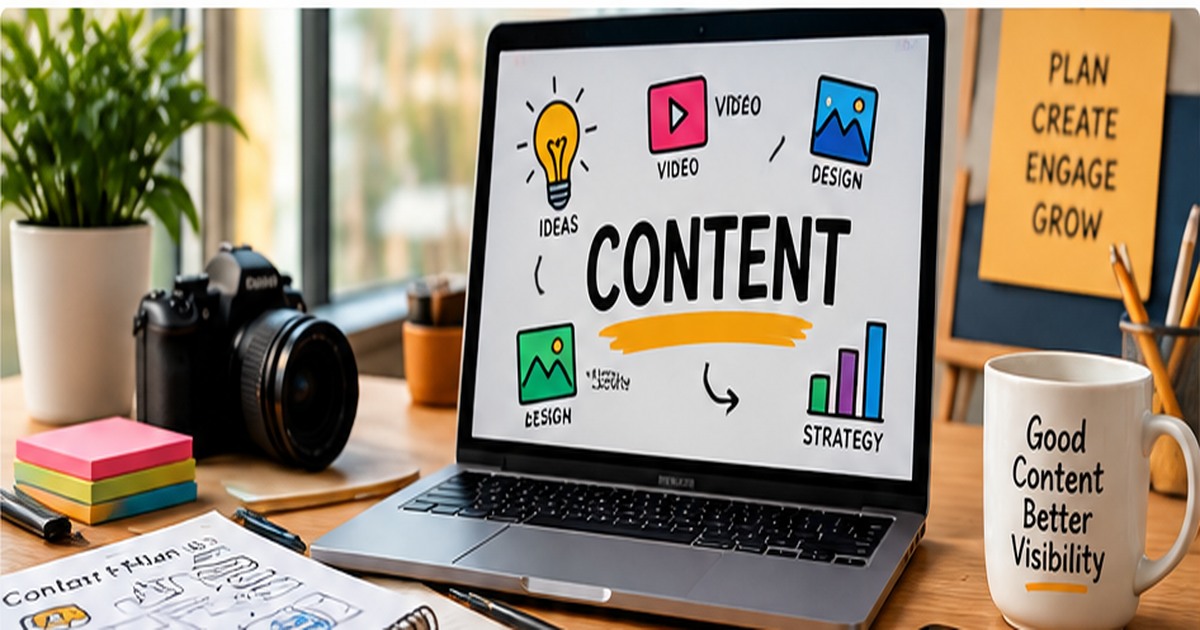
In a digital world where thousands of brands compete for attention, creating content that genuinely stands out has become one of the biggest challenges for marketers. Consumers scroll through social media feeds, browse websites, and encounter countless advertisements every day. With so much information available, businesses have only a few moments to capture interest and communicate their message. This is why content design has become an essential part of modern marketing. It’s no longer enough to publish valuable information; the way that information looks, feels, and reaches an audience matters just as much.
In 2026, successful content design is about finding the right balance between creativity, functionality, and authenticity. Businesses are experimenting with bold typography, interactive visuals, personalized experiences, and compelling storytelling to make their content more memorable. However, adopting every new design trend isn’t necessarily the best approach. What truly matters is understanding your audience and creating visual experiences that reflect your brand’s personality. Whether you’re managing a startup’s social media presence or developing campaigns for an established company, thoughtful content design can help increase visibility, strengthen recognition, and encourage meaningful engagement.
One simple yet effective way to make digital content more engaging is to rethink how text appears in visual materials. Headlines, promotional messages, and campaign slogans often determine whether someone stops scrolling or continues past a post. Instead of relying exclusively on standard fonts, marketers can experiment with AI text effects to create distinctive lettering for social media graphics, website banners, and digital advertisements. These creative treatments can add personality to ordinary messages, especially when they complement a brand’s existing colors and design style. The key is to use them strategically so that visual creativity enhances communication rather than distracting from it.
1. Build a Consistent Visual Identity Across Platforms
One of the most important aspects of content design is consistency. When customers encounter your brand on Instagram, LinkedIn, YouTube, or your website, they should recognize a familiar visual style.
This doesn’t mean every post needs to look identical. Instead, your content should share recognizable characteristics, such as a consistent color palette, typography, illustration style, or photography approach.
For example, a wellness company might use soft natural colors, minimal layouts, and calming imagery across its marketing channels. A technology startup may prefer geometric shapes, contrasting colors, and modern typography.
Developing a simple brand style guide can help maintain consistency, particularly when several people are responsible for creating content.
Include examples of approved colors, fonts, logo placement, and preferred image styles.
Over time, consistent visual communication makes it easier for audiences to associate particular design elements with your business.
2. Turn Complex Information Into Engaging Infographics
Not every message is best communicated through lengthy paragraphs.
Sometimes, audiences understand information more quickly when it is presented visually.
Infographics combine text, icons, illustrations, and data to explain complicated topics in a clear and accessible format.
For example, a financial services company could create an infographic explaining the steps involved in preparing a monthly budget.
A digital marketing agency might illustrate the customer journey, showing how potential buyers move from discovering a brand to making a purchase.
The most effective infographics focus on one central topic rather than attempting to communicate too much information at once.
Use clear headings, concise explanations, and logical visual sequences.
If your infographic includes statistics, make sure the information comes from reliable sources.
Well-designed educational graphics can become valuable resources that audiences save, share, and revisit.
3. Experiment With Short-Form Video Content
Short-form video continues to provide opportunities for brands to communicate information quickly and creatively.
Platforms such as Instagram Reels, TikTok, and YouTube Shorts make it possible to reach audiences through entertaining demonstrations, practical advice, and relatable stories.
However, successful video content doesn’t always require expensive equipment or elaborate production.
A small bakery could share a short video showing how its most popular pastry is prepared.
A software company might demonstrate a useful feature in less than a minute.
A clothing retailer could create styling tutorials featuring products from its latest collection.
The opening seconds are particularly important.
Start with an interesting question, a clear benefit, or a visually engaging moment that gives viewers a reason to continue watching.
Include captions for people viewing videos without sound, and keep the message focused.
Rather than chasing every viral trend, create videos that address genuine audience interests.
4. Create Interactive Content That Encourages Participation
Interactive content transforms audiences from passive viewers into active participants.
Quizzes, polls, calculators, and interactive guides can make digital experiences more engaging while providing practical value.
For example, a skincare company might create a quiz that helps customers explore products based on their preferences.
A furniture retailer could offer an interactive room planner that allows shoppers to experiment with different layouts.
Even simple social media polls can encourage meaningful interaction.
A restaurant could invite followers to vote on a new menu item, while a fashion brand might ask customers to choose between upcoming color combinations.
The goal is to create experiences that feel useful or enjoyable.
Avoid unnecessary complexity or asking users to provide excessive personal information.
When interactive content solves a problem or encourages genuine participation, it can strengthen relationships between brands and their audiences.
5. Use Authentic Photography to Build Trust
Photography plays a major role in shaping how audiences perceive a business.
While stock images can be useful, relying exclusively on generic visuals may make a brand feel less distinctive.
Authentic photography offers opportunities to showcase real employees, products, customers, and everyday experiences.
For instance, a local restaurant might share photographs of its kitchen team preparing meals.
An independent clothing brand could document the design and production process behind a new collection.
These images communicate personality and provide audiences with a better understanding of the people behind a business.
Professional equipment isn’t always necessary.
Natural lighting, thoughtful composition, and consistent editing can make smartphone photographs suitable for many marketing purposes.
The most important consideration is ensuring that the images accurately represent your business.
Authenticity often creates stronger connections than overly polished visuals that feel disconnected from reality.
6. Repurpose Existing Content Into Fresh Visual Formats
Creating original content consistently can require significant time and resources.
Content repurposing allows businesses to extend the value of existing materials by adapting them into different formats.
For example, a detailed blog article could become a series of educational social media graphics.
A webinar might be transformed into several short videos highlighting individual insights.
A customer case study could inspire a visual timeline showing how a business overcame a particular challenge.
This approach helps marketers reach audiences with different content preferences.
Someone who doesn’t have time to read a lengthy article may still engage with a concise infographic or short video.
However, repurposing should involve more than copying identical information across platforms.
Adapt the presentation, structure, and tone to match the expectations of each audience.
A thoughtful repurposing strategy can improve efficiency while maintaining content quality.
7. Incorporate Motion Graphics and Subtle Animation
Motion graphics can bring digital content to life by introducing movement and visual progression.
Animated headlines, moving illustrations, and subtle transitions can make marketing materials more engaging.
For example, an online retailer might use animation to demonstrate how a product works.
A technology company could create a short animated explanation of a complicated service.
Motion can also help guide attention toward important information, such as a product feature or call to action.
However, excessive animation can become distracting.
Avoid unnecessary movement that makes content difficult to understand or slows down webpage performance.
Accessibility should also be considered.
Provide alternatives where appropriate and respect users who prefer reduced motion.
The best motion graphics support the message rather than compete with it.
8. Personalize Visual Content for Different Audiences
Not every customer responds to the same type of content.
Different audiences have different interests, priorities, and expectations.
Personalized content design allows businesses to adjust visual messaging to better reflect those differences.
For example, an online clothing retailer might create separate promotional graphics for customers interested in athletic wear, formal clothing, or seasonal accessories.
A software company could develop different visual campaigns for small businesses and larger organizations.
The overall brand identity should remain consistent, but imagery, messaging, and examples can change based on audience needs.
Personalization doesn’t require collecting excessive amounts of customer information.
Businesses can use general audience research, voluntary preferences, and campaign performance data to guide creative decisions.
The objective is to make content more relevant while respecting customer privacy.
9. Prioritize Mobile-Friendly Content Design
Many consumers discover and interact with brands through smartphones.
This makes mobile-friendly design an essential consideration for every digital marketing campaign.
A graphic that looks attractive on a desktop monitor may become difficult to read when displayed on a smaller screen.
Complex layouts, tiny fonts, and excessive text can reduce engagement.
Start by designing content with mobile viewing in mind.
Use clear typography, appropriate spacing, and simple compositions.
Important messages should remain visible without requiring users to zoom in.
Website images should also be optimized for efficient loading.
Large files can slow down pages, especially for visitors using slower internet connections.
Testing content on different devices helps identify issues before publication.
A mobile-first approach improves accessibility while creating a more consistent customer experience.
10. Use Visual Storytelling to Create Emotional Connections
The most memorable marketing content often tells a story rather than simply promoting a product.
Visual storytelling combines photography, illustrations, video, and design elements to communicate experiences and emotions.
For example, a sustainable fashion company could document how a garment moves from initial design to finished production.
A family-owned bakery might share a photo series highlighting its history and traditions.
A technology startup could create a short video explaining the problem that inspired its founders.
These stories help audiences understand the motivations and values behind a business.
Effective storytelling should remain authentic.
Avoid exaggerated claims or overly dramatic narratives that don’t reflect real experiences.
Instead, focus on meaningful moments that communicate your brand’s personality.
When customers connect with a story, they may be more likely to remember the company behind it.
How to Build a Successful Content Design Strategy
Creative ideas become more valuable when supported by a clear plan.
Begin by identifying your target audience and understanding the type of content they find useful.
Consider their interests, preferred platforms, and common challenges.
Next, define measurable objectives.
Your business may want to increase brand awareness, generate qualified leads, improve website engagement, or encourage repeat purchases.
Choose content formats that support those goals.
For example, educational infographics and detailed guides may help demonstrate expertise, while short videos and interactive posts can encourage broader engagement.
Develop a content calendar that balances promotional messages with educational and entertaining material.
Maintain consistent branding while allowing room for creative experimentation.
Finally, review performance regularly.
Metrics such as content shares, engagement rates, website visits, and conversions can help identify which formats resonate with your audience.
Use these insights to refine your strategy rather than relying entirely on assumptions.
Common Content Design Mistakes to Avoid
Even creative marketing teams can make mistakes that weaken their content.
One common problem is overcrowding designs with too many visual elements.
Excessive colors, competing fonts, and unnecessary decorations can distract audiences from the main message.
Another mistake is prioritizing appearance over usefulness.
An attractive infographic provides limited value if its information is confusing or inaccurate.
Businesses should also avoid inconsistent branding.
Frequently changing visual styles can make it difficult for audiences to recognize a company.
Finally, overlooking accessibility can prevent some users from engaging comfortably with digital materials.
Readable text, sufficient color contrast, descriptive image alternatives, and clear navigation should be standard considerations.
Addressing these issues helps businesses create content that is both attractive and effective.
Conclusion
Content design in 2026 is about more than creating visually appealing marketing materials. It involves communicating ideas clearly, understanding audience preferences, and developing experiences that encourage meaningful engagement.
From interactive content and authentic photography to short-form videos, motion graphics, and visual storytelling, businesses have numerous opportunities to make their digital presence more distinctive.
The most effective strategies combine creativity with consistency, accessibility, and practical value.
By focusing on thoughtful design rather than temporary trends, brands can improve visibility, strengthen customer relationships, and build a recognizable identity that supports long-term growth.
For designers creating visual content across different devices, understanding screen dimensions is also important. A design that looks balanced on a desktop may appear very different on smaller displays. Our guide to things that measure 16 inches includes laptop screen examples that help explain how screen sizes are measured and why dimensions matter when planning digital layouts.