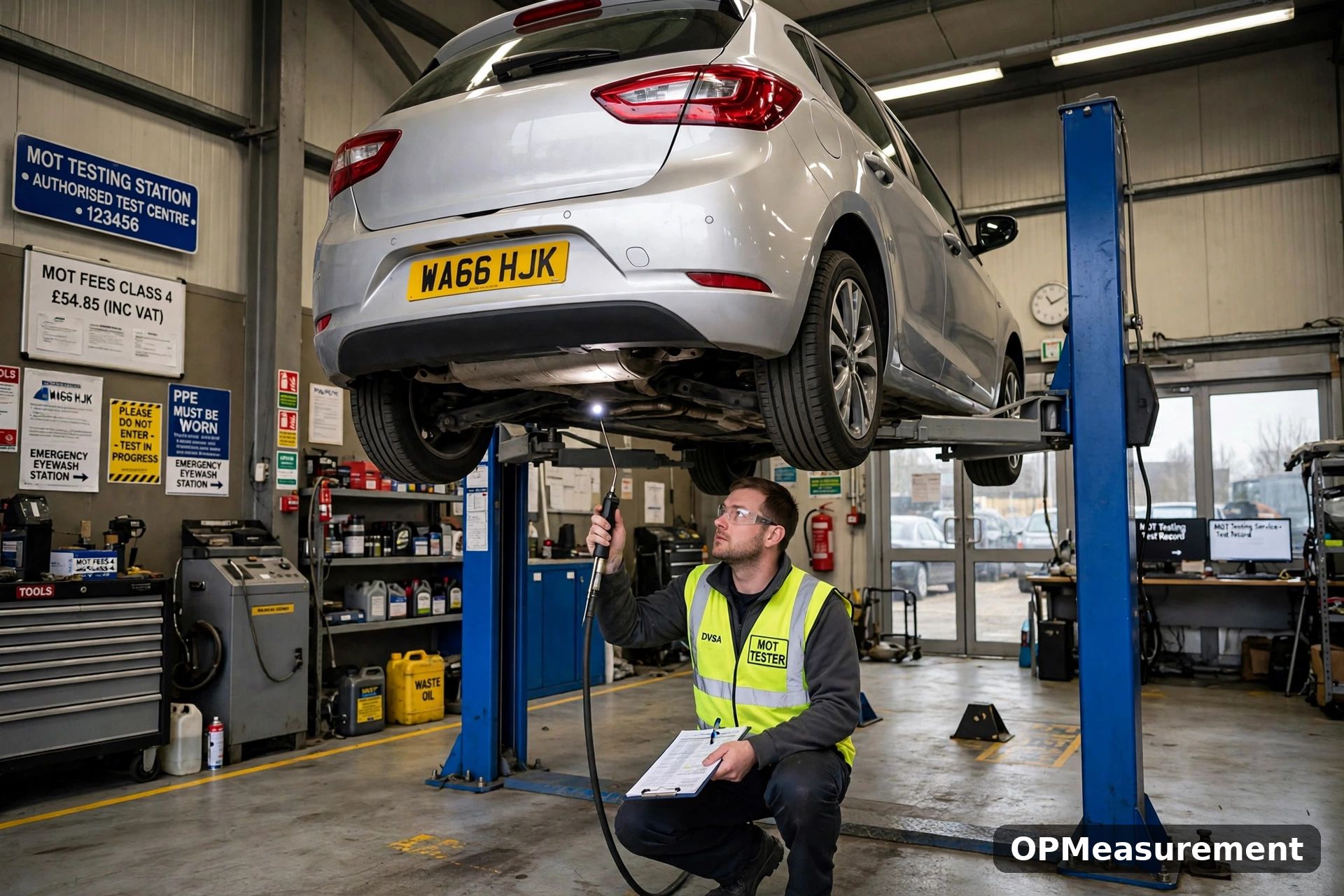
Every car owner in Britain meets the mot test sooner or later: it is the annual roadworthiness check that most vehicles must pass by law once they reach a certain age.
The test looks at safety, roadworthiness, and exhaust emissions, and it is carried out by approved test centres overseen by the Driver and Vehicle Standards Agency. It is not the same thing as a service.
This guide explains what testers actually check, when your first test is due, which vehicles are exempt, what it costs, and what happens if your vehicle fails or its certificate runs out.
What Does MOT Stand For?
The letters come from the Ministry of Transport, the government department that introduced the test in 1960. The ministry no longer exists under that name, but the test kept its initials and its purpose.
At first the test covered only a few basics on older cars. It has grown steadily since, and today’s version examines dozens of items, from brake performance to emissions and number plate condition.
What Does the MOT Test Check?
Testers work through a set list of checks covering the parts of the vehicle that matter most for safety and the environment. The main areas include:
- Lights, indicators, and reflectors
- Steering and suspension
- Brakes and brake performance
- Tyres and wheels
- Seatbelts and seats
- Windscreen, wipers, washers, and mirrors
- Horn, speedometer, and dashboard warning lights
- Exhaust system and emissions
- Bodywork, doors, and the fuel system
- Registration plates and the vehicle identification number
The tester does not dismantle anything, and the test usually takes between 45 minutes and an hour. You can watch from a designated viewing area while it happens.
When Is Your First MOT Due?
Most cars and motorbikes need their first MOT on the third anniversary of their first registration, and then every year after that. Some vehicles, including many taxis and ambulances, are tested from one year old instead.
You can have the test done up to a month, minus a day, before the current certificate expires and keep the same renewal date. A free online check shows exactly when your vehicle is due.
check your vehicle’s MOT history online
Which Vehicles Are Exempt from the MOT?
A small number of vehicles never need a test. Most vehicles over 40 years old are exempt, provided they have not been substantially changed in the last 30 years, and some specialist vehicles such as tractors are also outside the scheme.
Exempt does not mean unroadworthy is acceptable. Owners of historic vehicles must still keep them in a safe, roadworthy condition, and the police can stop and check any vehicle that looks unsafe on the road.
MOT Classes at a Glance
Vehicles are grouped into classes that decide what is tested and the maximum fee. Most drivers only ever meet class 4, which covers everyday cars.
- Class 1 and 2: motorbikes, with or without a sidecar
- Class 3: three-wheeled vehicles up to 450 kg
- Class 4: cars with up to eight passenger seats, motor caravans, and goods vehicles up to 3,000 kg design gross weight
- Class 5: private passenger vehicles with 13 or more passenger seats
- Class 7: goods vehicles between 3,000 kg and 3,500 kg design gross weight
If you are unsure which class your vehicle falls into, the test centre can confirm it from the registration details when you book.
How Much Does an MOT Cost?
The government sets a maximum fee that test centres cannot exceed, and for a standard class 4 car that cap currently stands at £54.85. Many centres charge less, so it is worth comparing prices locally before you book.
There is no charge for the certificate itself beyond the test fee, and garages cannot add VAT on top of the capped price. Always check the current maximum fees on GOV.UK, because the caps are reviewed from time to time.
What Happens If Your Vehicle Fails?
Failures are graded by severity. Dangerous defects make the vehicle unsafe to drive at all, major defects need prompt repair, and minor defects and advisories are recorded so you can fix them soon.
A vehicle with a dangerous defect must not be driven until it is repaired. If the vehicle is repaired and retested at the same centre within ten working days, the retest is often free or charged at a reduced partial rate.
Driving Without a Valid MOT
Driving without a valid certificate, where one is required, can lead to a fine of up to £1,000. Your insurance may also be affected, and a vehicle that is unroadworthy can bring penalty points on top of any fine.
The one exception is driving to a pre-booked MOT appointment, or to a garage for repairs after a failure, when the previous certificate has expired. Keep the booking confirmation with you in case you are stopped.
How to Book and Prepare
Any approved test centre can carry out your MOT, and you do not need to use the garage that services your car. Booking ahead is wise near busy periods such as the start of a month.
A few minutes of preparation prevents silly failures. Check every light works, top up the screenwash, make sure the tyres have visible tread and correct pressures, and clear the windscreen of cracks in the driver’s view.
Frequently Asked Questions
Is an MOT the same as a service?
No. The MOT is a legal safety and emissions check that follows a fixed list, while a service maintains the vehicle with oil, filters, and inspections chosen by the manufacturer. One does not replace the other.
Do electric cars need an MOT?
Yes. Electric cars follow the same schedule, with a first test at three years and annual tests after that. There is no exhaust emissions check, but brakes, tyres, lights, and steering are all tested as normal.
Can I check my MOT status for free?
Yes. The government’s online service shows your vehicle’s test history, expiry date, and recorded advisories, and it costs nothing. You only need the registration number to look a vehicle up.
Conclusion
The MOT is a yearly legal health check that keeps unsafe vehicles off UK roads. Know your due date, prepare the basics, and treat advisories as early warnings rather than paperwork to file away.