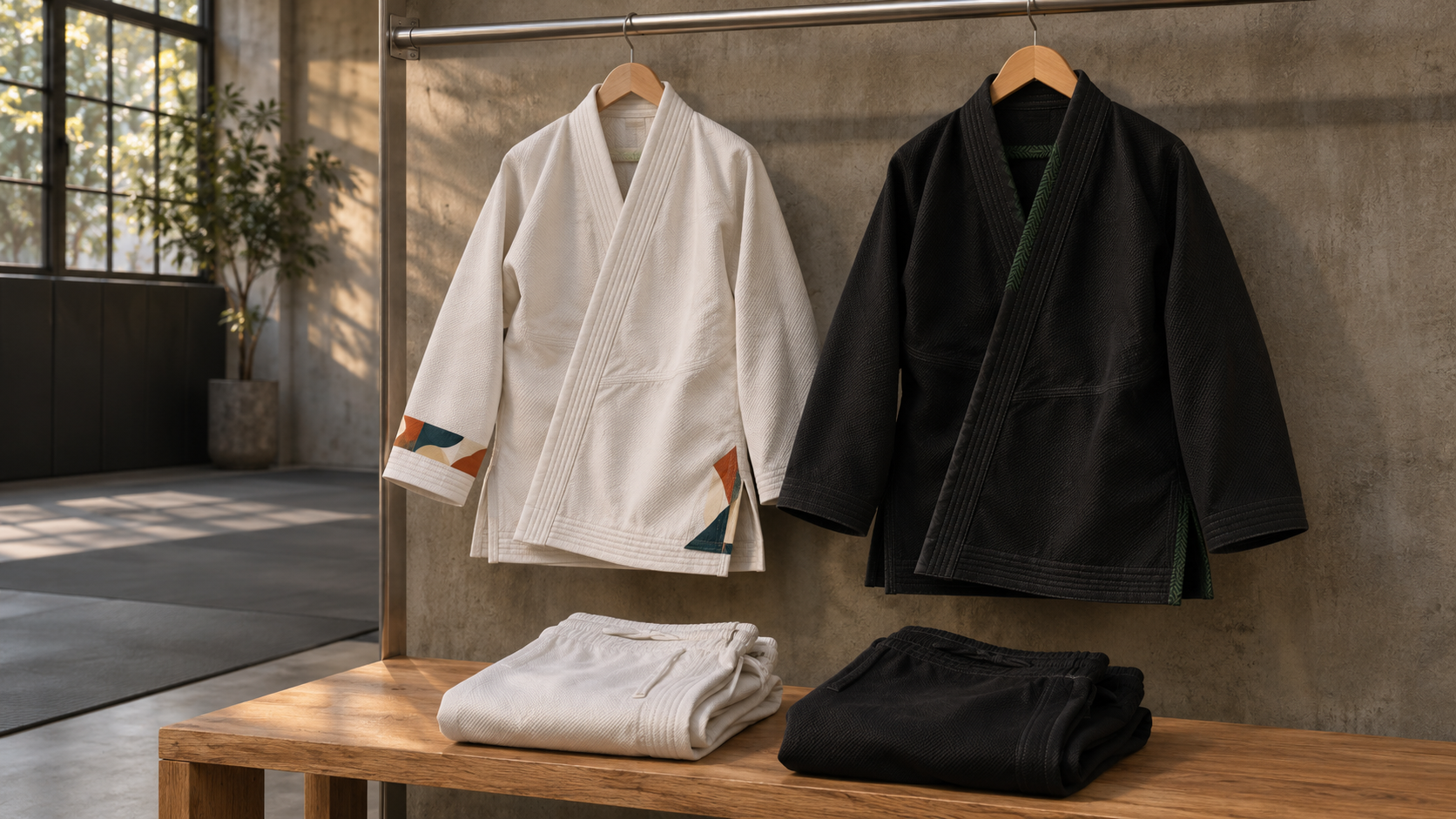
A white gi with bright graphics and a black gi with a small flash of green can feel like two very different purchases. In the Albino & Preto lineup, both can start with a 450 GSM pearl weave jacket. Look past the jacket, though, and the pants, trim, and cut can tell a different story. Those details will matter when you pull on the gi for your third class of the week or try it on after its first wash.
Albino & Preto, often called A&P, makes gear for Brazilian jiu-jitsu and draws on skate and streetwear culture in some of its designs. That mix gives buyers plenty of reasons to look at the brand. It can also make it easy to fall for a release before you know how it fits. If you’re shopping for an Albino & Preto BJJ gi, start by thinking about where you’ll wear it and what you need it to do.
What sets Albino & Preto apart?
Albino & Preto started in 2011. Jiu-jitsu gear remains a big part of its identity, but the brand has carried ideas from the mat into clothes and shoes. The Nike SB Dunk Low collaboration is an easy example to spot. The shoe used pearl weave on the upper, a reference to a fabric often found on BJJ gi jackets. That kind of detail helps explain why someone might follow A&P releases even when they have enough gis for class.
Within its gi range, the brand has room for plain designs, bright graphics, and small changes in trim. A Classic uniform makes sense if you want a gi that looks at home in regular classes. A bolder release might appeal if you enjoy seeing how a brand works with color or embroidery. Either way, the full product name helps you find the right size chart and check what the jacket and pants are made of.
How popular releases compare
The B105 Collage gi pairs a white base and multicolor accents with a 450 GSM pearl weave jacket and 10-ounce cotton pants. It’s a good example of how much a brand can do with a familiar white gi. The color adds interest without turning the whole uniform into a loud print. If you like the look and plan to compete, check the placement of the graphics on the actual set before you count on wearing it at an event.
The black B106 TC HB Classic takes a quieter route. Midnight green, gray, and white accents sit against the black fabric. It also uses a 450 GSM pearl weave jacket, but this batch adds herringbone trim and comes with 10-ounce herringbone NOVO pants. This is the sort of gi to look at if you prefer small details you can see up close. The pants also give you a distinct point of comparison if you already own a gi with plain cotton or canvas bottoms.
The Origami gi appeals to people who like embroidery and want the design to be part of what they wear to train. A&P lists a 450 GSM pearl weave jacket with a 10-ounce canvas skirt, plus 10-ounce canvas pants. The skirt is the part of the jacket that hangs below the belt. Its fabric can change how that part of the jacket feels when you tie your belt and sit into your guard.
The black VGB Comp gi is a useful comparison for a buyer who starts with weight and cut. This version uses a 380 GSM pearl weave jacket and the brand’s MN001 pattern. That gives you a lower jacket fabric weight to compare with the Collage or the TC HB Classic. If you train in a warm room or carry your gi on a long commute, find out how much the full set weighs. The collar and pants both contribute to what goes into your bag.
How to read gi fabric specs
GSM means grams per square meter. It tells you what a set area of fabric weighs. If two jackets have a similar weave, GSM gives you a way to compare the cloth. The weight of the complete gi also depends on its size, collar, seams, and pants. If a seller lists a jacket at 380 GSM, you still need to weigh the full uniform to know what it adds on the scale.
Pearl weave has a raised pattern that’s easy to see and feel. A 450 GSM pearl weave jacket can feel more substantial in the hand than a lighter one. The fit also affects how it feels in a roll. Reach across your body as if you’re taking a grip. If the jacket pulls across your shoulders, a lower fabric weight may do little to make that cut more comfortable.
Look at the pants on their own. Herringbone has a repeating zigzag pattern, and canvas has a more even surface. Check where the knee panels sit and how the drawstring holds when you move. If you spend long rounds playing guard, bring your knees up when you try the pants on. A stiff knee panel or a tight seat can be hard to spot when you’re standing upright.
How to find your Albino & Preto gi size
Start with the chart for the exact release. A&P has used lettered sizes such as M and L, as well as options like ML and MT on some models. Use the chart for that gi to see what each label means. A medium in your favorite rash guard or a size from another gi brand gives you only a rough starting point.
If you already own a gi that fits, lay it flat and measure it. On the jacket, note the chest width, the distance from cuff to cuff, and the length from the back of the collar to the hem. For the pants, check the flat waist, inseam, and overall length. Ask the seller to show where they placed the tape. Two measurements can look different on paper simply because the buyers and sellers used different starting points.
When the gi arrives, try it on indoors and check the return terms before you wash it. Tie the belt, reach forward, and do a deep squat. Raise your arms to see where the cuffs land and whether the skirt stays under your belt. Then sit on your heels and check for pulling at the knees. If the fit already feels tight, allow for the chance that it may shrink after washing.
Can you compete in an Albino & Preto gi?
Start with your event’s current uniform rules. The International Brazilian Jiu-Jitsu Federation specifies which gi colors it accepts and where patches can go. It also checks other details, including fit. A white, royal blue, or black gi can still raise issues if the trim, graphics, fabric, or dimensions fall outside the rules. Check the specific gi you plan to bring, even if the word Comp appears in the model name.
Wash and try on the uniform before the event. Check your cuffs again once the fit has settled. If the event requires you to weigh in wearing the gi, step on a scale in the uniform you’ll actually use. Include the belt when it’s part of the required kit. When you have room in your bag, bring a second gi that meets the rules in case the first one fails inspection.
What to check when buying an older batch
Buying secondhand can help you find a release that’s hard to get in your size. Ask for clear photos of both pieces, including the labels, collar, cuffs, knees, and seams. Check whether the pants and jacket match the original release, especially if the price reflects the value of a complete set. Compare the color, patches, and embroidery with the brand’s original product photos when those are available.
Ask about repairs, stains, and how the gi was dried. An older gi may have changed shape after repeated trips through a dryer. Get current measurements and compare them with a gi you already like. Proof of purchase can help you assess the listing, and clear return or buyer protection terms matter if you’re paying a premium. Add shipping and any fees before you compare the price with a new gi.
How to care for your A&P gi
Take your gi out of your bag after training and wash it after each session. Start with the care label for your release. If the label allows it, wash in cold water with mild detergent and hang the gi to dry. Turn it inside out to help protect trim and embroidery in the wash. Wash a new dark gi with similar colors until you know how the dye behaves.
Hang the jacket and pants separately so air can reach both pieces. The collar and waistband can stay damp after the rest of the gi feels dry. Give those areas a quick check before you put the uniform away. If you train on back-to-back days and your gi takes longer to dry, a second set gives you a clean option for the next class. When you shop, leave room for that second set in your budget if you need it.
Which Albino & Preto gi should you buy?
If you need a gi for several classes a week, start with the fit you can verify. A Classic model gives you a point of comparison for a simple everyday uniform. If you like the details on the B105 Collage or the Origami gi, decide how often you’d wear that design and whether it suits your gym’s dress code. If you want a lighter jacket, compare the VGB Comp with a 450 GSM model and check the weight of both full sets if you can.
When you compare listings at Strikers BJJ, keep the full release name and your best-fitting gi measurements handy. They’ll help you spot a difference in the pants or the cut that may be hard to see in photos. Once you find a set that fits your training, the design becomes something you can enjoy every time you tie your belt.