Most breakdowns give you some warning first. Very often the earliest clue is that the car battery is dying slowly, losing a little more charge and cranking power each week until one morning it simply cannot turn the engine over.
Catching the decline early matters. A battery you test and replace at a time you choose costs less stress than one that fails in a supermarket car park, at the school gates, or before an early shift.
Below are the warning signs UK drivers report most often, the simple checks that confirm a weak battery, and clear guidance on when charging or a jump start is enough and when replacement is the honest answer.
1. The Engine Cranks Slowly
A healthy starter motor spins the engine briskly. When the battery weakens, the crank sounds laboured and drawn out, often described as a sluggish rurr-rurr before the engine finally catches, if it catches at all.
Cold mornings expose a weak battery first, because low temperatures reduce the power it can deliver while the engine oil thickens and makes turning harder. A crank that worsens as the weather turns deserves attention quickly.
2. Clicking When You Turn the Key
Rapid clicking from under the bonnet usually means the battery has enough charge to trigger the starter solenoid but not enough to spin the engine. It is one of the clearest signs the battery is flat or failing.
A single firm click is different. That can point to a faulty starter motor or a poor connection instead, so it is worth having the whole starting and charging system checked rather than assuming the battery alone is to blame.
3. The Battery Warning Light Appears
The red battery symbol on the dashboard means the charging system is not working properly. Sometimes the battery itself is at fault, but a worn alternator or a slipping drive belt can produce exactly the same warning.
Do not ignore this light and hope it clears. If the alternator has stopped charging, the car is running on battery power alone, and it will eventually cut out once that stored charge is used up.
4. Headlights Dim and Electrics Behave Oddly
Weak batteries show themselves through the electrics. Headlights may look dim or yellow at idle and brighten as you rev the engine, electric windows slow down, and the infotainment screen may restart when you start the car.
Modern cars are packed with control units that dislike low voltage. Random warning messages, flickering dashboard lights, or settings that forget themselves can all trace back to a battery that can no longer hold a steady charge.
5. You Can See the Damage
A quick look under the bonnet can confirm your suspicions. A battery case that bulges or looks swollen has usually been damaged by heat or overcharging, and it should be replaced rather than trusted.
White or blue-green crusty deposits around the terminals restrict the flow of current and can mimic a dying battery. Cleaning the terminals and tightening the clamps sometimes restores normal starting without spending anything.
6. The Battery Is Simply Old
Most car batteries in the UK last somewhere around three to five years, depending on use, climate, and quality. If yours is older than that and starting has become hesitant, age alone is a strong explanation.
Many batteries carry a date label on the top or side showing the month and year of manufacture or fitting. Checking that sticker takes seconds and can settle whether you are chasing faults or simply facing an old battery.
7. How to Test the Battery Yourself
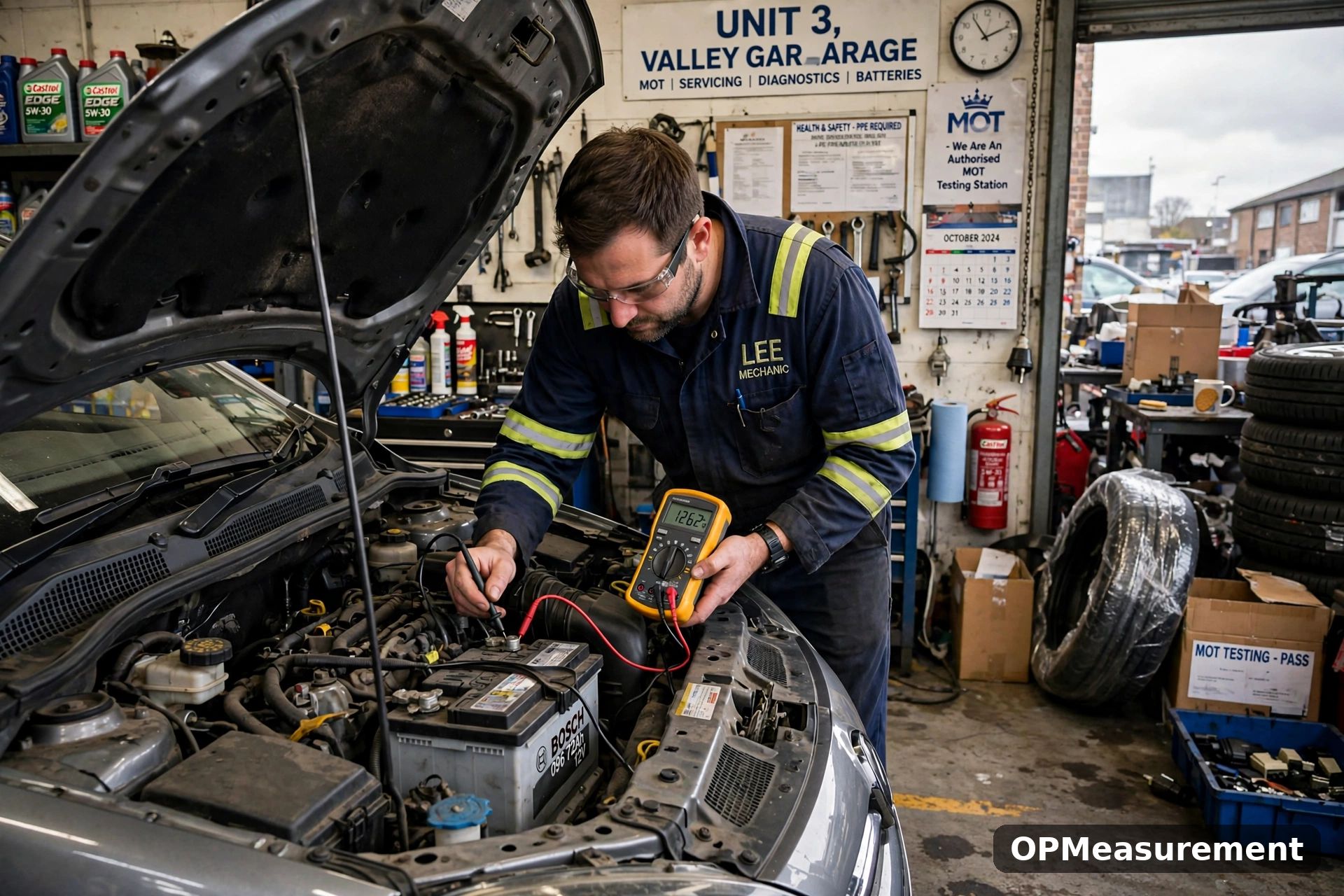
A basic multimeter gives a useful first answer. With the engine off and the car left standing for a few hours, a healthy battery reads around 12.6 volts, while a reading near 12.2 volts suggests it is heavily discharged.
- Around 12.6 volts: fully charged and healthy
- Around 12.4 volts: roughly half charged
- 12.2 volts or below: heavily discharged or failing
Many garages and motor retailers offer free battery health checks that load-test the battery properly. If a test shows the battery cannot hold charge, replacement is the fix, because no charger can revive worn-out plates.
how to test a car battery with a multimeter
8. Habits That Shorten Battery Life
Short trips are a common culprit. Starting the engine takes a large burst of power, and a five-minute drive may not run the alternator long enough to put that charge back, so the battery slowly runs down over weeks.
Lights or interior lamps left on overnight, accessories used with the engine off, and long periods parked unused all drain the battery. A fault that keeps drawing power after you lock the car, called a parasitic drain, needs a mechanic to trace.
9. Jump Start, Charge, or Replace?
A jump start or an overnight charge is reasonable if the battery went flat for an obvious reason, such as lights left on. If it goes flat again within days, the battery is telling you it has reached the end.
how to jump start a car safely
When you replace the battery, match the specification the car maker lists, including capacity and cold cranking amps, and consider a stop-start rated battery if your car has that system. Take the old battery back for recycling, as retailers must accept them.
recycling your old car battery
Frequently Asked Questions
How long should a car battery last?
Most last around three to five years in UK conditions. Cars used mainly for short trips, or left standing for long periods, often wear batteries out sooner than high-mileage cars do.
How much does a replacement battery cost?
Prices vary widely with the battery’s size, capacity, and whether the car needs a stop-start type, so check your exact model before comparing quotes. Fitting is often included, and many suppliers will test your old battery free first.
Is it safe to drive with a weak battery?
You can usually drive once the engine is running, because the alternator powers the car. The risk is the next start: a battery that barely cranked this morning may not manage it again later today.
Conclusion
A dying battery almost always warns you first: slow cranking, clicking, dim lights, warning lights, or visible damage. Test it early, charge or replace it on your terms, and you avoid the flat-battery breakdown entirely.