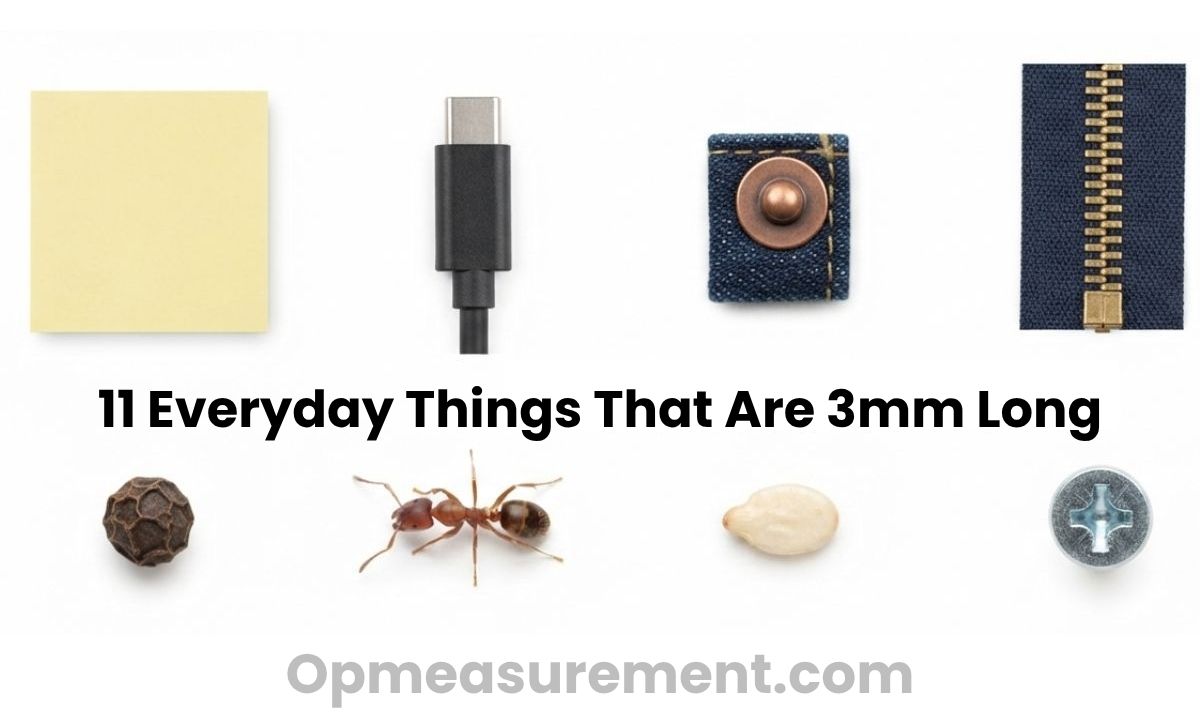
3 millimeters equals 0.3 centimeters and approximately 0.1181 inches. Compare the specific dimension named below—diameter, width, length, or thickness. Natural objects and product sizes vary; check a ruler, caliper, or manufacturer specification before treating an example as exact.
Three millimeters sits in an interesting zone. It is small enough that most people cannot judge it confidently by eye, yet large enough to feel distinctly different from 1 or 2 mm when placed on a ruler. In decimal inches, 3 mm converts to approximately 0.118 inches, which falls just under an eighth of an inch (0.125 inches). That fractional reference is useful because 1/8 inch is a common measurement in woodworking and hardware, and 3 mm lands just slightly short of it.
The examples below cover a range of objects where 3 mm appears as a thickness, a length, a diameter, or a key dimension. Each entry identifies exactly which part of the object measures 3 mm, because the same object can be vastly different across its dimensions.
Quick Reference: 11 Things That Are 3mm
| Object | 3mm Dimension | Type |
| Whole Black Peppercorn | Diameter of a small, dense dried peppercorn | Approximate (natural) |
| Sesame Seed | Length along longest axis | Approximate (natural) |
| Red Fire Ant Worker | Body length (head to abdomen tip) | Approximate (natural) |
| Standard #3 Metal Zipper Tooth | Width across each individual tooth | Standardized |
| Four Standard Credit Cards Stacked | Combined stack thickness | Exact (ISO/IEC 7810) |
| Post-it Note Pad (40 Sheets) | Total compressed pad thickness | Approximate |
| USB-C Cable Insulation Sheath | Outer diameter of cable sheath | Approximate (varies by brand) |
| Jeans Rivet Cap | Height of dome above fabric surface | Approximate |
| #10 Wood Screw Flat Head | Head height from base to top surface | Approximate (standardized range) |
| 1/8-Inch Twist Drill Bit | Shank and cutting diameter (3.175mm) | Near-exact (slightly over 3mm) |
| M3 Machine Screw Thread | Nominal outer thread diameter | Exact (metric standard) |
1. A Whole Black Peppercorn
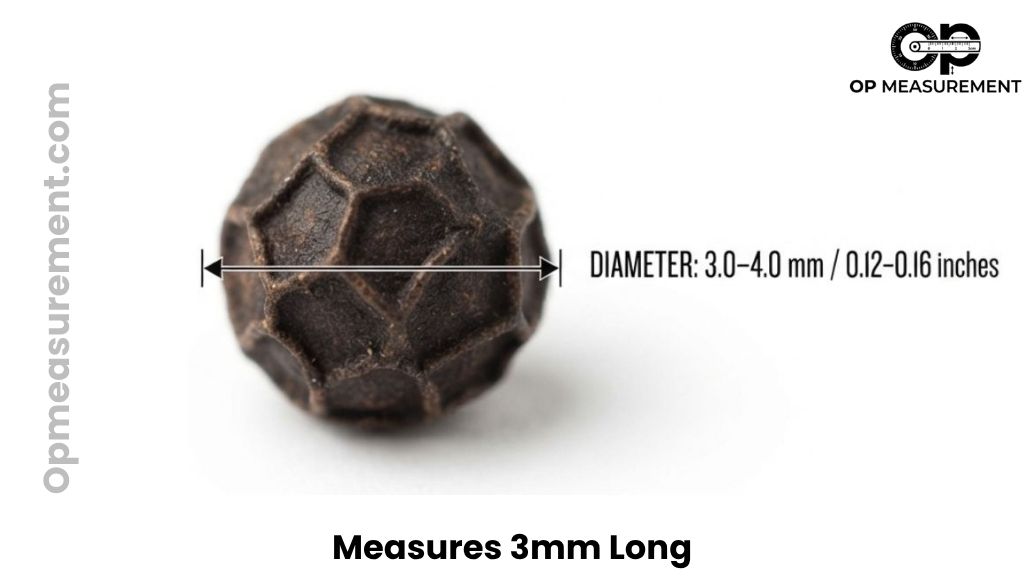
A dried black peppercorn is one of the most universally available objects that sits at or very close to 3 mm in its shortest dimension. The diameter of a typical dried black peppercorn ranges from roughly 3 mm to 5 mm, with the smaller, denser ones landing right at 3 mm. This makes a single peppercorn a surprisingly practical reference for visualizing the measurement without any tools.
What makes peppercorns useful as a comparison is their near-spherical shape. You are not trying to judge a long thin object from a tricky angle. You are holding a roughly round object whose width you can intuitively register. If something is described as 3 mm wide, picturing a compact peppercorn gives you a grounded, honest reference.
2. A Sesame Seed
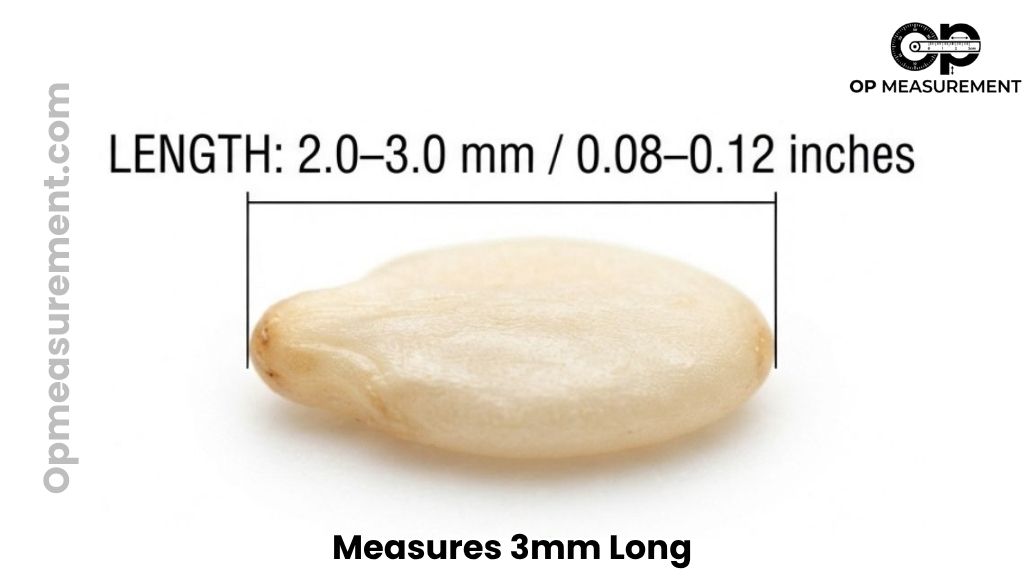
A sesame seed is one of those objects where people are often surprised to learn exactly how small 3 mm really is in practice. The length of a single sesame seed typically measures between 2.5 mm and 3.5 mm, placing the average seed very close to 3 mm long. The width is noticeably narrower, usually around 1.5 mm to 2 mm, so the 3 mm dimension refers specifically to the seed’s length along its longest axis.
Because sesame seeds appear on food daily, they offer immediate visual recognition. If you have ever noticed a sesame seed on a burger bun and thought about how small it is, you already have a working mental image of 3 mm length. The seed is flat and oval, so it also illustrates how 3 mm can describe something that feels almost two-dimensional in thickness.
3. A Standard Red Fire Ant Worker
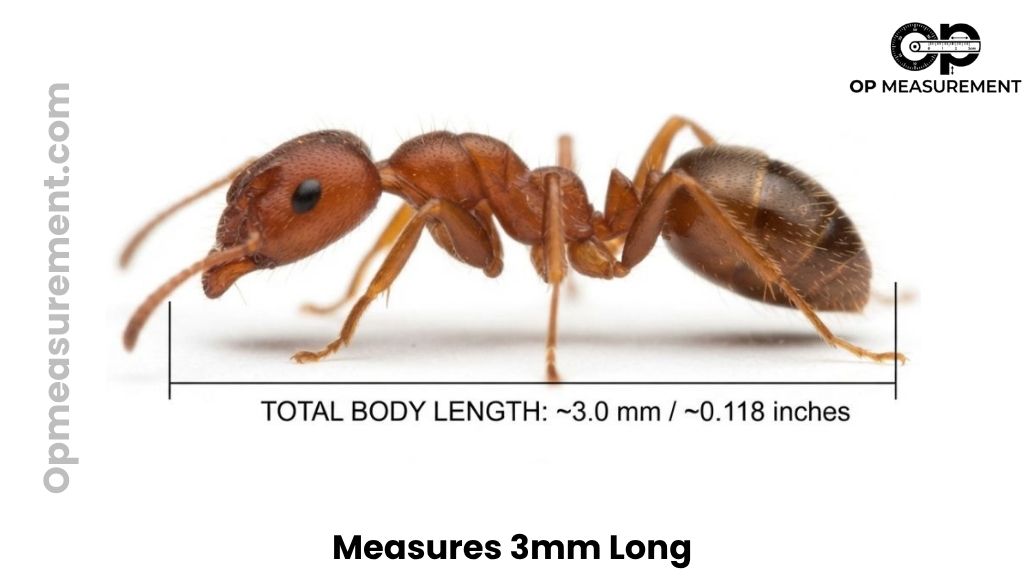
A worker red fire ant (Solenopsis invicta) typically measures between 2 mm and 6 mm in body length depending on its caste, with the most common minor worker ants measuring close to 3 mm from head to the tip of the abdomen. This range is well-documented in entomology because caste size variation is a defining characteristic of the species. The 3 mm worker represents one of the smaller, more numerous individuals in a colony.
Looking at a fire ant at 3 mm gives a very different sense of scale than a peppercorn or a sesame seed, because the ant has legs, antennae, and defined body segments that extend beyond its core length. The body itself is the 3 mm measurement. This makes the ant useful for understanding that 3 mm is tiny in biological terms, roughly the size of an organism that is difficult to examine without magnification.
4. A Standard #3 Metal Zipper Tooth
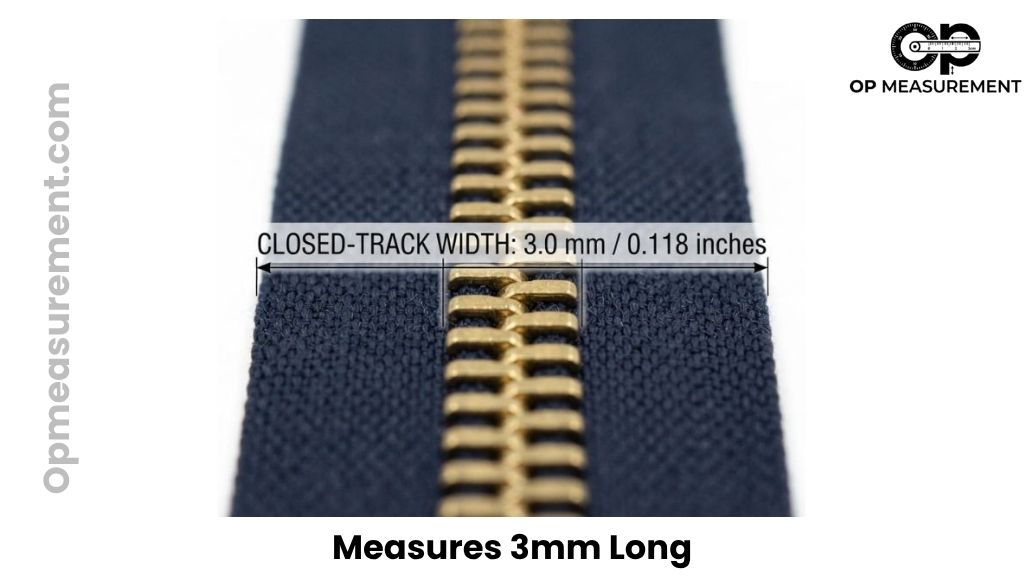
Metal zippers are classified by tooth size, and a #3 zipper has teeth that measure approximately 3 mm in width across the widest part of each individual tooth. This is the dimension that determines how the zipper is labeled. The #3 designation is a direct reference to this measurement, which is why zipper specifications in the apparel and accessories industry always list tooth width as the defining metric.
In everyday terms, #3 metal zippers appear on lightweight jackets, handbags, and dress garments where a finer, less bulky closure is preferred over a heavier #5 or #8 zipper. If you run your thumbnail across the teeth of a fine metal zipper on a small purse or a dress, the individual teeth you feel are approximately 3 mm wide.
5. Four Standard Credit Cards Stacked
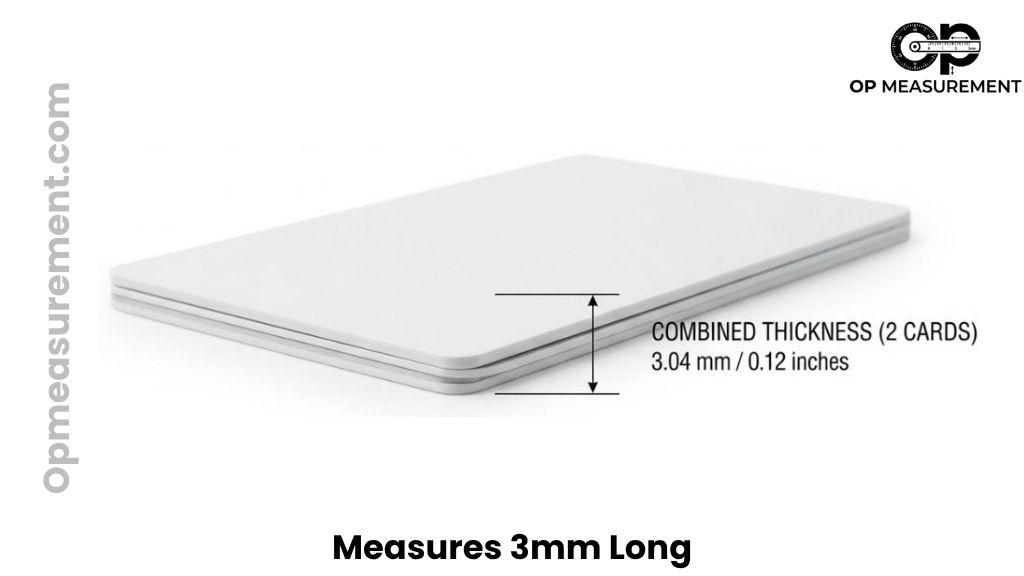
A single standard credit card has a thickness of 0.76 mm, defined by the ISO/IEC 7810 ID-1 specification. Two cards stacked together reach 1.52 mm. To reach 3 mm, you need to stack four cards, not two. However, if you are comparing credit card thickness to 3 mm, two cards give you a reference for roughly half of 3 mm, which helps you mentally double the gap and arrive at the target. Some sources reference two cards as a 3 mm comparison, but four cards is the more accurate physical match.
Four cards with a nominal thickness of 0.76 mm total 3.04 mm, close to three millimeters. Raised lettering, card construction, wear, and gaps can change a real stack’s height.
6. Standard Post-it Note Pad Segment (40 Sheets)
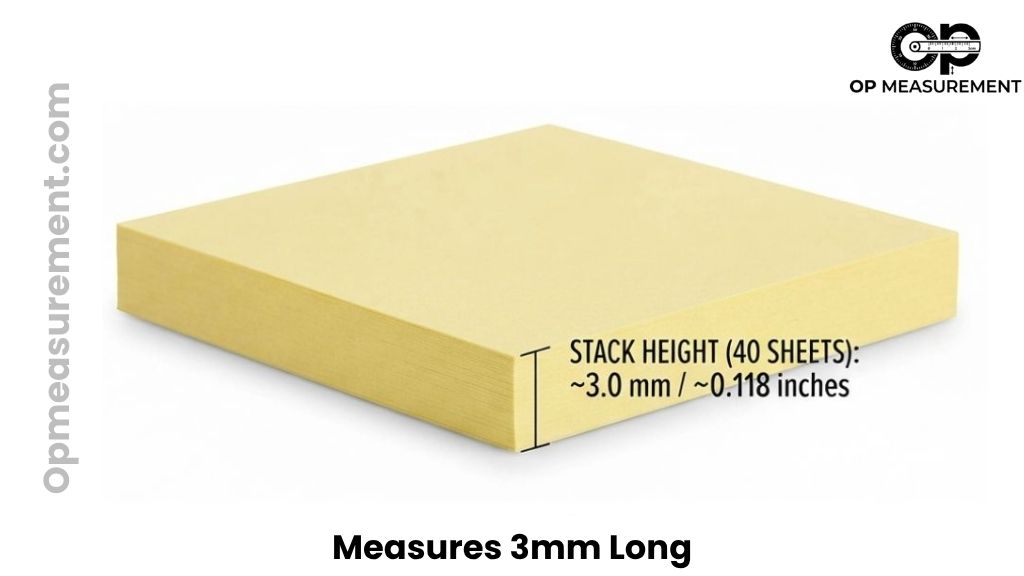
A standard Post-it note has a sheet thickness of approximately 0.07 mm to 0.08 mm per leaf. A pad of 40 sheets therefore compresses to roughly 3 mm in total thickness when the stack is pressed flat. This assumes a standard 75 gsm or similar office note paper weight, which is typical for most Post-it note products. The adhesive on each sheet contributes a negligible amount to the total.
This comparison is particularly useful in office or paper-related contexts. If you need to visualize the gap in a stack of documents or the height of a printed booklet, counting 40 standard note-weight sheets gives you a reference for 3 mm of stacked paper. The number shifts slightly with heavier paper stocks, but for ordinary light office paper, 40 sheets is a solid working estimate.
7. A Standard USB-C Cable Insulation Sheath
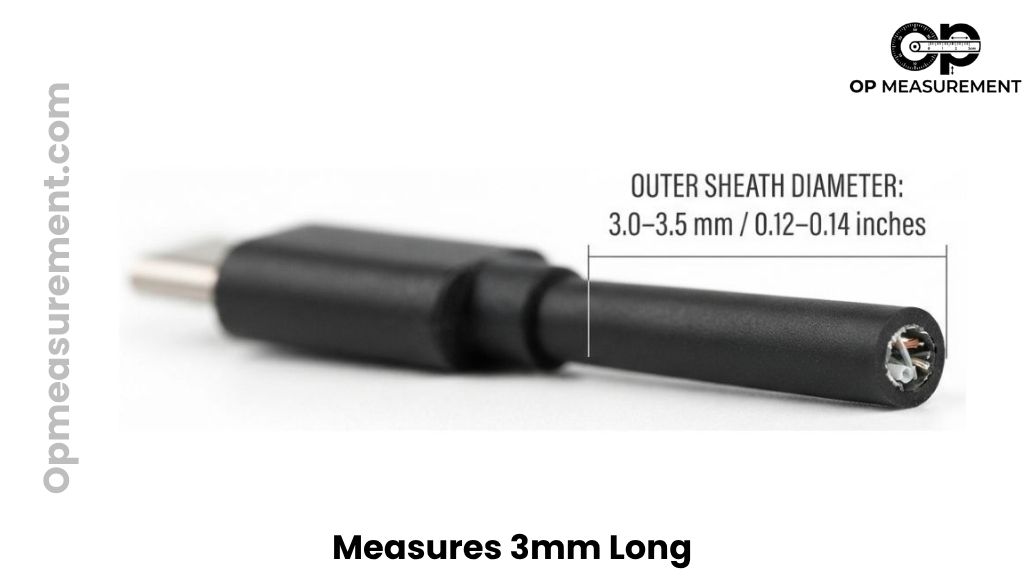
The outer insulation diameter of a USB-C cable varies by manufacturer and cable grade, but the sheath of a standard data and charging cable typically measures between 3 mm and 4 mm in outer diameter. Entry-level and mid-range cables tend to sit closer to 3 mm, while braided or reinforced premium cables are wider. The 3 mm measurement refers to the round cross-section of the cable at any point along its length, not the connector housing.
This comparison is useful because USB-C cables are now ubiquitous. You can pick up any standard cable and look at the cross-section of the insulation where it meets the connector. That circular diameter, roughly the width of a thin cable sheath, is approximately 3 mm. It is thicker than a headphone jack wire but noticeably thinner than most power cables.
You may like: How Long Is 80 Feet?
8. Standard Jeans Rivet Cap Thickness
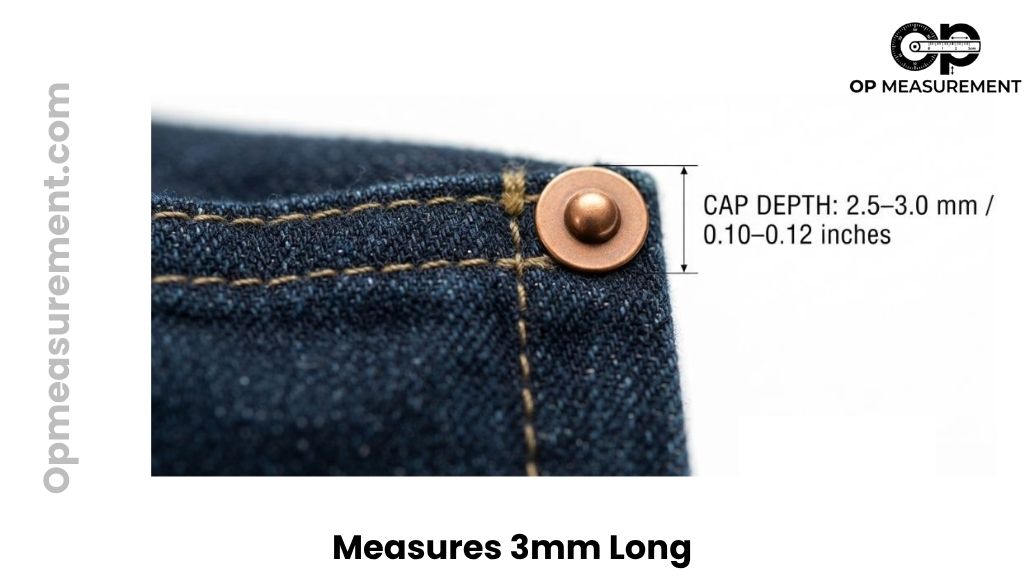
The metal rivets used to reinforce stress points on denim jeans, such as the corners of pockets, consist of a cap pressed against a back post. The cap height, meaning the thickness of the metal dome as it sits proud of the fabric surface, typically measures around 3 mm. This is the vertical dimension from the flat fabric surface to the top of the rivet dome. The cap diameter is wider, usually around 8 mm to 10 mm, but the rise off the fabric surface is close to 3 mm.
If you run a finger across the rivet on a pair of jeans, you can feel that raised dome. The height of that bump above the denim fabric is a practical, tactile reference for 3 mm. It is not a perfectly standardized measurement across all manufacturers, but it is consistent enough to work as an everyday comparison.
9. Standard #10 Wood Screw Flat Head Height
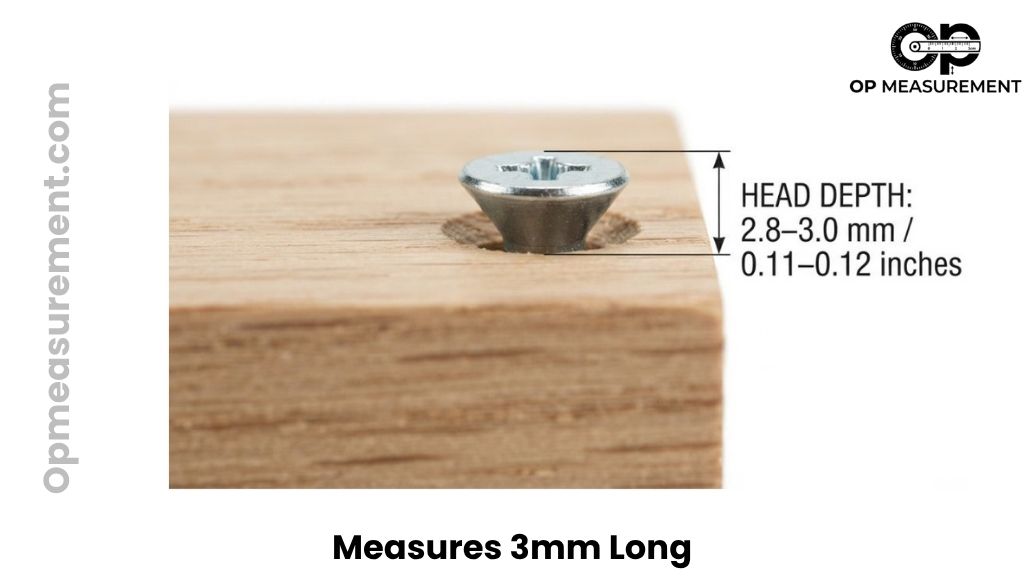
A #10 flat-head wood screw has a head diameter of approximately 9.5 mm to 10 mm, but the relevant 3 mm dimension here is the head height, meaning how tall the conical head rises from its base to its flat top surface. The head height of a #10 flat-head screw is typically close to 3 mm. This is the taper thickness that sits above the countersunk recess once the screw is flush-driven into wood.
This measurement matters in woodworking when calculating countersink depth. If your countersink bit is not cutting deep enough to fully recess a #10 flat-head, the 3 mm of head height is what protrudes above the surface. Knowing this allows a woodworker to set the correct countersink depth before driving the screw.
10. A 1/8-Inch Twist Drill Bit
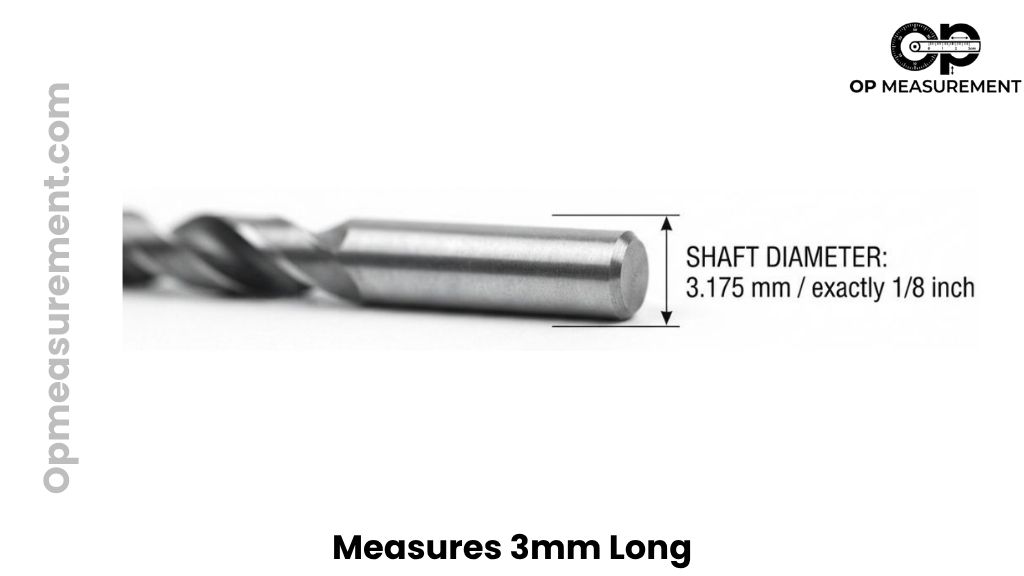
A 1/8-inch twist drill bit has a shank and cutting diameter of exactly 3.175 mm, which is just slightly above 3 mm. It is close enough that it appears regularly in discussions about 3 mm drilling, particularly in metalworking and electronics work where both metric and imperial sizes are used interchangeably. Many hobbyists and makers use a 1/8-inch bit as a practical stand-in for a 3 mm bit when the application does not require tight tolerances.
The key distinction is that 1/8 inch is not exactly 3 mm. The difference of 0.175 mm matters in precision fitting but is negligible for most DIY drilling. When you hold a 1/8-inch bit and look at the shank diameter, you are looking at a diameter that is, for most visual purposes, indistinguishable from 3 mm.
Read also: How Long Is 25 Feet?
11. An M3 Machine Screw Thread
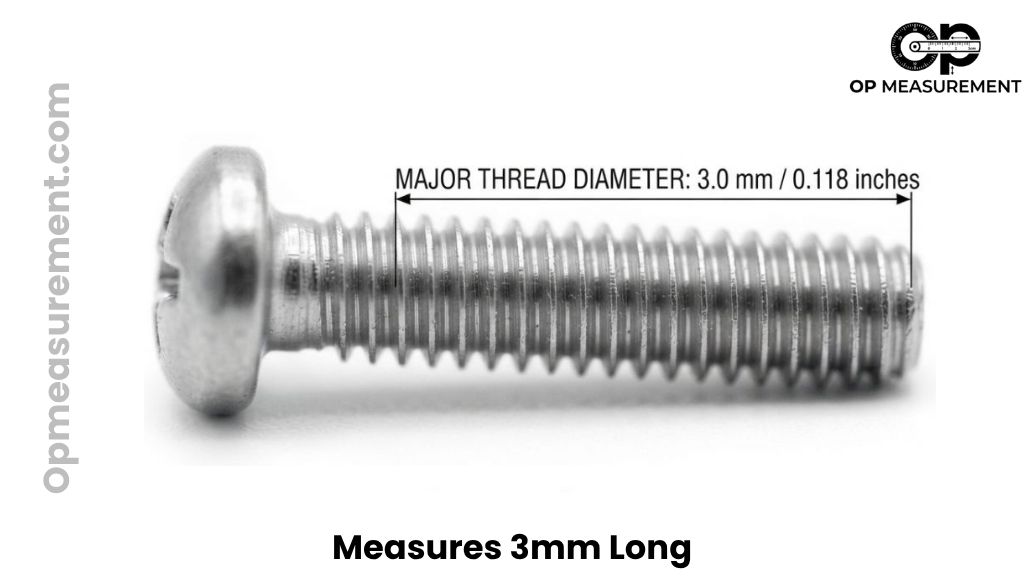
An M3 machine screw is defined by its nominal thread diameter of exactly 3 mm. This is a metric standard, and the 3 mm refers to the outer diameter of the screw thread itself, not the head width or the shaft of any specific head style. M3 screws are one of the most common small fasteners in electronics, laptop assemblies, camera equipment, and 3D printers.
The M3 is particularly relevant to this topic because it is one of the few objects where 3 mm is not an approximation. It is the defining measurement by standard. If you want to physically hold exactly 3 mm in thread diameter, an M3 machine screw gives you precisely that. The thread engagement, the clearance hole size, and the tap drill size all derive from this 3 mm nominal dimension.
For another size reference, see How Big Is 4mm? and How Big Is 2mm?
Conversion reference: NIST unit definitions and conversion factors. Rounded values are for comparison; product dimensions and weights should be checked against the specific item.

Vera loves exploring the size and dimensions of everyday objects. She shares practical, visual guides to help readers understand measurements clearly. With a focus on accuracy and usefulness, Vera creates content that informs, engages, and supports learning for all.