Good working at height training is the difference between a routine job and a serious accident. Falls from height remain the most common cause of fatal workplace injuries in Britain, according to HSE reporting.
The training you need depends on the equipment you use and the work you do. A general awareness course suits some workers, while platform operators need accredited, category-specific instruction.
This guide explains the main course types, who each one is for, and how long the certificates last. It finishes with practical advice on choosing a provider you can trust.
What Counts as Working at Height?
The Work at Height Regulations 2005 cover any work where someone could fall a distance likely to cause injury. That includes obvious jobs on roofs and scaffolds, and less obvious ones too.
Standing on a ladder, working from a platform, or even working beside an open edge at ground level can all count. If a fall could hurt someone, the regulations apply.
Employers must plan the work properly, choose suitable equipment, and make sure workers are competent. The HSE publishes free guidance on working safely at height that explains the duties in plain language.
Who Needs Working at Height Training?
Anyone whose job takes them off the ground needs training matched to their tasks. Roofers, scaffolders, maintenance engineers, warehouse staff and window cleaners are common examples.
Supervisors and managers need training too, because they plan the work and check it is done safely. Their courses focus on risk assessment, equipment selection and the law.
Even occasional users, such as a caretaker changing light fittings from a podium step, need basic instruction. Short, simple jobs cause plenty of accidents precisely because they feel low-risk.
What a Working at Height Course Covers
A general awareness course usually runs through the regulations, the main causes of falls, and the hierarchy of control measures. Avoiding work at height altogether always comes first.
Where height work cannot be avoided, collective protection such as guardrails is preferred over personal protection. Harnesses and lanyards are the last line of defence, not the first.
Most courses also cover equipment inspection, emergency planning and rescue basics. Many end with a short test, and some include a practical session on real equipment.
IPAF Training for Scissor Lifts and Cherry Pickers
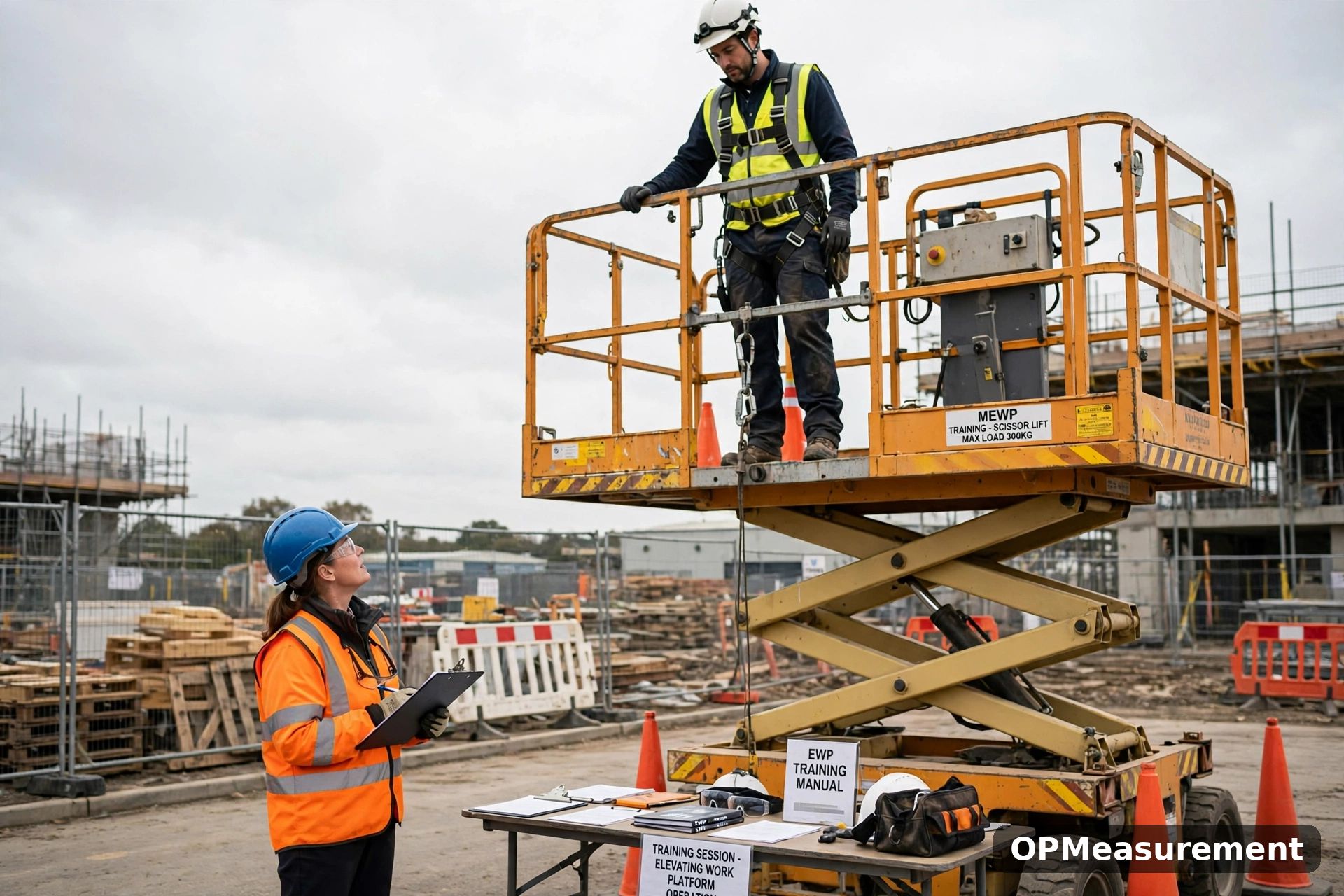
IPAF is the best-known accreditation for mobile elevating work platforms, often called MEWPs. Its operator courses combine classroom theory with hands-on practice on the machine categories you will use.
The common categories are 3a for mobile scissor lifts and 3b for mobile boom lifts, or cherry pickers. Reading about IPAF operator categories helps you pick the right category before booking.
Successful candidates receive a PAL Card, which IPAF states is valid for five years. Many large sites ask to see a valid card before allowing platform work.
PASMA Training for Mobile Access Towers
PASMA is the recognised scheme for mobile access towers, the lightweight aluminium towers used across construction and facilities work. Its Towers for Users course is the one most tower builders take.
The course covers assembling, altering and dismantling towers safely, following the manufacturer’s instruction manual. It also covers inspection, tagging, and spotting damage or missing components.
PASMA says its certificates and cards are typically valid for five years, but always confirm the current position on PASMA’s official training pages before you book or renew.
Harness, Ladder and Low-Level Access Training
Harness courses teach fitting, adjustment and pre-use inspection, plus what to do after a fall. They are usually short, often half a day, and suit anyone who clips on at work.
Ladder training covers choosing the right ladder, the correct angle, footing, and inspection for damage. The Ladder Association runs recognised courses for users and inspectors.
Low-level access courses cover podium steps and small platforms. They are quick to complete and ideal for retail, cleaning and maintenance staff who never go very high.
Course Lengths and Certificate Validity
Course lengths vary more than many people expect. A general awareness course might take half a day, while an IPAF operator course usually takes a full day per category group.
Validity periods differ between schemes, so never assume one card matches another. IPAF and PASMA cards commonly run for five years, while some provider certificates last three years or fewer.
Always check the exact duration and validity with the training provider before booking. Schemes update their requirements, and the provider’s current course details are the ones that count.
How to Choose the Right Course and Provider
Start from the task, not the course catalogue. List the equipment your team actually uses, then match training to those items rather than buying a generic package.
Choose accredited training where a scheme exists, and check the provider is approved to deliver it. Ask whether the course includes practical assessment, not just classroom theory.
Finally, keep records of who was trained, on what, and when certificates expire. A simple training record prevents the common problem of cards quietly lapsing mid-contract.
Frequently Asked Questions
How long does working at height training take?
Most general courses take half a day to a day. IPAF operator training usually takes a day, and PASMA tower training is typically a one-day course.
Does working at height training expire?
Yes. IPAF and PASMA cards are generally valid for five years, while other certificates may last two or three years. Check the date printed on your card or certificate.
Can working at height training be done online?
Some theory-only and refresher courses are available online, and PASMA offers e-learning for parts of its low-level training. Courses with practical assessment, such as IPAF operator training, must be done in person.
Is working at height training a legal requirement?
The regulations require workers to be competent, and training is the usual way to prove it. Employers must also provide instruction and supervision suited to the risks involved.
Conclusion
The right working at height training matches the equipment, the task and the person doing the job. Accredited courses from schemes such as IPAF and PASMA give employers clear evidence of competence.
Check durations and validity before you book, keep good records, and refresh training before it lapses. A few hours in a classroom is a small price for everyone going home safely.