The citb test is the health, safety and environment exam most UK construction workers sit before they can apply for a CSCS card. Passing first time is realistic with focused preparation.
The pass mark is high, so casual revision rarely works. The good news is that the test follows a fixed format, and CITB publishes everything you need to prepare.
This guide explains the format, the materials that matter, and a simple way to structure your revision. It ends with practical advice for test day itself.
What the CITB Test Involves
The test is taken on a touchscreen computer at an approved test centre. For operatives, CITB sets 50 multiple-choice questions to answer in 45 minutes.
Questions cover five knowledge areas: legal and management, health and welfare, general safety, high risk activities, and the environment. Scenario-style questions test what you would do in real site situations.
The pass mark for the operatives test is 45 out of 50, which is 90 percent. That allows only five wrong answers, so accuracy matters as much as knowledge.
Check You Are Revising for the Right Test
There are three versions of the test: operatives, specialists, and managers and professionals. Each version matches a different type of CSCS card and a different level of responsibility.
Sitting the wrong version wastes your fee, because the result will not support the card you need. Use the CSCS card finder to confirm your version before booking.
Specialist tests include extra questions on your trade area, such as working at height or demolition. Check whether your card needs one of these specialist versions.
Use the Official Revision Materials
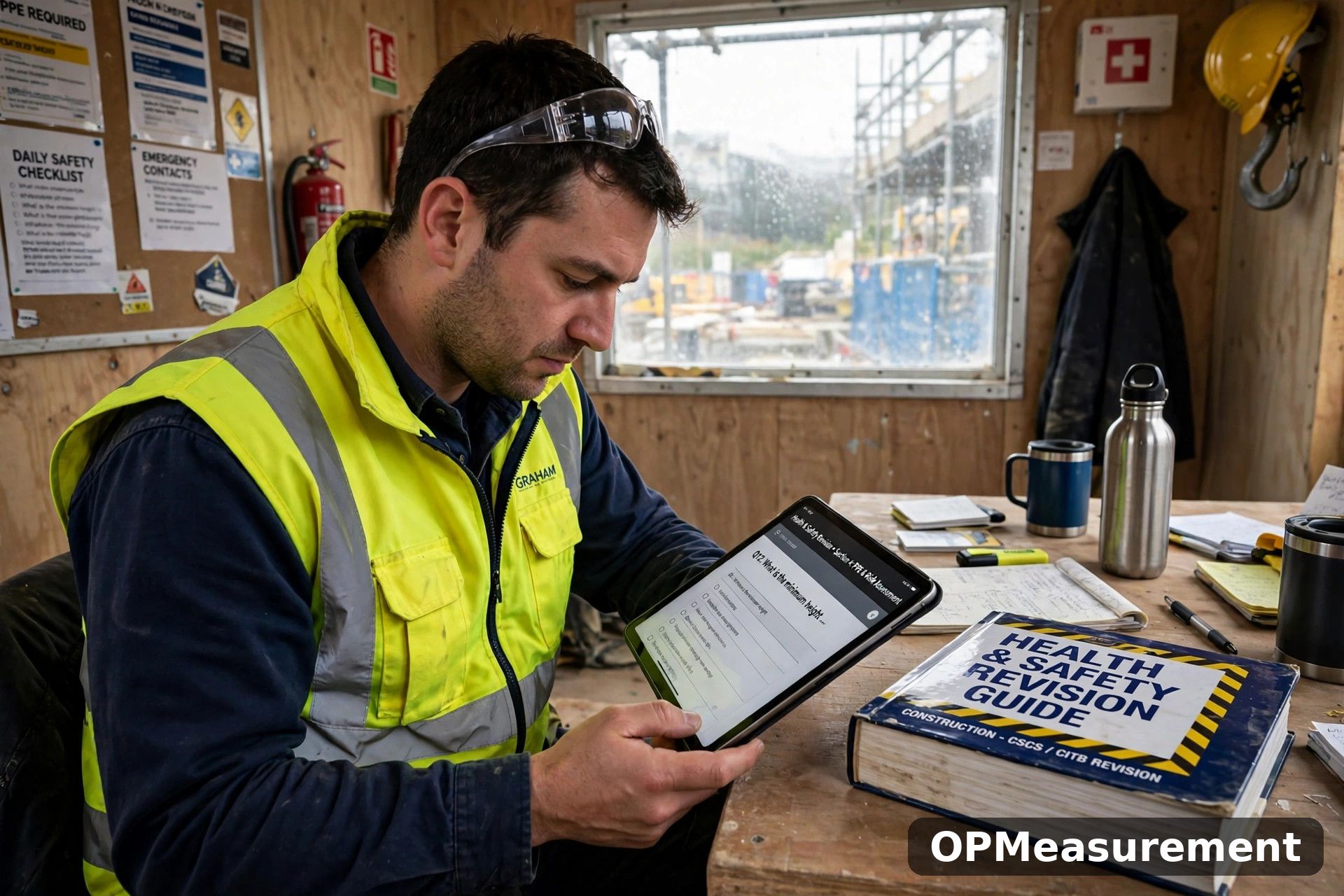
CITB publishes the official revision book for the operatives and specialists tests, known as GT100. CITB states that it contains the content the test covers, in question-and-answer form.
There is also an official app with a timed test simulation, plus downloads for your computer. Working through CITB’s official revision materials gives you questions in the same style as the real exam.
Be wary of unofficial question packs sold online. Some are out of date, and a few contain wrong answers that teach you the opposite of what the test expects.
Build a Simple Revision Plan
Little and often beats one long cramming session. Thirty to forty-five minutes a day for two weeks covers the material more reliably than a single weekend of reading.
Work through one knowledge area at a time, then test yourself on it before moving on. Keep a note of topics you get wrong and revisit them every few days.
Leave the final two or three days for full practice tests rather than new material. By then, your job is building speed and confidence, not learning fresh facts.
Learn the Numbers That Keep Coming Up
Some questions turn on specific figures, and they reward memorising. Examples in the official revision material include noise action values, the one-in-four ladder angle, and scaffold inspection intervals.
Make a short list of every number you meet while revising, with what it refers to. Test yourself on the list daily until the figures come back instantly.
Do not guess these on the day if you can avoid it. Number questions are effectively free marks once the figures are fixed in your memory.
Practise Under Timed Conditions
Fifty questions in 45 minutes allows under a minute per question. Timed practice teaches you that pace, so the real test does not feel rushed.
Try CITB’s free demo test first to learn the touchscreen layout. Then use the app simulation for full, timed runs.
Aim to score above the pass mark in several practice runs in a row before booking. Consistent practice scores are the best sign you are ready for the real thing.
How to Tackle Scenario Questions
Scenario questions describe a site situation and ask what you should do. The correct answer is usually the one that stops work, makes things safe, and reports the problem.
Answers that prioritise finishing the job quickly are almost always wrong. The test rewards protecting people first, even when that means a delay or extra paperwork.
Read every option before choosing. Two answers may look similar, but the safer and more responsible one is the one the examiners want.
What to Do on Test Day
Arrive early and bring the photographic identification the booking requires. Without acceptable ID, the centre cannot admit you, and you may lose your fee.
During the test, answer every question, even if you have to guess. Flag anything difficult, move on, and return to flagged questions with your remaining time.
A pass is valid for two years when applying for a CSCS card, so apply promptly. If you fail, you can rebook, but use the gap to revise your weak areas first.
Frequently Asked Questions
How many questions are on the CITB test?
The operatives test has 50 multiple-choice questions, answered in 45 minutes. The pass mark is 45 correct answers, which is 90 percent.
How long is a CITB test pass valid?
A pass counts towards a CSCS card application for two years. If you apply after that window, you will need to sit and pass the test again.
Can I take the CITB test in another language?
CITB offers a voiceover in a range of languages for candidates who need it, arranged when you book. Check the current language list on the CITB website before booking.
What happens if I fail the CITB test?
You can book another attempt, and many people pass on their second try. Your result shows the areas where you lost marks, so target those topics when you revise.
Conclusion
Passing the citb test first time comes down to three things: revising the official material, practising against the clock, and choosing the safe answer in scenarios.
Start early, learn the recurring numbers, and book only when your practice scores sit comfortably above the pass mark. That approach turns a high pass mark into a manageable one.