20 pounds equals 320 ounces by mass and exactly 9.0718474 kilograms. Use a package labeled 20 lb net weight or a weighed portion as a reference. Packaging adds weight, and household objects vary by size and model. Fluid ounces measure volume, not mass.
Numbers alone can be hard to picture. If you’ve ever wondered What Weighs 20 Pounds, the answer is closer than you think. From a large watermelon to a bag of pet food, many everyday items fall near this weight. Using familiar examples makes it easier to understand how heavy 20 pounds really feels and helps you compare it to things you lift, carry, or move in daily life.
Quick 20 Pounds Weight Reference
| Unit | Value | Real-World Feel |
| Pounds | 20 lbs | Heavy grocery haul |
| Kilograms | 9.07 kg | Standard metric weight |
| Ounces | 320 oz | Bulk measurement |
| Stone | 1.43 st | UK weight reference |
Weight conversions follow the International Yard and Pound Agreement (1959), the globally recognized standard for imperial-to-metric measurement.
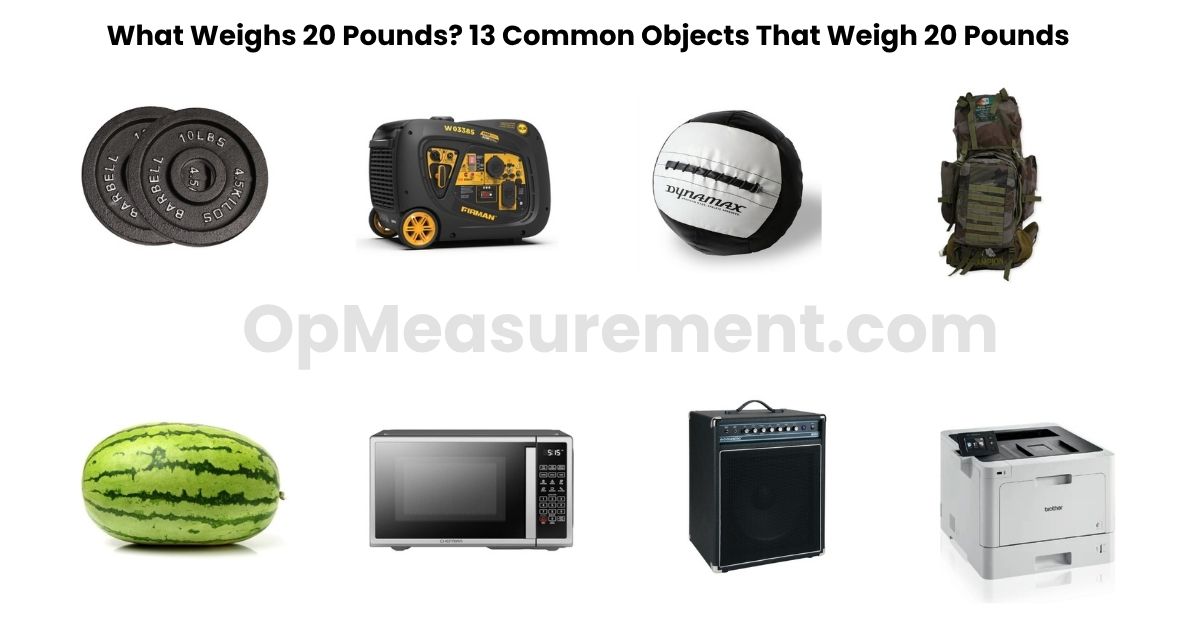
13 Everyday Things That Weigh 20 Pounds
| Object | Category | Weight (lbs) |
| Commercial Laser Printer | Office Equipment | 20 |
| Portable Inverter Generator | Outdoor Equipment | 20 |
| 14-Gauge Steel Wire Roll | Hardware & Tools | 20 |
| Bass Guitar Combo Amplifier | Musical Equipment | 20 |
| Large Whole Watermelon | Food & Produce | 20 |
| Dry Pet Food Bag | Household Item | 20 |
| Two Gallons of Paint | Home Improvement | 20 |
| Raw Thanksgiving Turkey | Food | 20 |
| Countertop Microwave | Kitchen Appliance | 20 |
| Hex Dumbbell | Fitness Equipment | 20 |
| Medicine Ball | Fitness Equipment | 20 |
| Two 10-Pound Weight Plates | Fitness Equipment | 20 |
| Loaded Tactical Rucksack | Outdoor & Travel Gear | 20 |
A Commercial Laser Printer
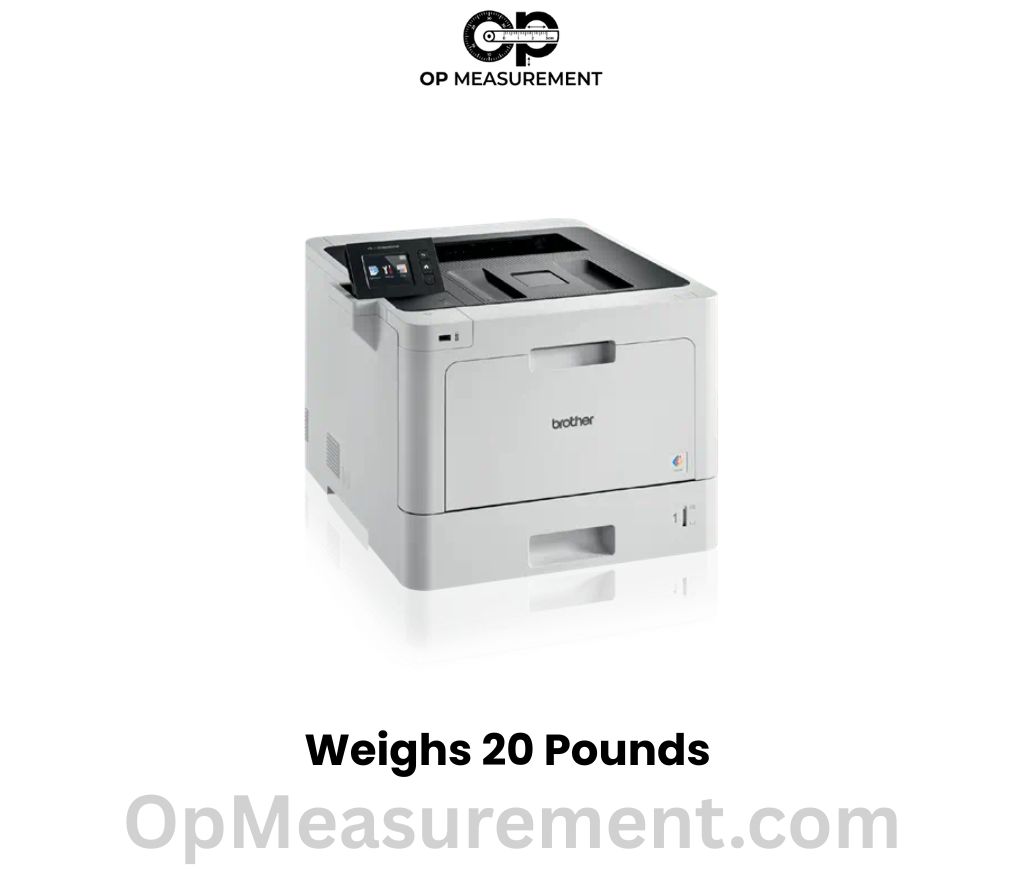
The standard desktop laser printer — the multi-function kind with a scanner on top — sits right in the 18 to 22-pound range. Toner cartridge included. You don’t notice it on the desk. You notice it the moment you have to move it.
Carry one from the car to a second-floor office and your forearms are done by the time you reach the stairs. The weight is solid and boxy with nothing comfortable to grip. It doesn’t shift or slosh — it just presses down, hard and steady, the entire way.
A Portable Inverter Generator
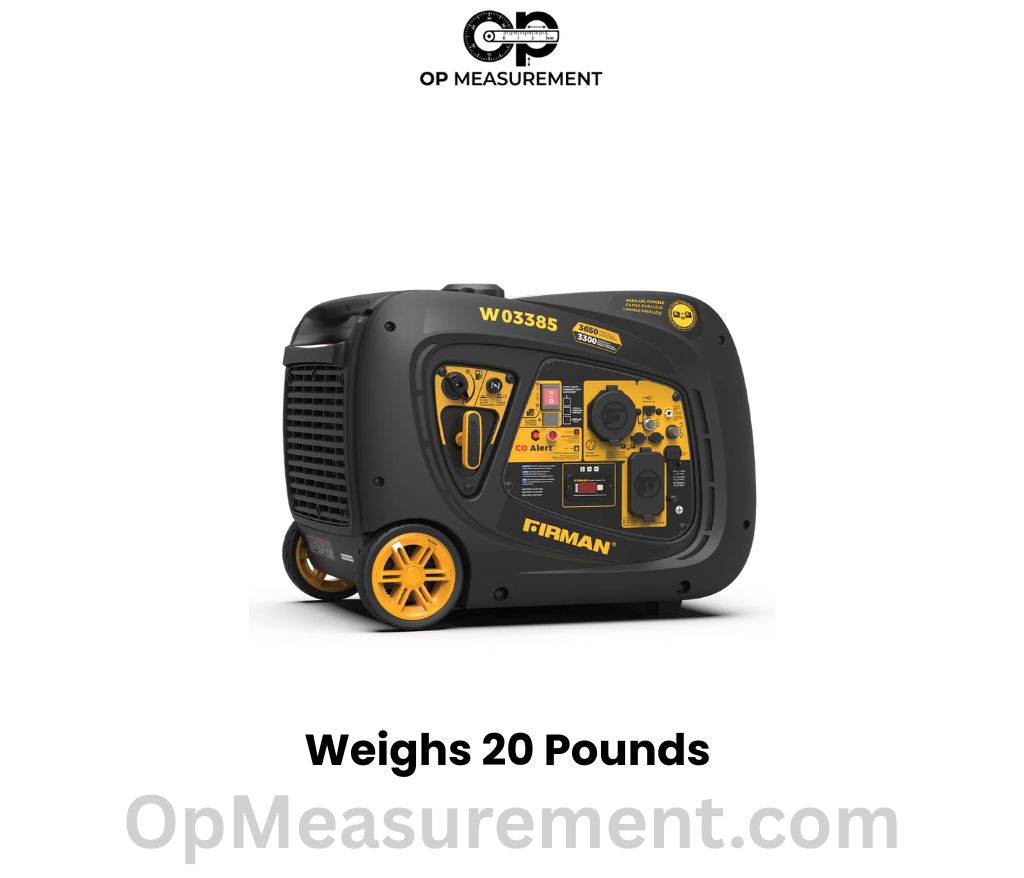
A generator’s mass varies by model. Check the manufacturer’s dry weight and account for fuel and accessories; a lightweight or compact label does not mean exactly 20 pounds.
The shape works against you. It’s roughly the size of a carry-on bag but shaped like a rectangle with a small handle. You carry it like a suitcase, but your wrist feels it in a way a suitcase never does. Fill that tank with gasoline and the number climbs fast, which is why smart buyers always check the dry weight first.
A Roll of 14-Gauge Steel Utility Wire
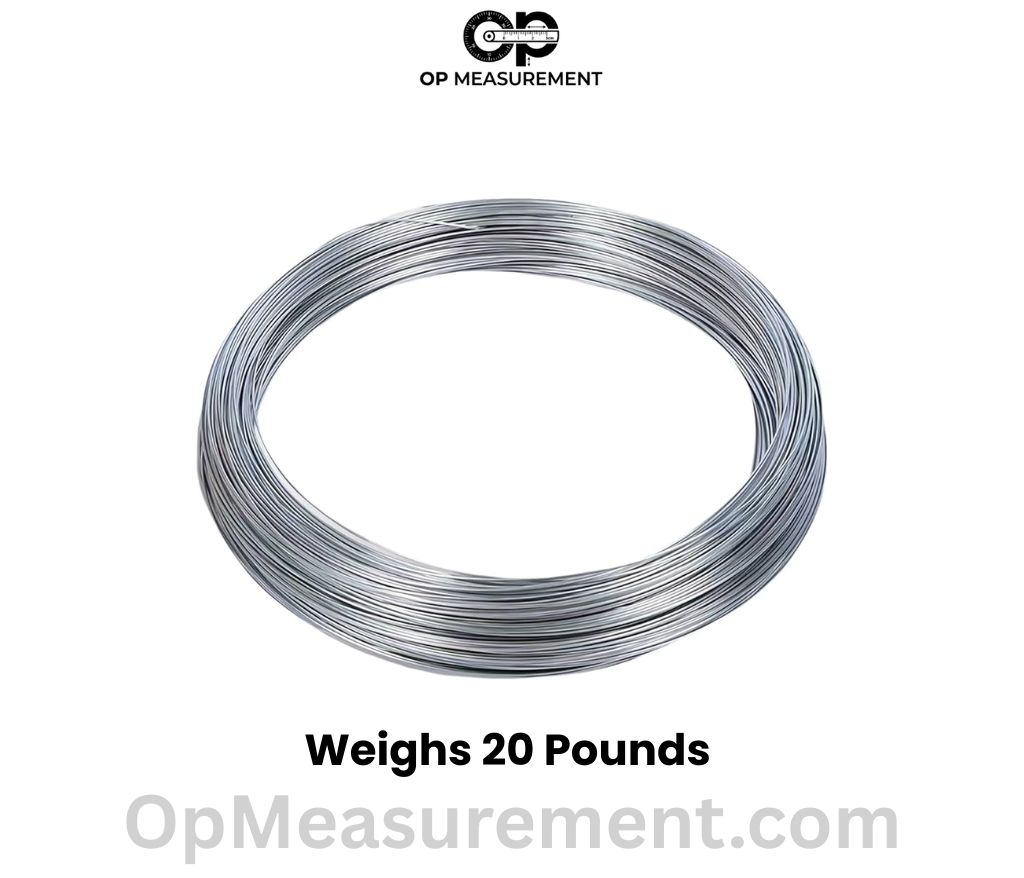
Hardware stores sell industrial wire spools for fencing and construction. The standard 14-gauge galvanized steel roll commonly hits 20 pounds. Farmers and contractors know this one well.
The weight is dense and completely unforgiving. No padding, no flex, no give. You’re gripping a rigid metal cylinder and your hands feel every ounce of it. Compared to carrying a 20-pound backpack, this feels heavier — not because it is, but because the load has nowhere to distribute across your body. It just sits in your palms and pulls.
A Bass Guitar Combo Amplifier
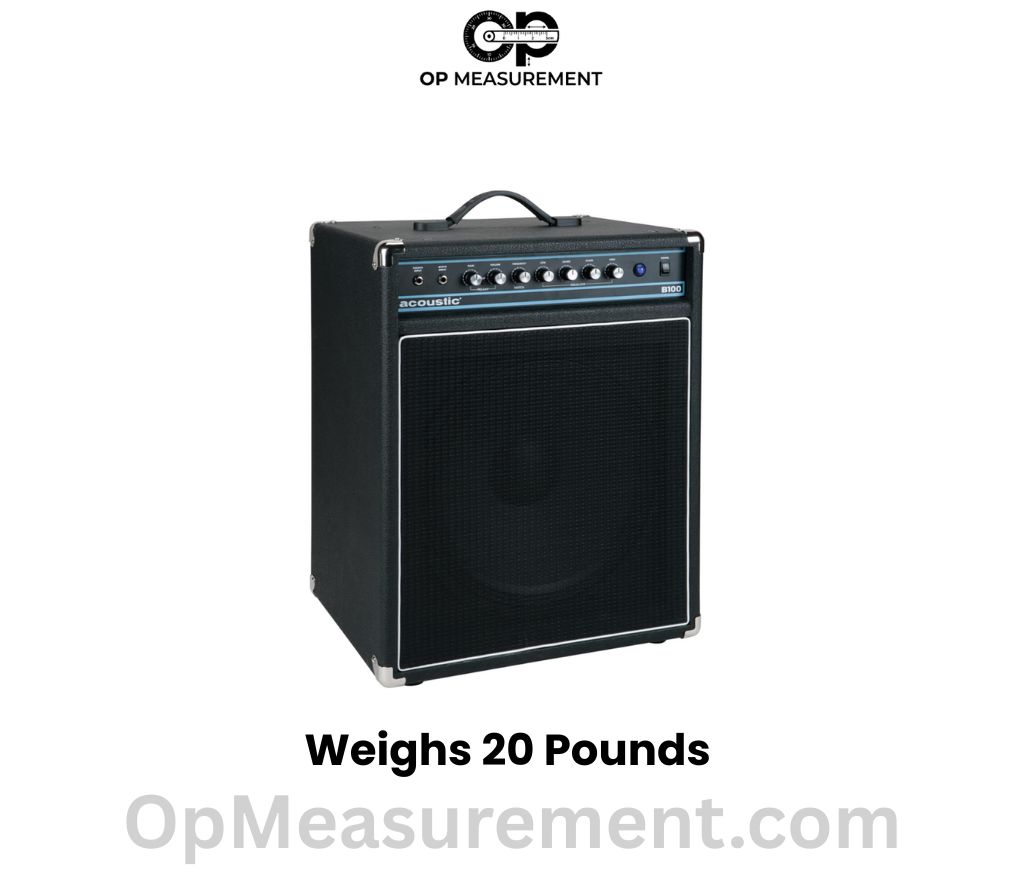
The 40 to 50-watt combo practice amps that bass players drag to rehearsals average right around 20 pounds. Not the massive stage stacks. The floor-sitting practice amp that fits in a trunk.
Any gigging musician will recognize this weight immediately. The handle is usually a single strip of plastic or rubber across the top. One hand, 20 pounds, up a flight of stairs. By the third rehearsal in a week, it starts feeling like twice that. The weight is real. The handle design almost never is.
A Large Whole Watermelon
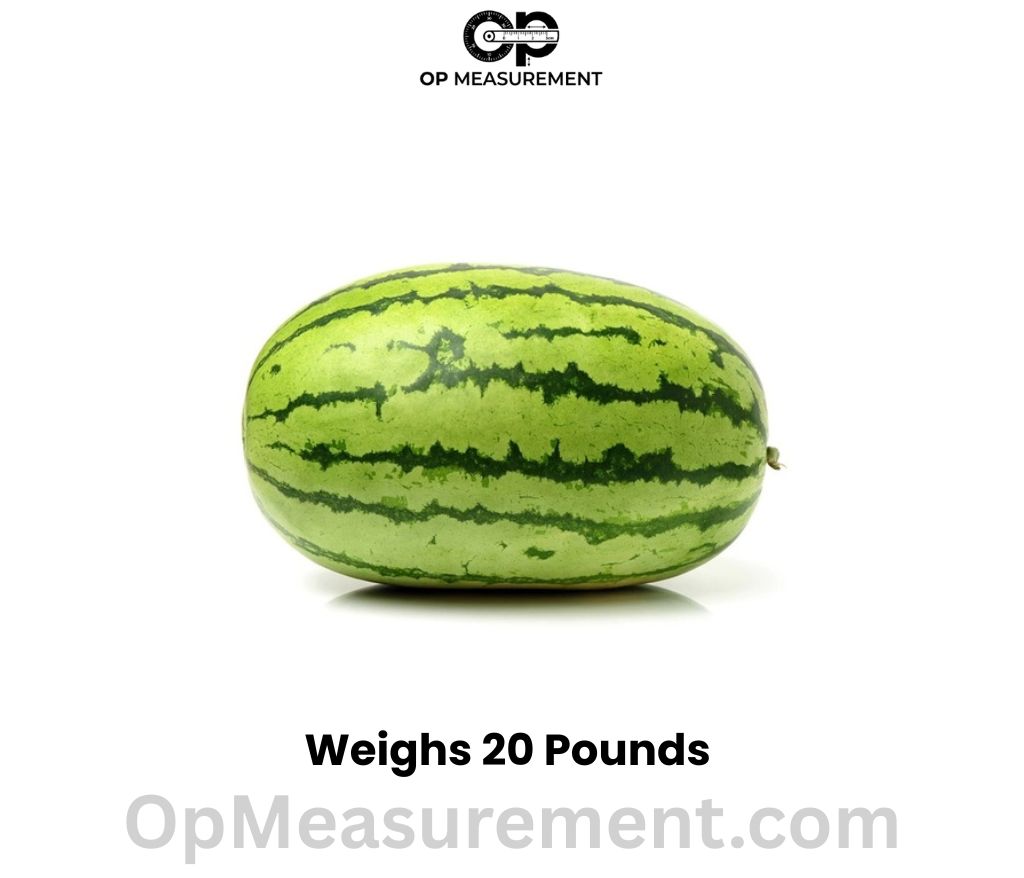
Peak-season watermelons at the grocery store regularly hit 15 to 20 pounds. A big oblong variety at full ripeness lands right at that upper number.
Try picking one off the produce shelf cleanly. The rind is smooth, the shape is awkward, and there’s no natural grip point anywhere on it. Both hands, pressed flat on either side, shuffling toward the cart. That fumbling, slightly panicked carry is 20 pounds with zero ergonomic cooperation — and it’s one of the most honest ways to feel what this weight actually means.
Read more: What Weighs 50 Pounds?
A 20-Pound Bag of Dry Pet Food
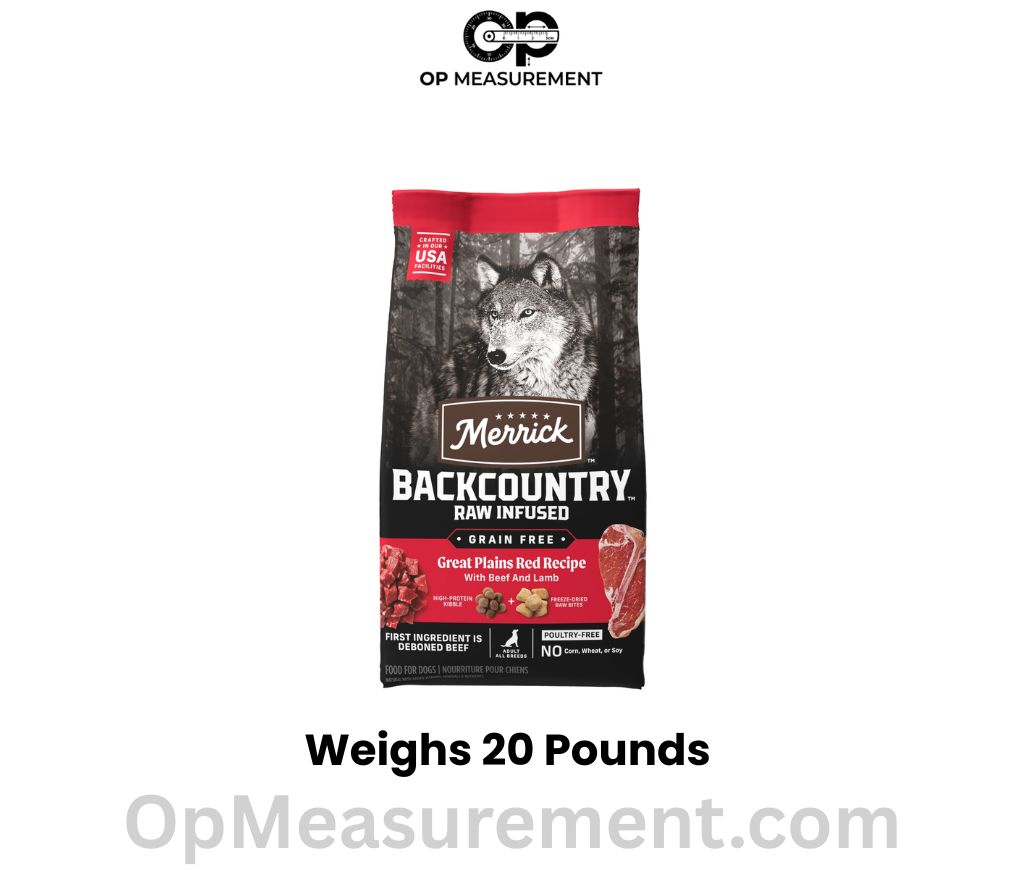
Medium-to-large bags of dry dog or cat kibble are commonly sold in exactly this size. It’s one of the most frequently lifted 20-pound objects in the average household.
What makes it tricky is the bag itself. The contents shift with every step. The weight travels around inside the packaging, throwing off your balance in small ways that a solid object never does. You adjust your grip constantly. That constantly moving 20 pounds is harder to manage than a rigid 20 pounds — same number, completely different experience in your hands.
Two Gallons of Liquid Paint
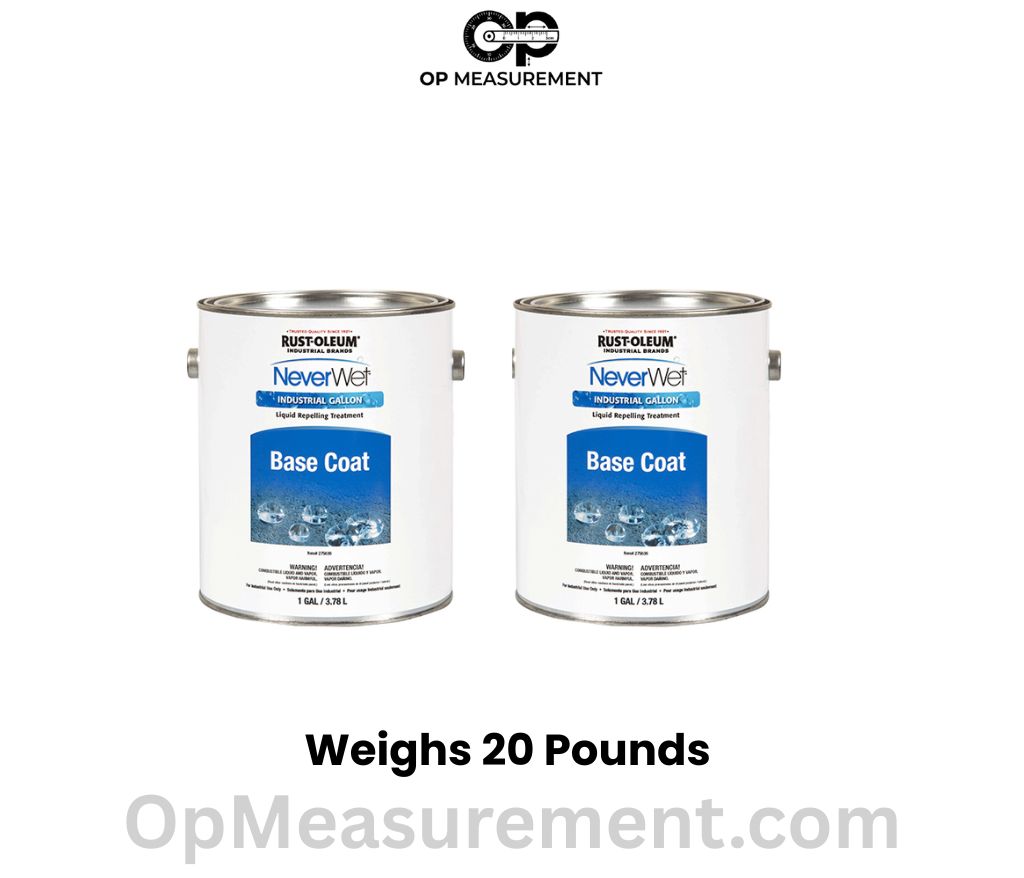
One gallon of latex house paint weighs about 10 pounds. Buy two for a bedroom project and the bucket handle is holding 20 pounds.
The deceptive part: it doesn’t feel heavy at first lift. The handle concentrates everything into your fingers and palm rather than spreading load across your whole arm. Five minutes into carrying it to a room, the fatigue shows up somewhere unexpected — not your shoulder, but your finger joints and forearm tendons. Paint is one of those weights that tricks you until it doesn’t.
A Raw Thanksgiving Turkey
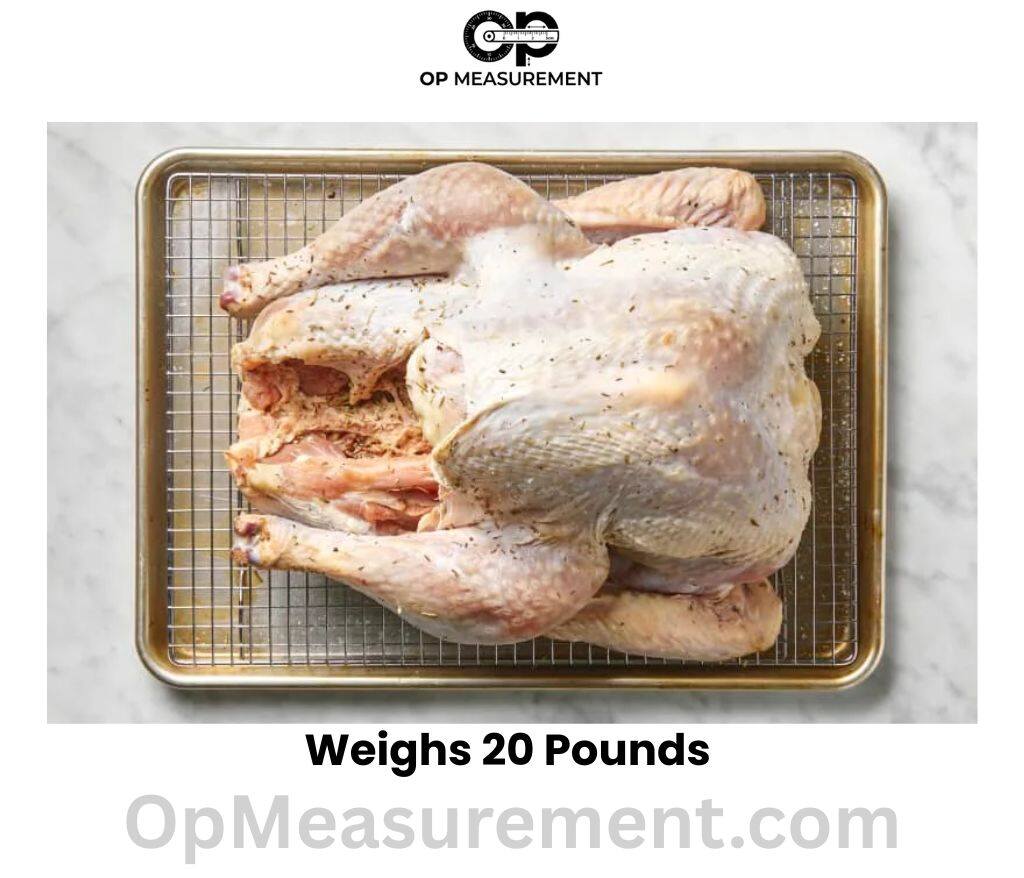
A medium turkey feeding 10 to 12 people frequently weighs right around 20 pounds. And lifting a raw, cold bird from the sink into a roasting pan may be the most memorable annual encounter most people have with this exact weight.
It’s slippery. It’s uneven. There’s no handle. You’re pressing your palms against cold raw skin and trying to maneuver something that absolutely does not want to cooperate. If you’ve done it, you remember it. Twenty pounds of raw turkey is a full-body negotiation, not just a lift.
A Countertop Microwave
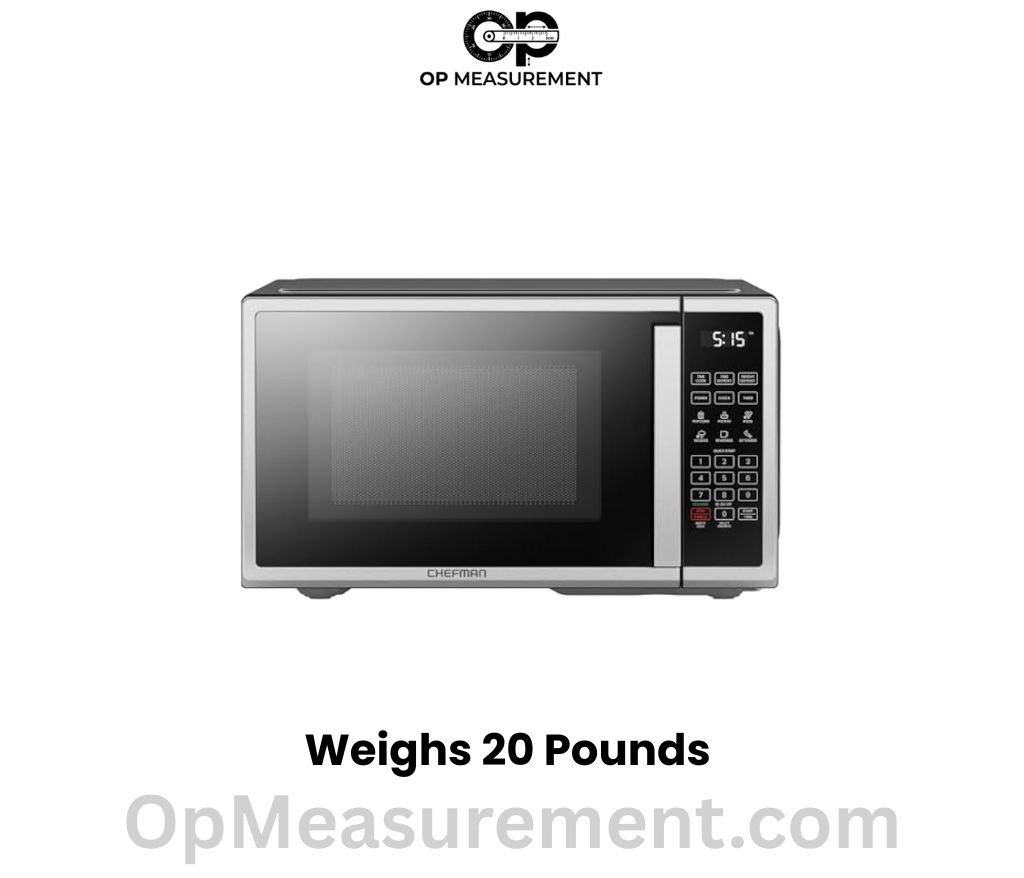
Compact kitchen microwaves — the 0.7 to 0.9 cubic foot models common in apartments — land squarely in the 17 to 22-pound range. Move one during a kitchen renovation and the weight announces itself immediately.
The challenge is the shape. Wide, boxy, no real handles, just two sides to awkwardly grip. You end up hugging it slightly while trying not to drop it on a toe. The weight isn’t extreme, but the form factor makes every pound feel deliberate. Appliance movers bend their knees for this exact reason.
A 20-Pound Hex Dumbbell
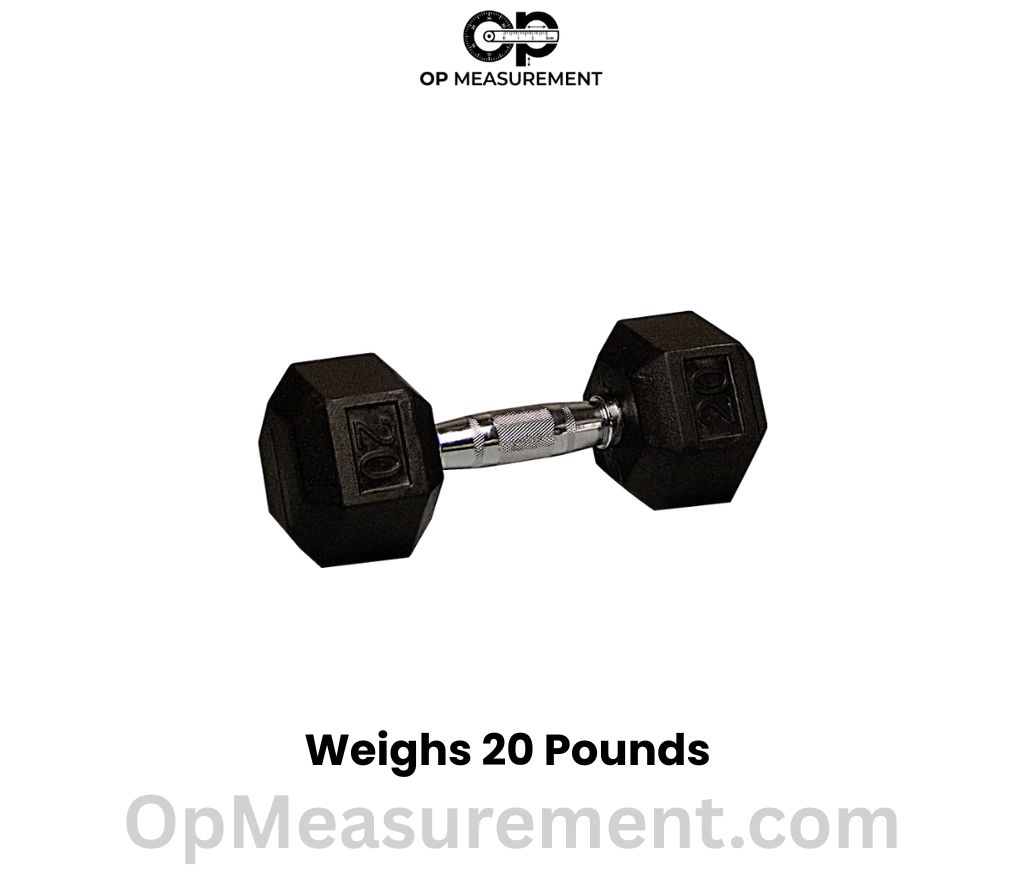
Every commercial gym has these. The rubber-coated or cast iron hex dumbbell at 20 pounds is a standard benchmark — considered intermediate for most upper-body movements.
Hold one at your side and it’s manageable. Extend the same dumbbell straight out in front of you at shoulder height and see how many seconds pass before your arm starts shaking. The weight doesn’t change. Your relationship to it does entirely. Gym veterans use this object as their mental reference for 20 pounds, and it’s a reliable one.
A Medicine Ball
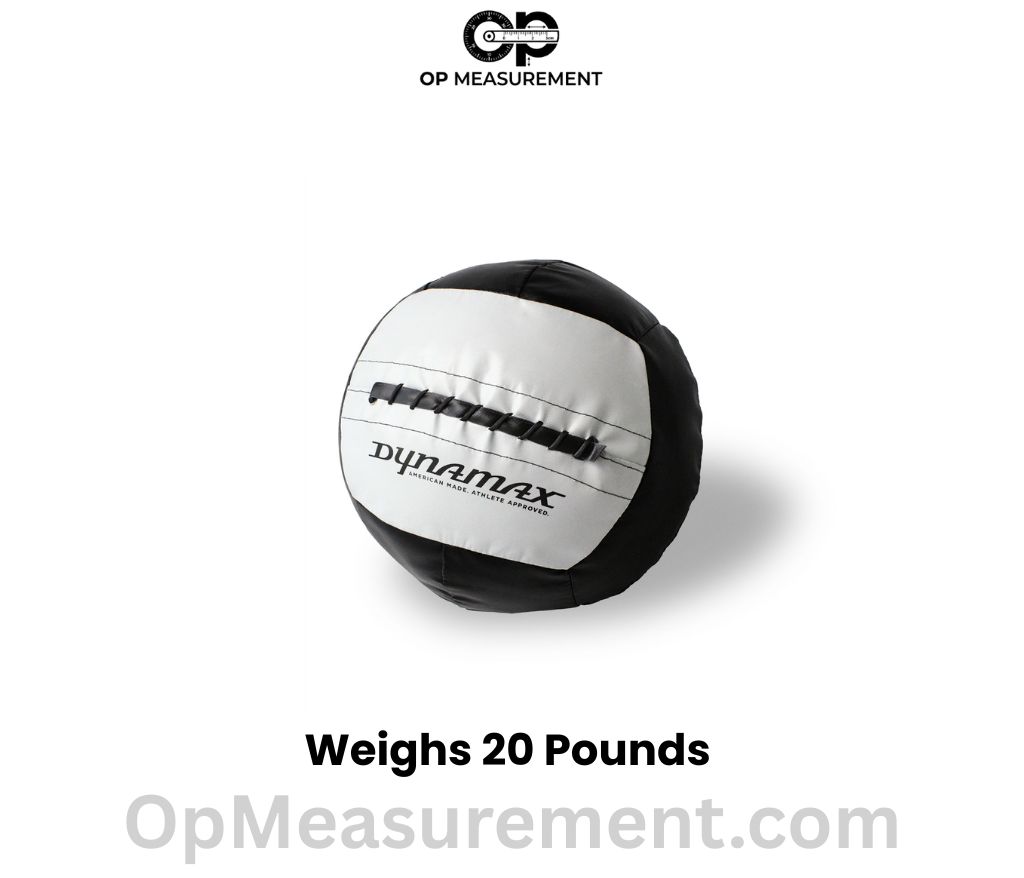
Twenty-pound medicine balls are one of the most common sizes in fitness facilities. Roughly basketball-sized but dramatically denser, they’re used for wall balls, core work, and rotational training.
They don’t bounce. Catch one thrown at your chest and you absorb the full impact — there’s no spring to soften it. That moment of catching a 20-pound medicine ball is one of the clearest ways to understand what this weight means in motion, not just at rest. Holding it is one thing. Moving with it is another.
Two 10-Pound Weight Plates
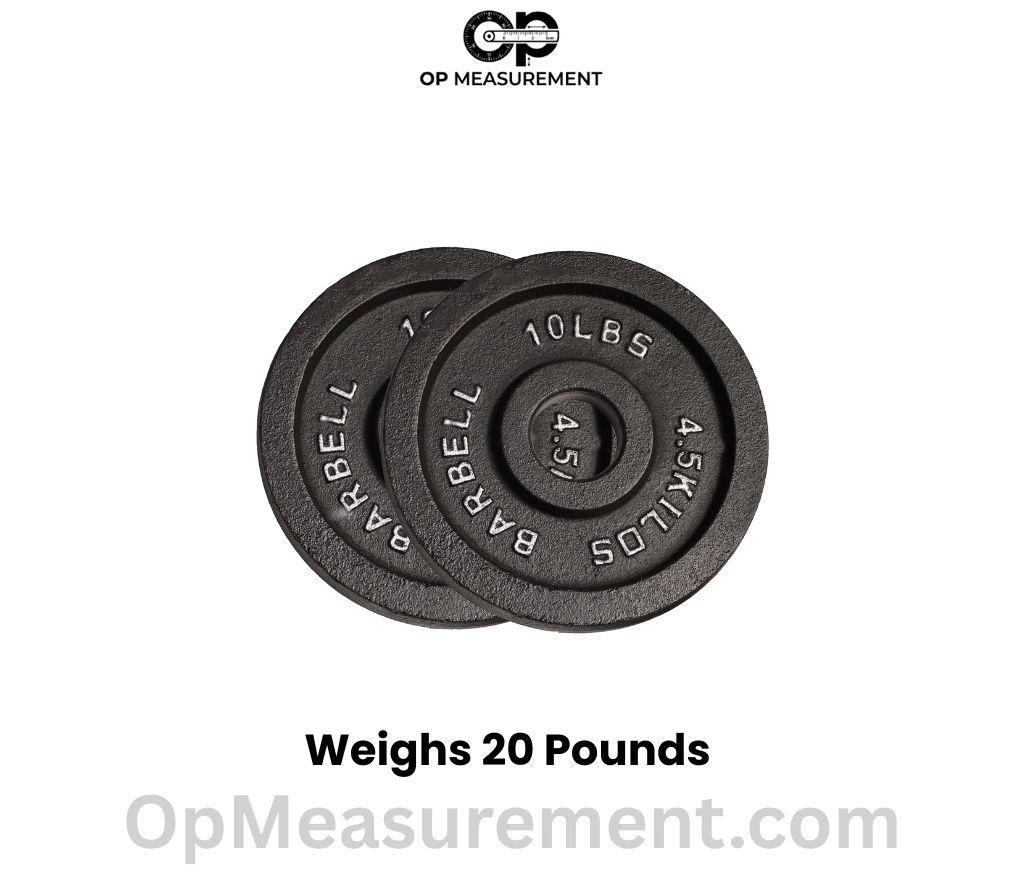
A single 10-pound iron plate feels easy. Stack two in one hand and the experience shifts. Same total weight as the dumbbell, but flat discs with no proper grip surface.
You end up pinching the edges between your fingers, which distributes the load badly. Your hands fatigue faster than your muscles. Anyone who’s carried plates across a gym floor to reload a barbell knows the specific, slightly annoying burn that comes from holding two flat iron circles. It’s a good reminder that how weight is shaped matters as much as how much it weighs.
A Loaded Tactical Rucksack
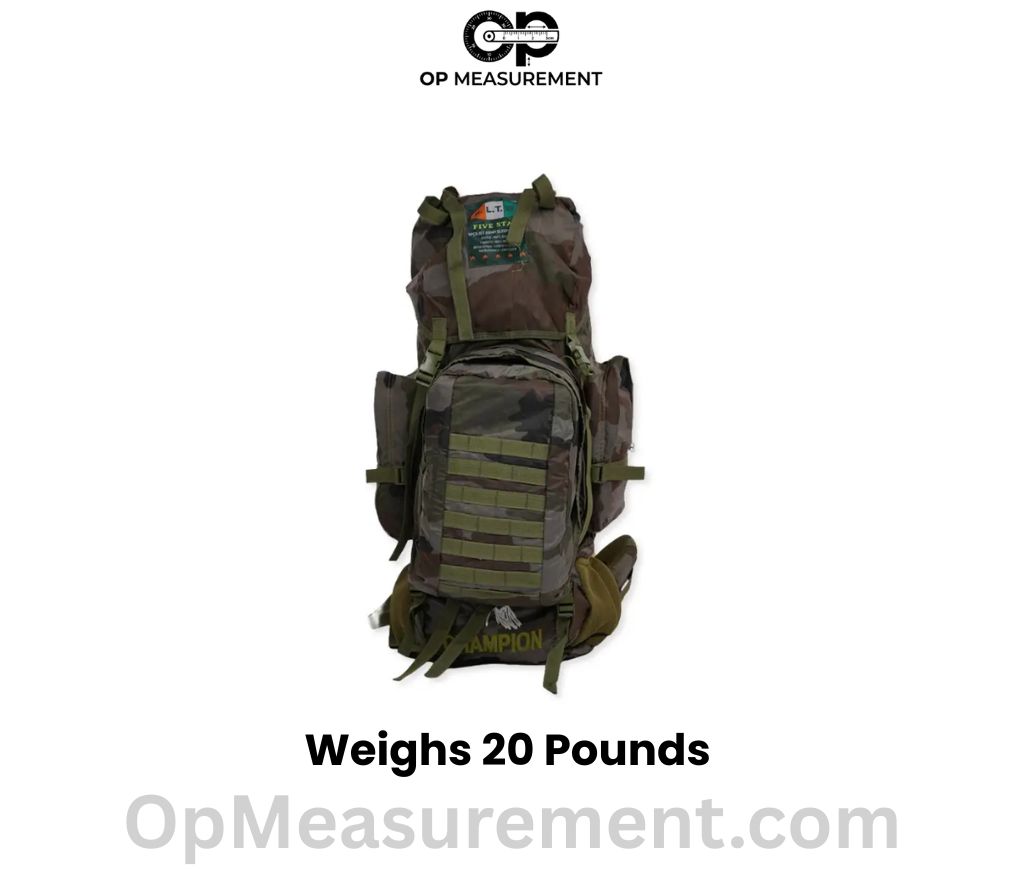
Twenty pounds is the standard entry weight for fitness rucking — walking or hiking with a weighted backpack as a strength and endurance workout. It’s the number most training programs start beginners with.
At this load, the weight sits on your shoulders and hips, changes your posture, and shortens your stride slightly within the first five minutes. It’s not comfortable, but it’s sustainable. A 20-pound ruck over three miles is hard work. Anyone who’s completed one understands this weight not as a number but as a physical memory.
How to Check 20 Pounds Without a Scale
Two US gallons of water weigh about 16.7 pounds, excluding the jugs. Reaching 20 pounds requires roughly another 3.3 pounds of water—about 1.5 liters. A small unspecified bottle will not necessarily make up the difference.
Stack two 10-pound rice bags. If you have standard 10-pound bags at home, holding one in each hand gives you the distributed version. Holding both in one arm gives you the concentrated version. Both are useful references.
The pet food bag test. Most households go through these regularly. The next time you bring a 20-pound bag in from the car, pay attention — that specific loaded feeling in your forearms is the reference point.
Common Mistakes People Make With 20 Pounds Weight
Judging it from a quick lift. Twenty pounds held for five seconds feels nothing like 20 pounds carried for five minutes. People consistently underestimate carry fatigue because their test lift is too short. Always factor in distance, not just the initial heft.
Ignoring how shape changes perception. A 20-pound wire spool, a 20-pound bag of kibble, and a 20-pound dumbbell are identical on a scale. In your hands, they feel completely different. Shape, grip surface, and weight distribution change the perceived difficulty significantly. Same number, different demands.
If you are a name lover and want to get different name ideas, then visit our Slang Slope guide.
Frequently Asked Questions
Is 20 pounds heavy for most people?
A twenty-pound item can be substantial. Whether a lift is manageable depends on the person, load shape, grip, posture, and frequency, so the weight alone does not establish that a lift is safe.
What is the easiest way to picture 20 pounds?
A large bag of pet food, a countertop microwave, or a medium-sized turkey are all good references. These common items help turn an abstract number into something familiar.
Why do some 20-pound objects feel heavier than others?
Weight stays the same, but shape changes the experience. A dumbbell with a handle feels easier to carry than a bulky box or a slippery watermelon that is harder to grip.
Can kids safely lift 20 pounds?
There is no blanket lifting weight suitable for every child. Do not use a twenty-pound lift as a strength test; choose an age-appropriate activity with responsible supervision.
How can I estimate 20 pounds at home without a scale?
Two US gallons of water weigh about 16.7 pounds, excluding containers. For a more dependable reference, combine two packages each labeled 10 lb net weight.
Compare this with What Weighs 25 Pounds? and What Weighs 5 Pounds?
Conversion reference: NIST unit definitions and conversion factors. Rounded values are for comparison; product dimensions and weights should be checked against the specific item.

Vera loves exploring the size and dimensions of everyday objects. She shares practical, visual guides to help readers understand measurements clearly. With a focus on accuracy and usefulness, Vera creates content that informs, engages, and supports learning for all.