Few products have been declared dead as often as vinyl records, and few have refused the verdict so completely. The black disc that dominated the twentieth century now anchors the physical music market again.
The comeback is not a rumour or a retro fad measured in months. Industry figures show well over a decade of continuous growth, driven by new buyers as much as by returning collectors.
This article traces the format’s rise, fall and revival, then looks at why people buy records again and what problems success has created for the industry behind them.
A Short History of the Vinyl Record
The modern LP arrived in 1948, when Columbia Records introduced the twelve-inch, 33⅓ rpm long-playing record. Its microgroove surface held far more music than the shellac 78s it replaced, around twenty minutes a side.
RCA answered in 1949 with the smaller seven-inch 45 rpm single, and the two formats settled into partnership: albums on LP, singles on 45. That pairing carried popular music for roughly three decades.
Reading the history of the LP record fills in the engineering story, from early recording experiments to the stereo pressings that became standard in the late 1950s.
The Fall: How CDs and Downloads Pushed Vinyl Aside
The compact disc launched commercially in 1982, promising durability, no surface noise and easy track skipping. Through the late 1980s, CD sales overtook vinyl, and record shops steadily shrank their LP sections.
The 1990s were harsher still. Major labels stopped accepting returns on vinyl, pressing plants closed, and the format survived mainly through DJs, independent labels and committed collectors who never stopped buying.
Downloads and then streaming finished the job for most listeners. By the mid-2000s, annual vinyl sales in the United States had fallen to under a million units, and the format looked finished commercially.
The Turning Point: The Mid-2000s Trough
The revival is usually dated from around 2006 and 2007, when sales stopped falling and began a slow climb. Independent record shops, which had kept vinyl alive, became the movement’s visible centre.
Record Store Day began in 2008 as a celebration of those shops, with exclusive pressings released each spring. The event gave the revival an annual focal point and guaranteed queues of buyers outside independent stores.
Growth stayed modest for years, but it never reversed. Each year sold slightly more records than the last, which quietly separated this recovery from the short-lived nostalgia spikes that other old formats experienced.
The Milestones That Proved It Was Real
Two comparisons with the CD settled the argument. In 2020, vinyl revenue in the United States passed CD revenue for the first time since the 1980s, helped by higher record prices.
Then, in 2022, Americans bought more vinyl records than CDs in unit terms, the first time that had happened since 1987. The figures come from the RIAA’s recorded music revenue statistics, which has tracked the format’s climb year by year.
Streaming still earns the large majority of recorded-music revenue, and nobody credible claims otherwise. Vinyl’s achievement is narrower and stranger: a physical format growing steadily inside a market built on instant access.
Why People Buy Vinyl Again
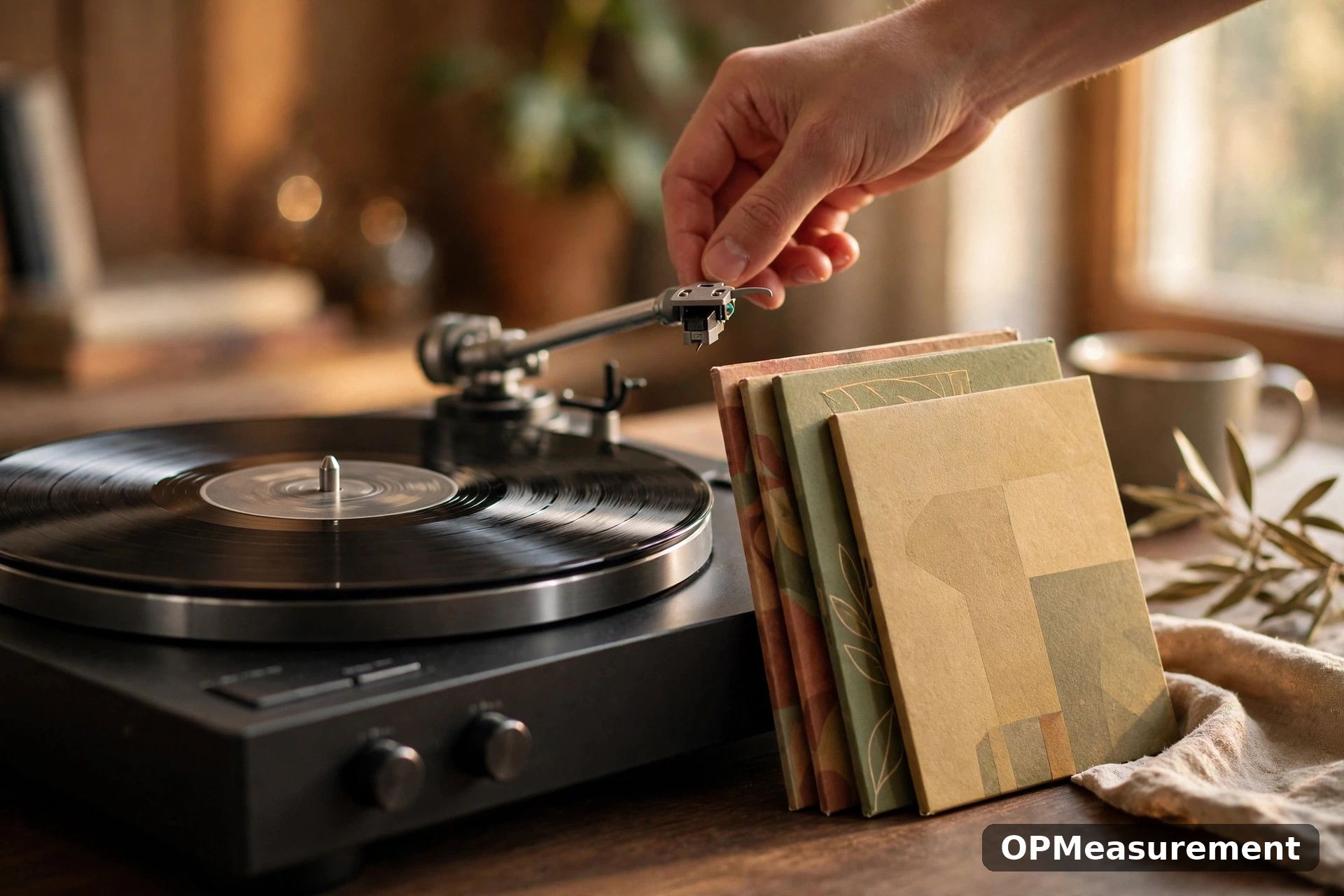
The ritual is the product. Choosing a record, sliding it from its sleeve, cleaning it and dropping the needle turns listening into an activity rather than a background stream, and many buyers describe exactly that as the appeal.
The artwork matters too. A twelve-inch sleeve is a poster, a lyric sheet and an object worth displaying, while a stream offers a thumbnail. Special editions, coloured pressings and detailed reissues give collectors something physical to hunt for.
Ownership completes the picture. A record cannot be removed from a catalogue when a licence changes, and buying one sends a larger share of money to artists and labels than a handful of streams does.
Record Store Day and the Independent Shops
Independent shops turned the revival into a community. Listening stations, second-hand bins and knowledgeable staff make browsing a social habit, and many younger buyers discovered record shopping as an afternoon out rather than a transaction.
The annual event now runs in many countries, with limited pressings that often sell out on the day. Checking Record Store Day’s official event guide before the spring date is the reliable way to find participating shops near you.
Shops also anchor the second-hand market, grading and pricing used records. That trade in older pressings keeps back catalogues circulating and introduces new collectors to music far outside current charts.
New Listeners, Not Just Nostalgia
The easy explanation is nostalgia, but the demographics argue otherwise. Many of today’s keenest buyers are too young to have grown up with records, and some purchase albums by artists who record entirely in the streaming era.
For these listeners, vinyl is not a return to anything. It is a deliberate upgrade for favourite albums: the copy you keep, display and play in full, while streaming handles discovery and everyday listening.
Artists have responded in kind. Major releases now routinely appear on vinyl at launch, sometimes in several variants, and big pop albums can sell hundreds of thousands of copies on the format in their first year.
The Problems Success Created
Demand outgrew the factories. Much of the world’s pressing capacity had closed during the lean decades, and the surviving plants suddenly faced order books stretching many months ahead, delaying releases across the industry.
New plants and presses have since opened, but the bottleneck shaped the revival’s economics. Records cost considerably more than they once did, and small labels still compete with major reissue programmes for production slots.
Quality control is the other complaint. Rushed production and ageing equipment can produce warped or noisy pressings, and experienced collectors advise buying from labels and shops with good returns policies.
Vinyl Alongside Streaming, Not Against It
The two formats have settled into different jobs. Streaming is for discovery, portability and enormous choice; vinyl is for commitment, ceremony and the albums that survive both filters.
Most record buyers also stream, and many discover music digitally before buying the physical copy. Rather than enemies, the formats behave like a funnel and a trophy cabinet working together.
That coexistence is why the revival has lasted. It does not depend on rejecting modern listening habits, only on adding something those habits cannot provide: a permanent, physical connection to favourite music.
Frequently Asked Questions
When did vinyl start coming back?
Sales bottomed out in the mid-2000s and began climbing again around 2006 and 2007. Record Store Day, launched in 2008, gave the recovery an annual showcase, and growth has continued, with interruptions only in pace, ever since.
Does vinyl outsell CDs now?
In the United States, yes. Vinyl revenue passed CD revenue in 2020, and vinyl unit sales passed CD unit sales in 2022, according to the RIAA. CDs remain common in some other markets, notably Japan.
Does vinyl really sound better than streaming?
It sounds different rather than simply better. A well-mastered record on a good turntable can sound warm and detailed, but results depend on the pressing, the mastering and your equipment. Many buyers value the ritual as much as the sound.
Is the vinyl revival going to last?
The growth run now stretches across well over a decade, through several changes in listening habits, which suggests durability. Pressing capacity, prices and quality control remain the main risks to watch rather than listener interest itself.
Conclusion
The vinyl records comeback rests on something streaming cannot copy: ownership, artwork and ritual. From the 1948 LP to the 2022 sales milestone, the format survived by meaning more than the music it carries, and that meaning shows no sign of fading.