6 millimeters equals 0.6 centimeters and approximately 0.2362 inches. Compare the specific dimension named below—diameter, width, length, or thickness. Natural objects and product sizes vary; check a ruler, caliper, or manufacturer specification before treating an example as exact.
Six millimeters sits in an interesting middle ground. It is small enough that most people would not notice it at a glance, yet large enough to feel deliberate when you hold something that size between your fingers. To give you an instant reference point, 6mm is just under a quarter of an inch — specifically 0.236 inches. On a standard ruler, it lands between the 5mm and 10mm marks, closer to the halfway point than most people expect.
The objects collected here were chosen because their 6mm dimension is either standardized, widely documented, or consistently manufactured to that size. Where natural variation exists, it is noted honestly. Each entry identifies the specific part of the object being measured, so you are always comparing the right dimension.
Quick Reference: 14 Things That Are 6mm
| Object | 6mm Dimension | Type |
| Standard Drinking Straw | Inner diameter | Nominal/Standardized |
| Hexagonal Pencil (Flat-to-Flat) | Width across flats | Standardized |
| Pencil Eraser (Top Cap) | Diameter | Approximate |
| Stack of Three US Nickels | Combined thickness | Exact |
| Push Pin Head (Base Rim) | Diameter | Approximate |
| Quarter-Inch Audio Jack Barrel | Outer barrel diameter | Standardized |
| Small Pearl Bead | Diameter | Standardized (craft sizing) |
| Heavy-Duty BBQ Wooden Skewer | Diameter | Nominal |
| Mini Marble | Diameter | Approximate |
| Green Pea | Diameter | Natural/Variable |
| Tellicherry Black Peppercorn | Diameter | Natural/Variable |
| 6mm Hex Key (Allen Wrench) | Wrench size across flats | Standardized |
| M6 Threaded Bolt Shank | Nominal shank diameter | ISO Standardized |
| 6mm Masonry Drill Bit | Cutting diameter | Standardized |
1. Stack of Three US Nickels

A single US nickel is 1.95mm thick, which means stacking three of them together gives you 5.85mm — close enough to 6mm that this is one of the most reliable pocket references you will find. The nickel’s thickness is set by the US Mint and does not vary between coins of the same series, making this a consistent comparison.
If you need to quickly check whether a gap, slot, or opening is around 6mm, three nickels slid in together will tell you immediately. This works especially well for checking tile grout spacing, furniture gaps, or mechanical clearances when a ruler is not nearby.
2. M6 Threaded Bolt Shank

The M6 bolt is one of the most common fasteners in the world. The “6” in M6 refers directly to the nominal shank diameter of 6mm, as defined under the ISO metric thread standard. The actual measured diameter sits slightly under 6mm due to thread geometry, but the nominal designation is 6mm.
You will find M6 bolts in bicycle components, flat-pack furniture, automotive panels, and consumer electronics enclosures. If you have ever assembled an IKEA shelf or adjusted a derailleur, there is a good chance you handled an M6 fastener without thinking about the number.
3. 6mm Masonry Drill Bit
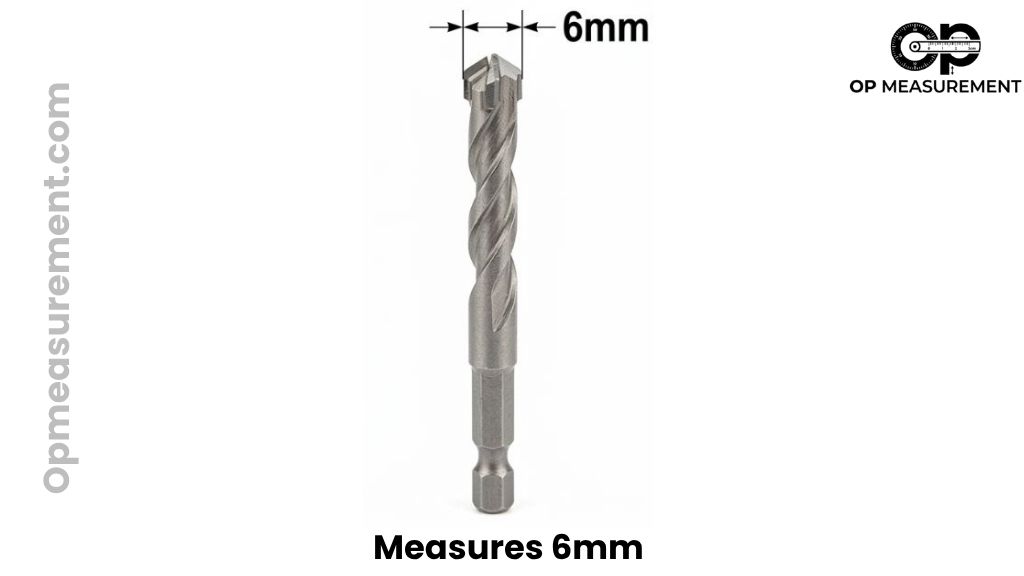
A 6mm masonry drill bit cuts a hole with a nominal diameter of 6mm through brick, concrete, or stone. This is one of the most common sizes sold in hardware stores because it pairs directly with standard wall plugs and M6 anchor bolts used for everyday wall-mounting tasks.
The shank diameter matches the cutting diameter on most standard bits, so the full tool gives you a consistent 6mm reference from tip to grip. Holding one next to a ruler confirms the size quickly and accurately, and it is a tool most households already own.
4. 6mm Hex Key (Allen Wrench)
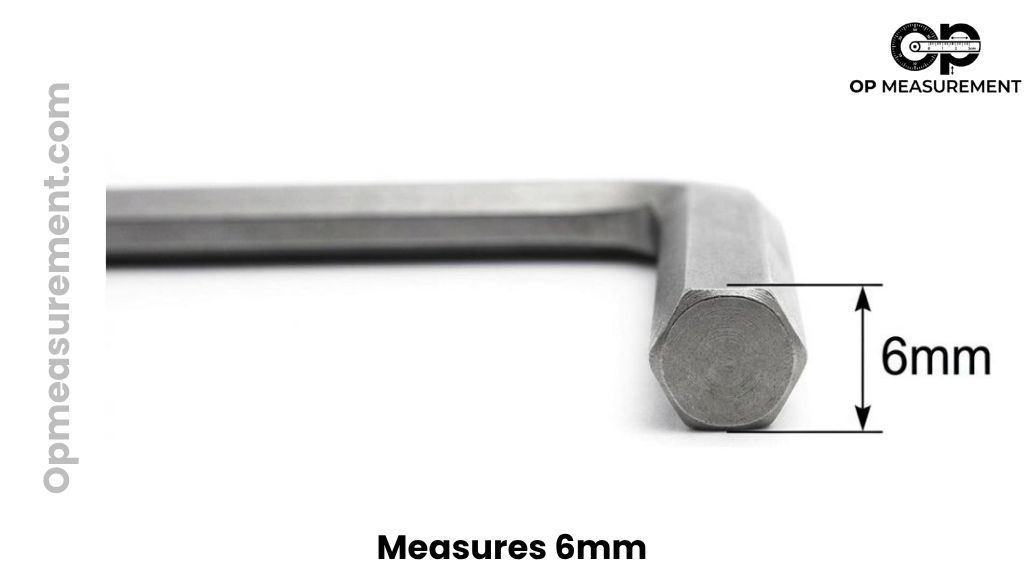
A 6mm hex key is measured across the flat faces of its hexagonal cross-section, not from corner to corner. This is the standard designation used by DIN 911 and ISO 2936, which govern hex key dimensions internationally. At 6mm across the flats, this wrench drives M10 socket head cap screws, making it a go-to tool in mechanical workshops.
The short arm of a standard 6mm L-shaped hex key gives you a very direct way to feel what 6mm means in cross-section. It feels substantial between the fingers but is still clearly a small tool — neither tiny nor bulky.
5. Standard Drinking Straw

The inner diameter of a standard disposable drinking straw is typically around 6mm. This is the opening through which liquid flows, and it has become a near-universal dimension for regular-sized straws used in restaurants, cafes, and packaged drinks. Wider smoothie straws and narrower cocktail straws exist, but the everyday straw settles consistently at this measurement.
The outer diameter is slightly larger due to wall thickness, but the inner channel is what most people unconsciously experience every day. If you look directly down into a straw, that circular opening you see is approximately 6mm across.
Read also: How Big Is 2mm?
6. Standard Hexagonal Pencil (Flat-to-Flat)

A standard hexagonal pencil body measures approximately 6mm from one flat face to the opposite flat face. This flat-to-flat measurement is the relevant one for hexagonal objects, as opposed to the corner-to-corner measurement which runs slightly larger. The 6mm flat-to-flat dimension is consistent across most wooden pencils manufactured to standard sizing.
This makes the pencil body surprisingly useful as a casual 6mm reference. Lay a pencil flat on a surface and look at one of its six faces — that face width is your 6mm. It is also why pencil sharpeners and grip holes are sized as they are.
7. Pencil Eraser (Top of a Standard Pencil)

The small pink eraser crimped onto the top of a standard wooden pencil has a diameter of roughly 6mm. It is held in place by a thin aluminum ferrule, and both the eraser and the ferrule share approximately the same outer diameter as the pencil shaft itself.
This eraser is one of those objects that most people have pressed down with a fingertip hundreds of times without ever considering its size. Looking at it from above gives you a clear circular 6mm reference — small enough to feel precise, large enough to see clearly without magnification.
8. Small Pearl Bead

In the jewelry and craft industry, beads are sold by diameter in millimeters, and 6mm is considered a small-to-medium pearl bead size. A 6mm round pearl bead sits comfortably between a “seed pearl” look and a more visible, classic bead. Many commercial pearl bracelets use beads in the 6mm to 8mm range as their standard sizing.
Unlike natural pearls, which vary in size, cultured and artificial pearl beads manufactured to 6mm are drilled and sorted to that specification. If you have purchased a basic pearl strand necklace from a craft supplier, it was likely described and sold using this millimeter measurement.
9. Quarter-Inch Audio Jack Plug Barrel

The quarter-inch audio jack, formally known as the 6.35mm TRS connector, has an outer barrel diameter of approximately 6mm on the plug body itself, separate from the tip. The 6.35mm specification refers to the tip diameter, but the cylindrical barrel section that slides into the socket housing measures close to 6mm in outer diameter.
This connector is the large audio plug used on electric guitars, headphones, and professional audio equipment. The physical feel of the barrel in your hand gives a clear sense of 6mm as a diameter you can grip with two fingers but not wrap your fingers around.
10. Heavy-Duty BBQ Wooden Skewer

Standard thin bamboo skewers typically measure around 3mm to 4mm in diameter. Heavy-duty wooden or bamboo BBQ skewers, however, are manufactured closer to 6mm in diameter to handle larger cuts of meat and vegetables on a grill without splitting or burning through quickly.
The 6mm diameter gives these skewers enough rigidity to pierce dense food and hold weight without bending. If you find skewers labeled “heavy duty” or “thick” at a kitchen supply store, the 6mm diameter is the dimension that separates them from the lighter versions on the shelf beside them.
Read also: How Big Is 7mm?
11. Green Pea
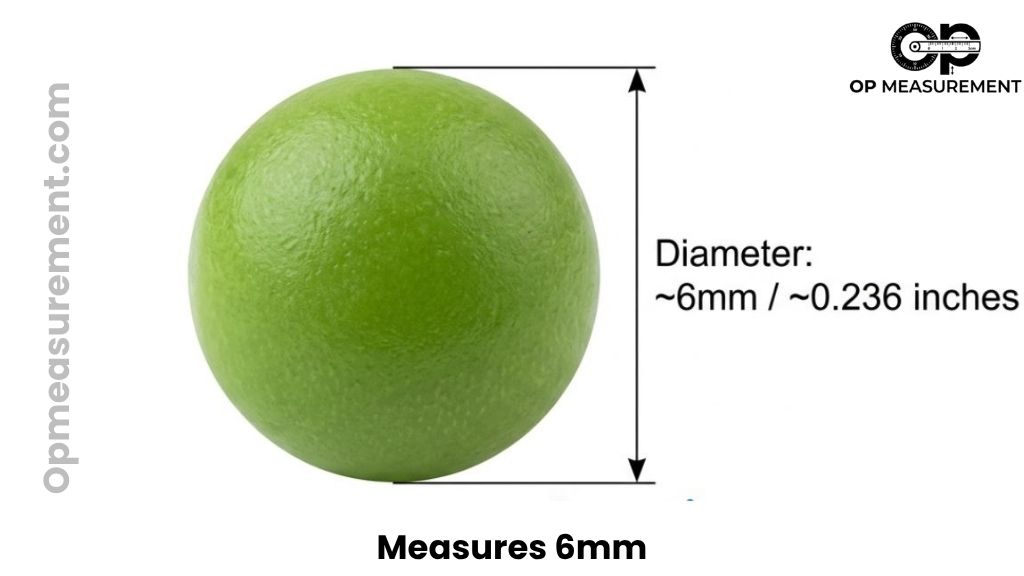
A fully mature garden pea has a diameter that typically falls between 6mm and 9mm depending on the variety and growing conditions. The smaller end of that range, around 6mm, represents a younger pea that has reached close to full size but has not yet expanded to its maximum diameter.
Because peas are natural and variable, this is an approximate comparison rather than a fixed measurement. That said, a pea near the smaller end of its maturity range gives you an organic, easy-to-visualize 6mm reference. Most people can picture this immediately, which is why it works as a practical size anchor.
12. Mature Tellicherry Black Peppercorn

Tellicherry peppercorns are a premium grade of black pepper grown on the Malabar Coast of India and are specifically defined by their larger size. They are left on the vine longer than standard peppercorns, which allows them to develop to 4mm-6mm in diameter. A fully mature Tellicherry peppercorn at the top of its size range touches 6mm.
Standard black peppercorns average around 3mm to 4mm, so the Tellicherry comparison is meaningful — it is noticeably larger when you hold both types side by side. The size difference is part of why Tellicherry peppercorns are sold as a distinct, higher-grade product rather than just ordinary pepper.
13. Standard Push Pin Head (Base Rim)
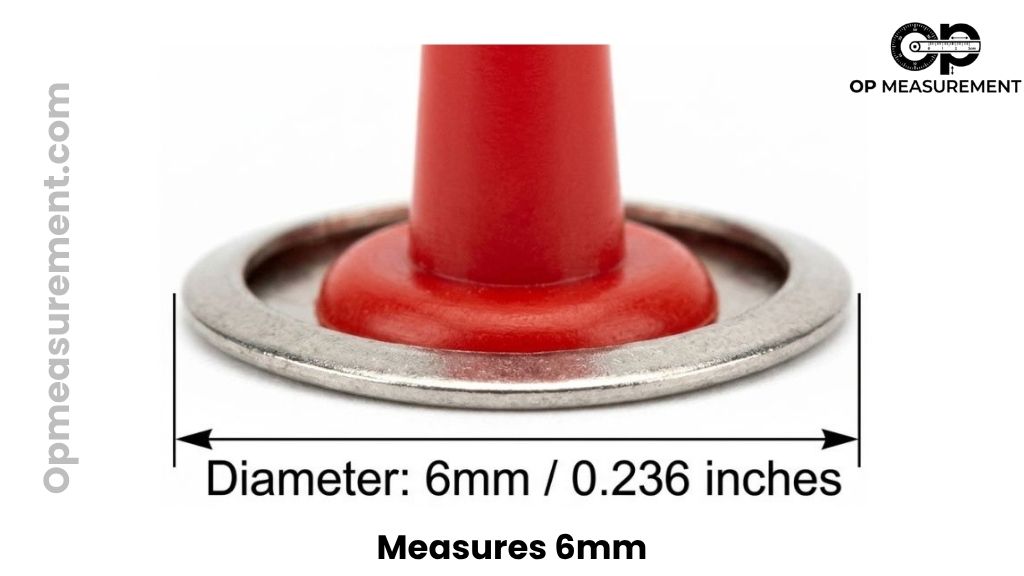
The head of a standard office push pin varies depending on the manufacturer, but many common push pins have a head base diameter measuring approximately 6mm at the rim where the plastic cap meets the pin shaft. The broader dome of the head is larger, but the base of the head — where it contacts the surface — is the 6mm dimension.
This is a useful comparison because push pins are ubiquitous in offices and homes. The firm plastic head has enough surface area to push with a thumb but is still clearly a small object. The 6mm base rim is the part doing the structural work of holding the pin in place once pressed into a board.
14. Mini Marble

Mini marbles, sometimes called “peewees” in traditional marble terminology, have a diameter of approximately 6mm. Standard marbles typically measure around 16mm, so a mini marble is dramatically smaller — less than half the size of the common glass shooter marble many people grew up playing with.
At 6mm, a mini marble is small enough that it can be easily lost on most floor surfaces and would not roll visibly unless you were looking directly at it. Some decorative glass bead products and aquarium gravels use a similar 6mm spherical size, which is why mini marbles and large glass beads are often confused when sold alongside each other.
For another size reference, see How Big Is 5mm?
Conversion reference: NIST unit definitions and conversion factors. Rounded values are for comparison; product dimensions and weights should be checked against the specific item.

Vera loves exploring the size and dimensions of everyday objects. She shares practical, visual guides to help readers understand measurements clearly. With a focus on accuracy and usefulness, Vera creates content that informs, engages, and supports learning for all.