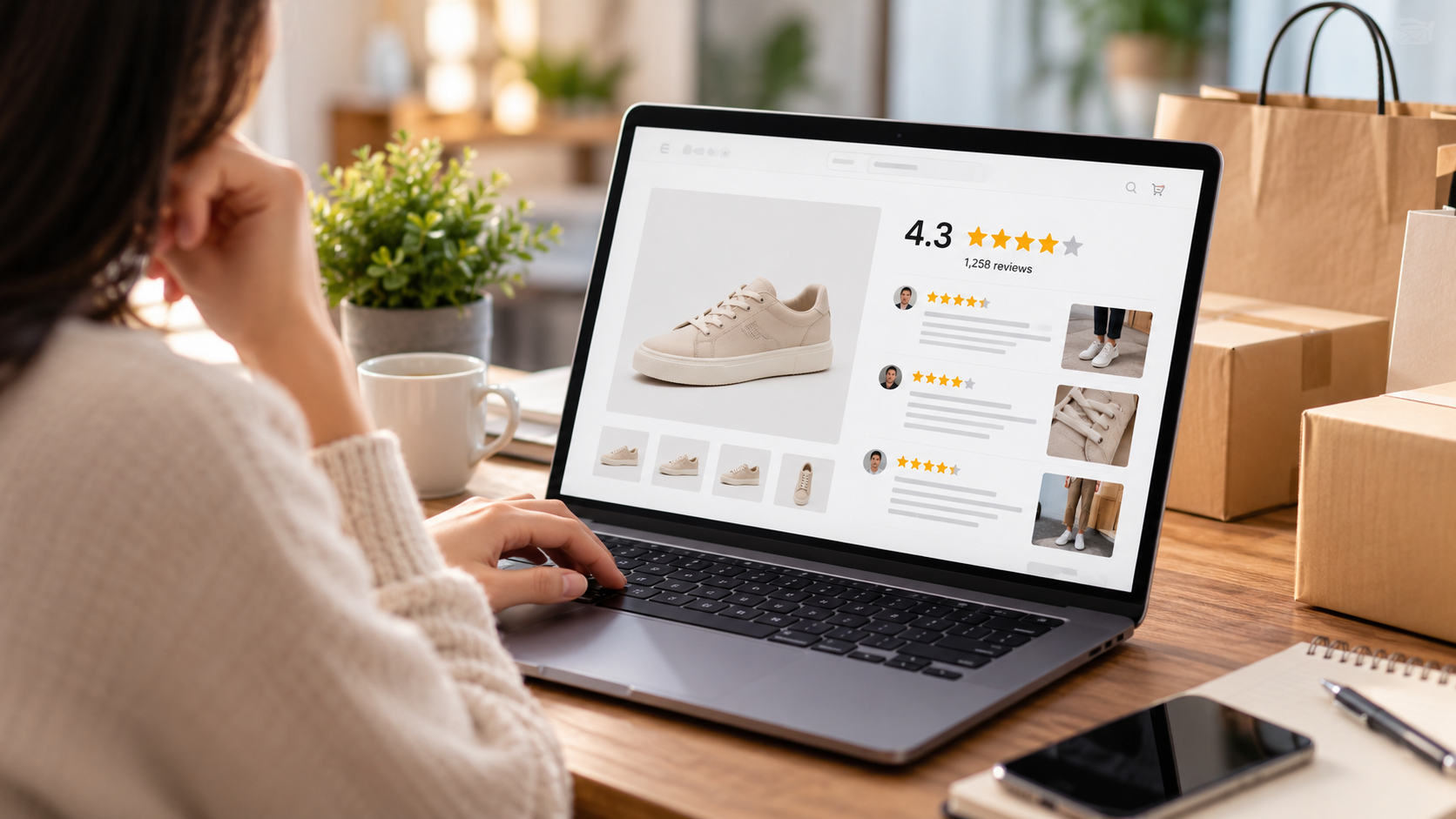
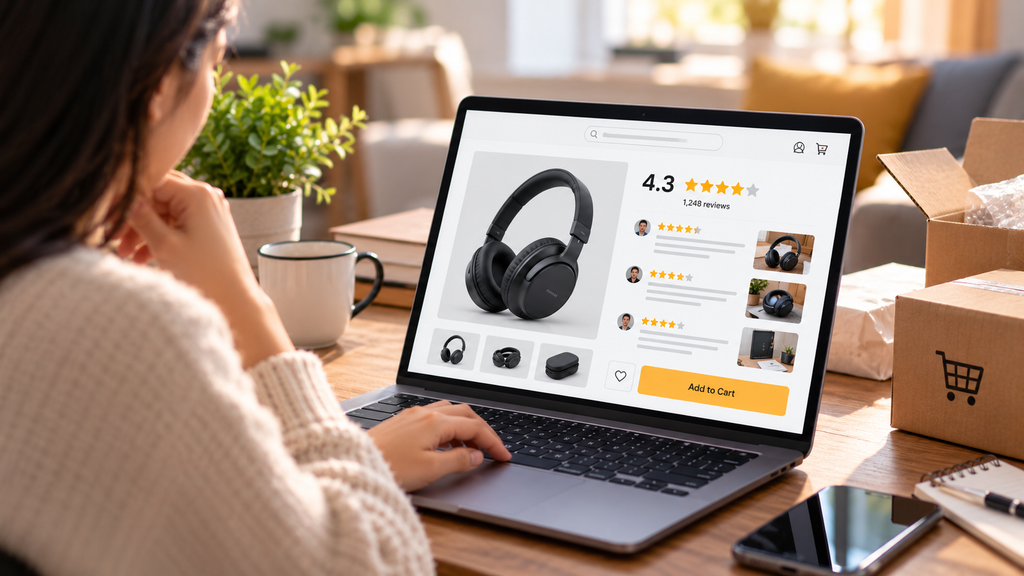
You can’t stuff a pair of shoes into a screen. You can’t feel the zipper or the fabric, or tell whether that “walnut” dining table is actual walnut or just premium outlet clothing marked as such. Reviews are a shopper’s equivalent of touching before buying, making it surprising how often people read them wrong. Scan the star average, three of them, then buy. A return is a chore no one wants, to say the least. Most shopping disasters begin with an attractive image and an appealing rating.
A Practical Framework for Evaluating Product Reviews
Source AI
1. Look Beyond the Star Average
It may look great until you compare the numbers. Six hundred five-star reviews, two hundred one-star reviews, and very few in the middle. The usual explanation is either some customers are ecstatic about buying something in some way unique, and others are not so happy, or there are some artificial reviews bumping the average up. It doesn’t say either, and neither does a random glance at the five-star reviews before the one-star ones. What the complaints are about says what goes wrong, what runs small, and what the photos of the product conveniently fail to show. People who love the product are effusive. People who don’t love the product are specific.
2. Prioritize the Newest Reviews
Products change, as do sellers. That backpack could have been made of lovely leather two years ago, but was switched to something cheaper when the supplier changed on the same listing with the same photos. Retailers do this often enough. A review from three years ago may describe a product that no longer exists. Sort by newest and look at the last month or two, not by years. Especially before big holidays, when stores put out fresh stock, newer reviews talk about what went into the box recently.
3. Find the Details in Three-Star Reviews
Unexpectedly, the middle ratings contain the most honest information from other customers. A three-star review is likely to be written by someone who bought the item, used it, and saw some problems without an interest in praising or condemning the product. They might be saying something like “great fabric, but the sleeves ran long, and the pocket seam frayed within a month.” The five-star review says, “I love it!!!” and the one-star review complains about the courier service, while the middle review says precisely what they mean. What the product actually is.
4. Use Customer Photos to Verify the Product
Reviews by text can be bought. Photos can be bought, but less often. If buyers took photos, look over those first. Real lighting, size, and color that have been washed twice. The studio shot makes a sweater look thick, but a photo of a stranger on an average-sized person is more informative. Check the size references as well; a mug beside a computer can say more than any measuring tape. A place where a site displays a verified purchase tag is helpful, if not perfect (many fake verified reviews exist), but it removes the most lazy fakes.
5. Recognize the Warning Signs of Fake Reviews
There are telltales for fake reviews. Sentiment without specifics. Strange language that appears across many reviews: the same odd phrasing, so to speak, “exceeded my expectations” a dozen times, across a dozen products. Reviewers with no history but five-star reviews flooding the system within a week. Sudden spikes of positive reviews, after a stretch of none, which is often the tail end of a paid campaign. Profiles reviewing completely different products, raving about the same thing: dog food, a cell phone charger, and a tuxedo, all with suspiciously similar language. Trust the bland, the boring, the slightly complaining review, which is almost always genuine.
6. Match Reviews to Your Own Needs
As with everything else, a tent can be “spacious” for a solo hiker, and small for a family of four. The best-made coat on the site has one-star bad reviews because the customer ordered two sizes too small. Skip ahead to the reviews that mention the kind of conditions that you’re ordering in, the same height, the same usage as much as possible. The more you look, the more you can find. Most retail sites allow searching the reviews, so type “fit” or “size” or how you’re going to use it, and you’ll find ten reviews that match, rather than two hundred that don’t.
7. Compare Reviews Across Multiple Sources
Not that it hurts to look somewhere else, either. The website that sells the thing can decide what reviews to highlight, and which to hide. Video reviews are harder to fake, with hands opening the box. Other websites have roundups of reviews as well; some are independent, some are smaller forums where no one is buying anything. If hundreds of people, and one particular reviewer, all mention the same problem, that problem is real no matter what anyone else says.
End Point
Reviews are not scripture. They are statistics, half sales pitch and half genuine sentiment, that get skimmed and misread all the time, resulting in people buying the same junk everyone else does. Skim them the long way, with newer reviews first, middle ratings, photos, and relevance to yourself, and most of the junk reviews filter themselves out. Less returns, for one, and less money spent on things that look good on paper. That’s the whole point, really: to be able to read like the critics that you want to trust.
For a smarter shopping experience, explore online fashion shopping to compare products, discover trusted brands and find great deals across multiple retailers.