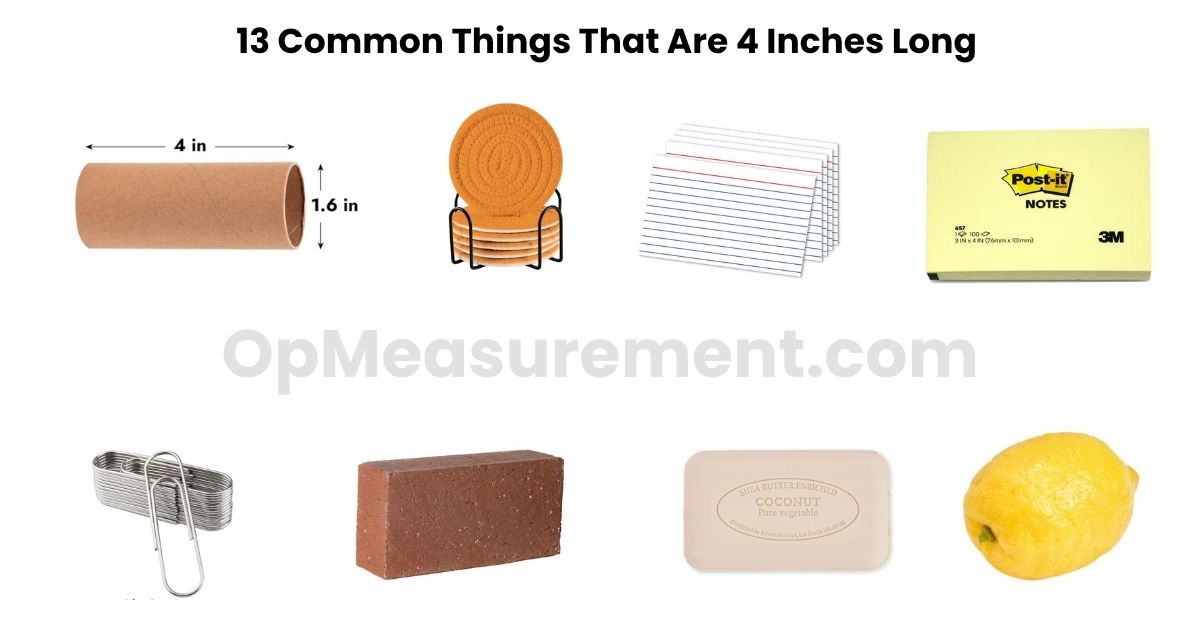
4 inches equals exactly 10.16 centimeters. Compare the dimension described below, rather than assuming every object has a standard size. Screen sizes refer to the diagonal, not width or height. A ruler or tape measure gives a more reliable result than hand or body estimates.
Trying to picture how long 4 inches is can be tricky without a ruler. The good news is that many everyday items are very close to this length, making it easy to estimate size wherever you are. In this guide, you’ll find simple, familiar examples that help you quickly understand and visualize 4 inches in real life, from household objects to items you use every day.
4 Inches Measurements at a Glance
| Unit | Value | Feel |
| Inches | 4 in | Base unit |
| Centimeters | 10.16 cm | Slightly over 10 cm |
| Millimeters | 101.6 mm | Just over 100 mm |
| Feet | 0.333 ft | One-third of a ruler |
| Meters | 0.1016 m | About a tenth of a meter |
13 Daily-Use Things That Are 4 Inches
| Object | Category | Dimension |
| Large Post-it Note | Office Supply | 4 in × 4 in |
| Four Paperclips (End to End) | Office Supply | 4 in Long |
| Pocket Highlighter | Stationery | 4 in Long |
| Medium Index Card (Short Side) | Paper Product | 4 in Wide |
| Toilet Paper Roll Tube | Household Item | 4 in Long |
| Drink Coaster | Household Item | 4 in Diameter/Width |
| New Bar of Soap | Personal Care | 4 in Long |
| Small Coffee Mug | Kitchenware | 4 in Tall |
| Junior Popsicle Stick | Craft Supply | 4 in Long |
| Heavy-Duty Nail Clipper | Grooming Tool | 4 in Long |
| Average Adult Palm Width | Body Measurement | 4 in Wide |
| Large Lemon | Food | 4 in Long |
| Half of a Standard Brick | Building Material | 4 in Long |
1. Large Post-it Note
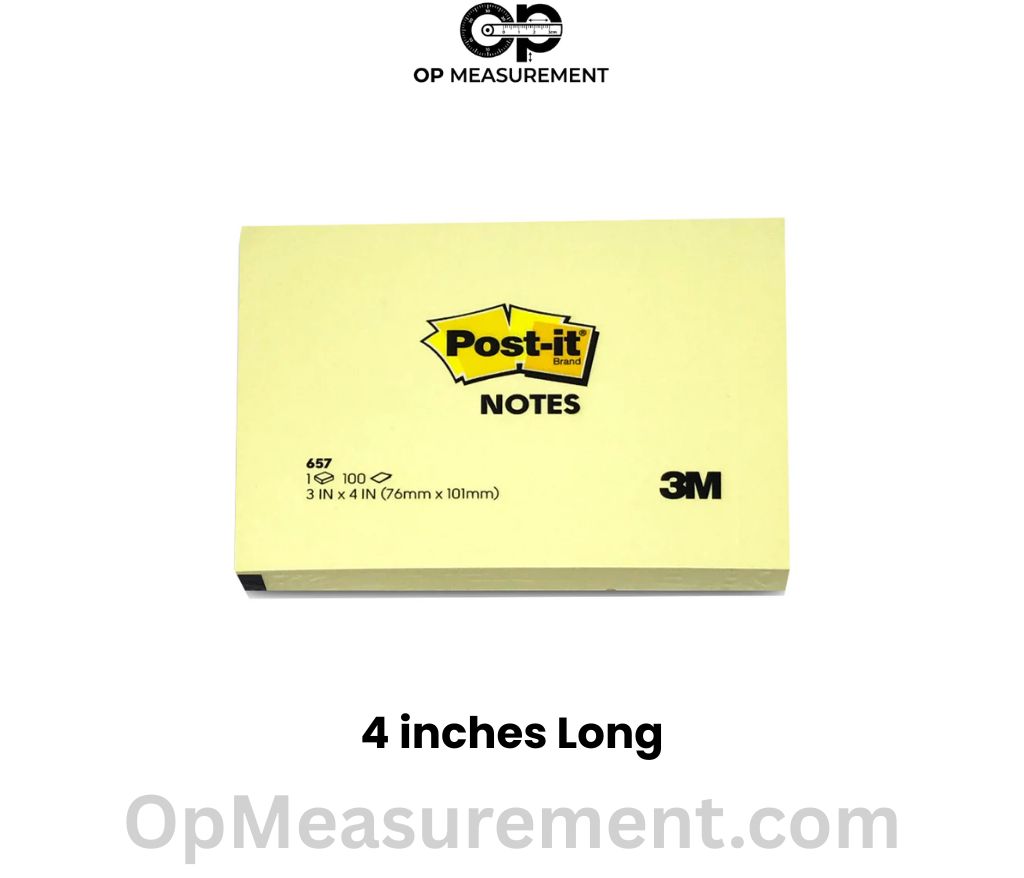
The big square sticky notes — the ones people cover whiteboards and monitors with — are made to exactly 4 inches on every side. Not approximately. 3M manufactures them to that dimension as a set standard.
Hold one flat in your open palm. Both directions — left to right, top to bottom — are the same 4-inch span. It makes this one of the cleanest physical references for this size because you can confirm both width and height at once.
If you’re at a desk right now, one is probably within reach. Grab it. That square in your hand is your answer.
2. Four Paperclips End to End
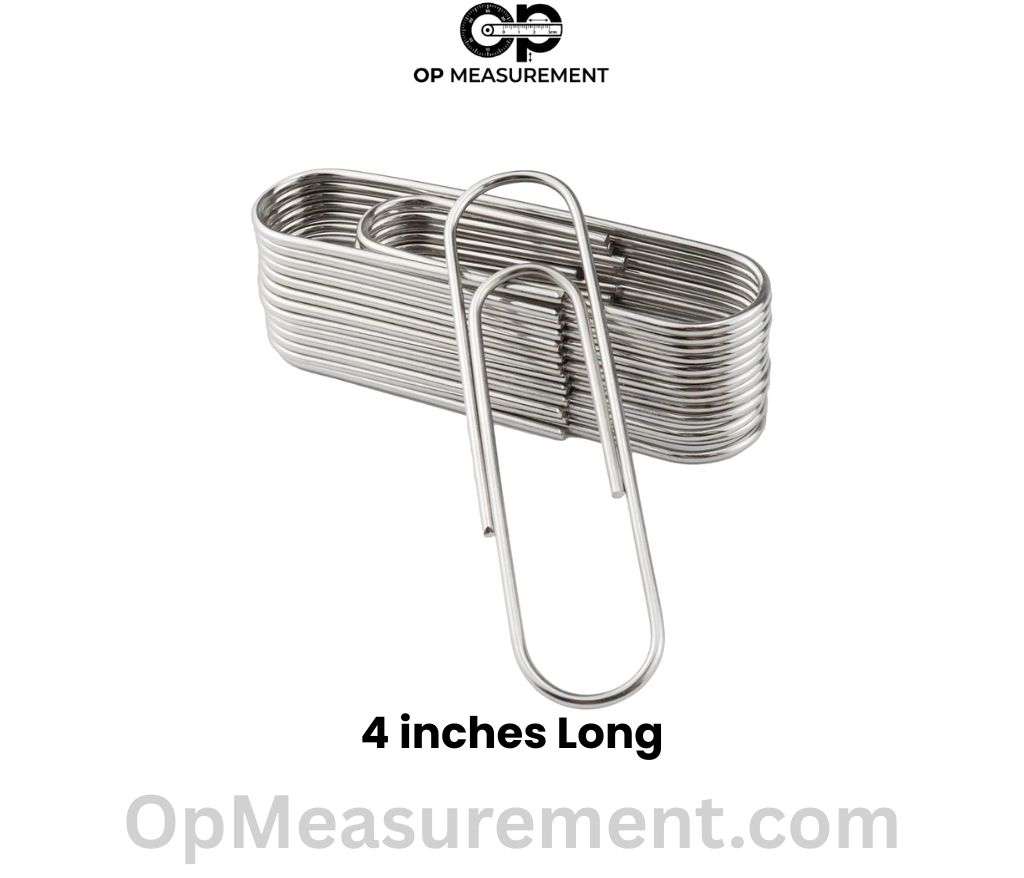
Paperclips come in different lengths. Four clips span four inches only if each measures one inch and they touch end to end without gaps.
Measure one clip before using a line of clips as a reference. For an exact four-inch span, use a ruler or the short edge of a labeled 4×6-inch index card.
3. Pocket Highlighter (Cap On)
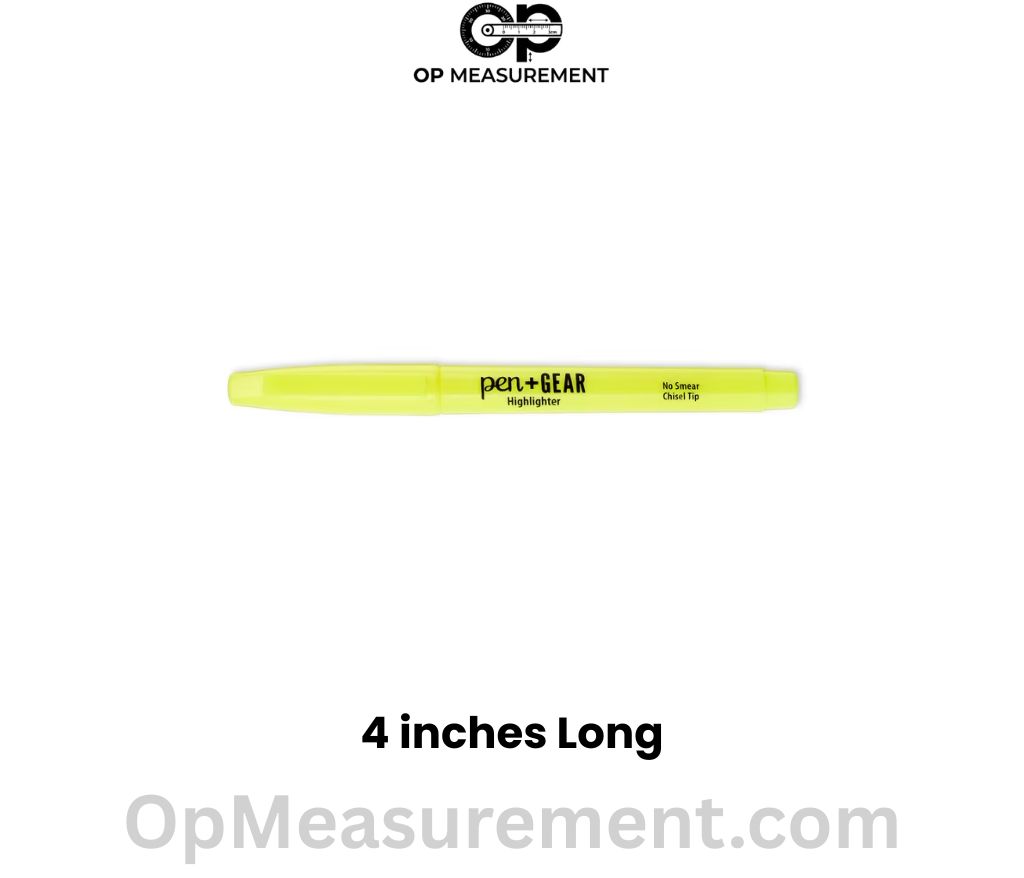
The short, fat highlighters built for carrying in a pocket or pencil case — Sharpie Pocket style — measure exactly 4 inches from the bottom of the barrel to the top of the cap. Not the long desk version. The mini one.
Hold it between two fingers. It balances easily. Doesn’t feel flimsy, doesn’t feel bulky. That specific length is what makes it pocketable without being too short to grip properly. The 4-inch dimension here isn’t arbitrary — it’s functional.
4. Short Side of a Medium Index Card
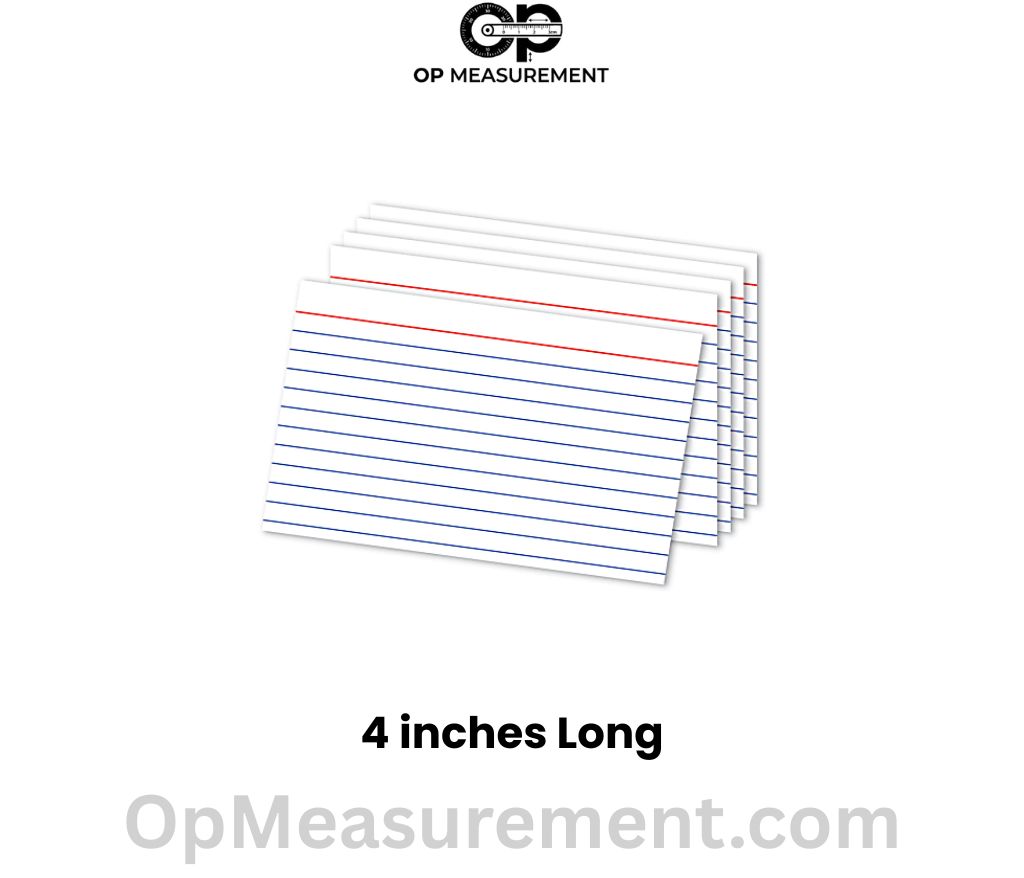
Standard small index cards are 3×5 inches. The medium size — one step up — is 4×6 inches. The short side of that medium card is exactly 4 inches.
Flip a medium index card so the short side runs left to right. That width is 4 inches of stiff card stock. Because the card is rigid and flat, it’s easy to lay against other objects for comparison. Students who use index cards for studying rarely realize they’re carrying a precise measuring reference every day.
Read also: How Long Is 9 Inches?
5. Toilet Paper Roll Tube
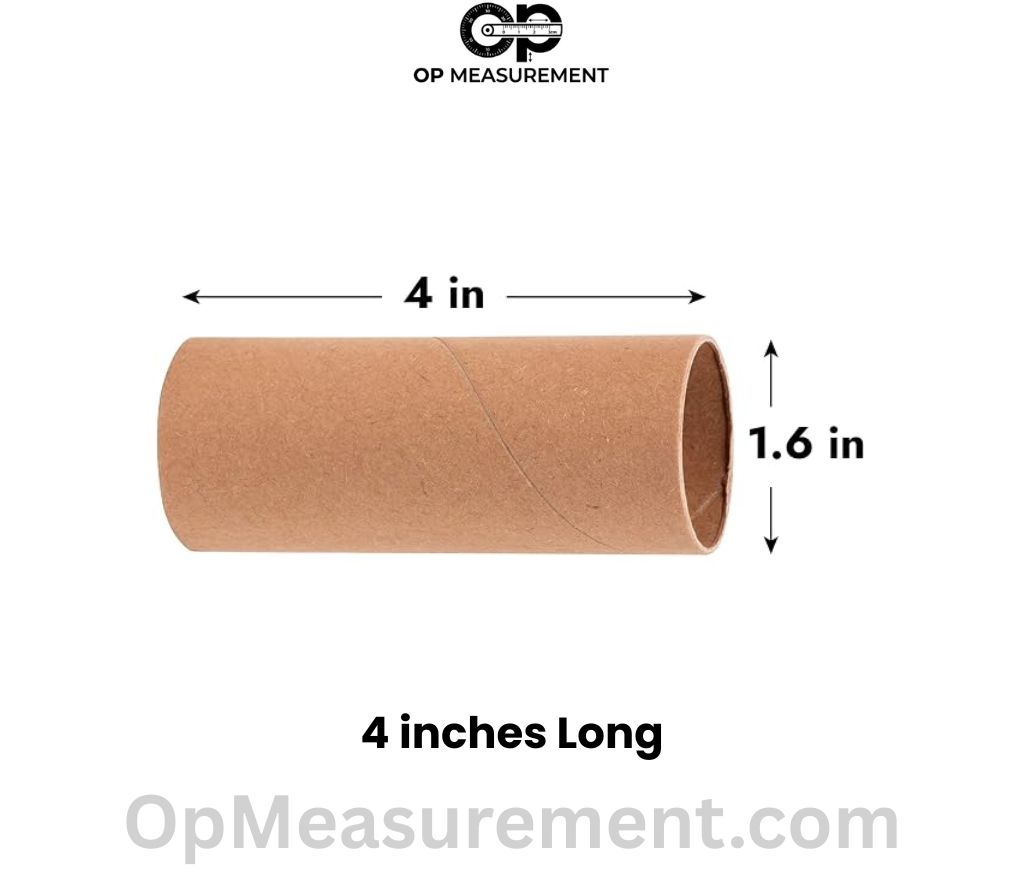
Toilet-paper tubes vary in length by brand and product. Some are close to four inches, but this is not a manufacturing standard shared by every brand; measure your own tube.
The tube is also about 1.6 inches in diameter. That proportion — a 4-inch length on a tube just wide enough to fit two fingers inside — gives a strong physical sense of what this size feels like in three dimensions, not just as a flat line on paper.
6. Standard Drink Coaster
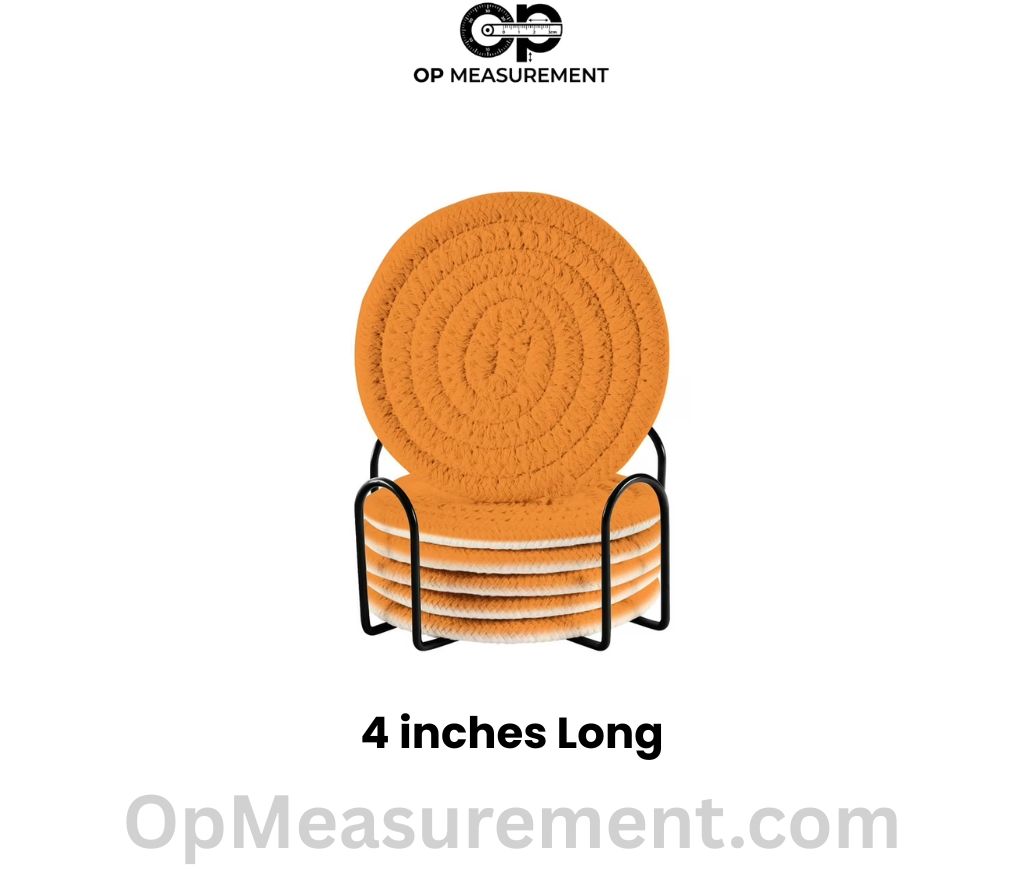
Most square or round drink coasters are built to a 4-inch dimension — either diameter for round ones or side length for square ones. The size exists for a practical reason: it fits under a large mug, a pint glass, and most standard water bottles without wasting table space.
Set one in front of you. That object sitting flat on your desk or table is 4 inches across. Solid, rigid, easy to look at straight-on. One of the better visual references because it doesn’t flex or fold.
7. A New Bar of Soap
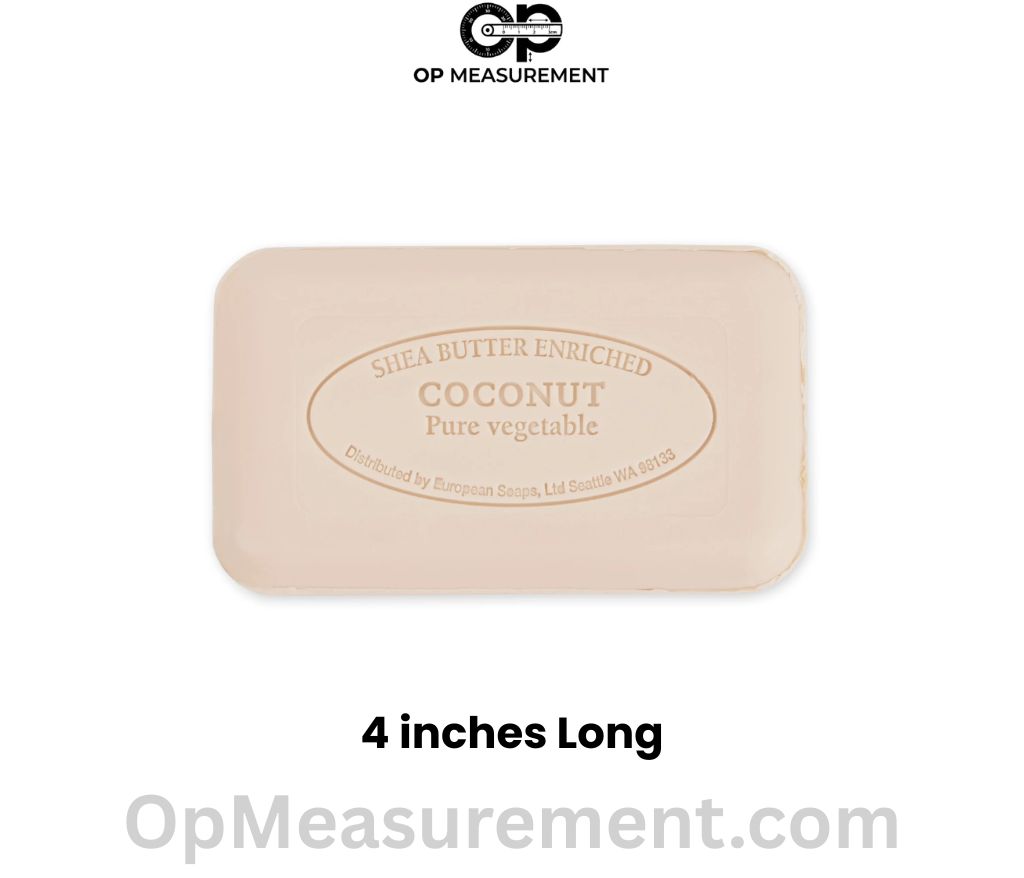
A sealed, brand-new bar of standard commercial soap — Dove, Dial, Irish Spring, most drugstore brands — measures right at 4 inches across the long side before any use. Once the bar wears down, the dimension changes. But out of the wrapper, it holds.
What makes this reference useful isn’t just the number — it’s the grip. That slight oval shape fits naturally in the palm. The 4-inch length is precisely what allows the bar to be held without the ends digging into the heel or fingertips. It fits the human hand because it was designed to.
Read also: How Long Is 17 Inches?
8. Small Coffee Mug Height
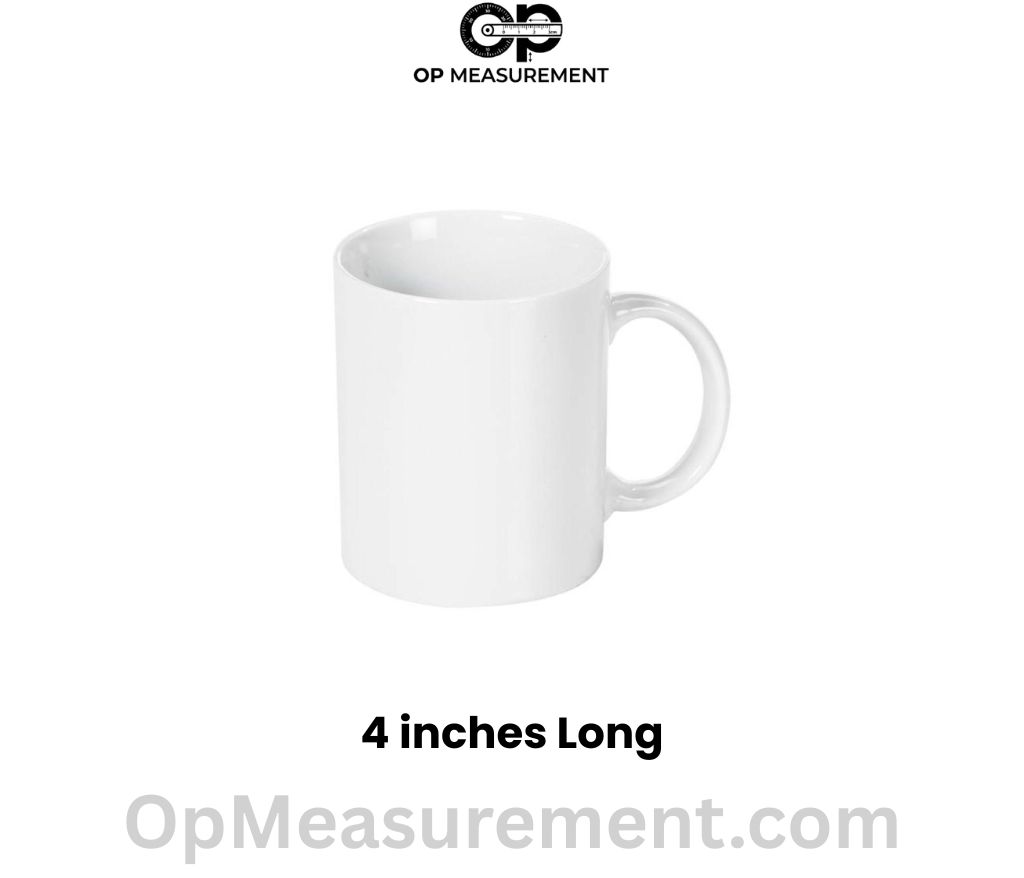
The everyday 8 oz to 10 oz ceramic mugs — not travel tumblers, not the oversized breakfast bowls, just a normal small morning mug — stand 4 inches tall from base to rim.
Crouch to counter level and look at one straight-on. That height is compact but not tiny. It holds a proper single serving and looks right on a desk without dominating it. Once you know the height is 4 inches, you’ll notice it every morning — that familiar mug is a measurement tool hiding in plain sight.
9. Junior Popsicle Stick
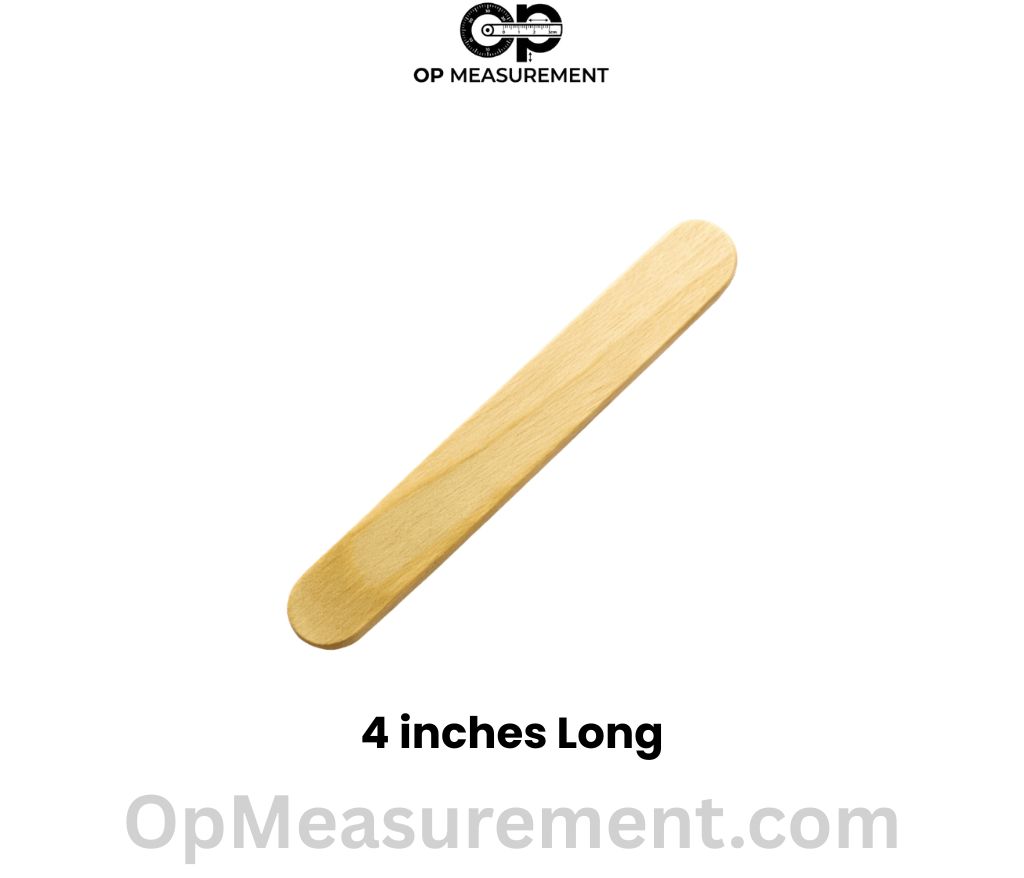
Full-size craft sticks measure about 4.5 inches — slightly longer than 4 inches. The junior version, sold for mini crafts and smaller baking molds, is exactly 4 inches. The visual difference is subtle, but the production specification is precise.
These sticks are flat, stiff, and made to tight tolerances. Every stick in a bulk pack is the same length. That consistency makes them a reliable physical reference — you can lay one against any surface and trust the dimension.
10. Heavy-Duty Nail Clipper
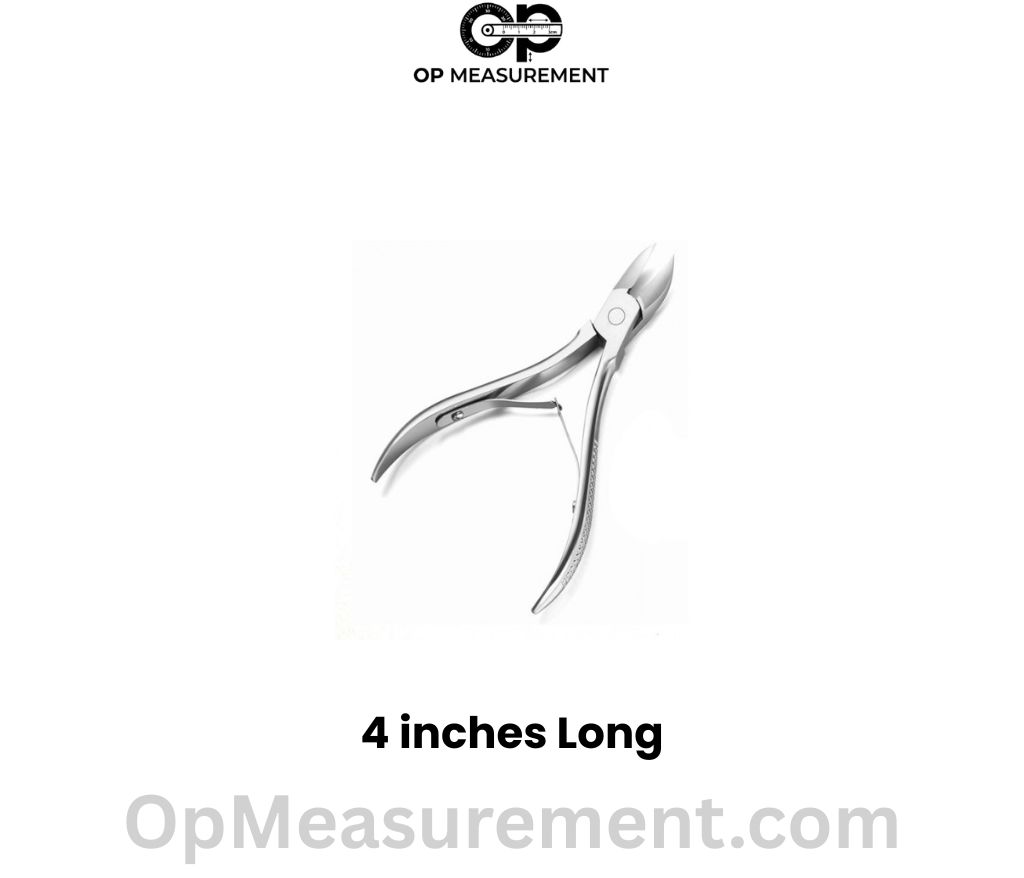
The large nail clippers — not the small ones for fingernails, but the thick, heavy-duty kind built for toenails — measure exactly 4 inches from the base of the handle to the top of the lever arm. These are the ones that feel substantial in the hand, not flimsy.
Hold one and press your thumb along the lever. The entire tool fits from the heel of your thumb to just past your first knuckle. That’s the 4-inch span expressed in grip. It’s a compact but solid feel — dense, purposeful, and easy to grasp.
Read also: How Long Is 18 Inches?
11. Your Own Palm Width
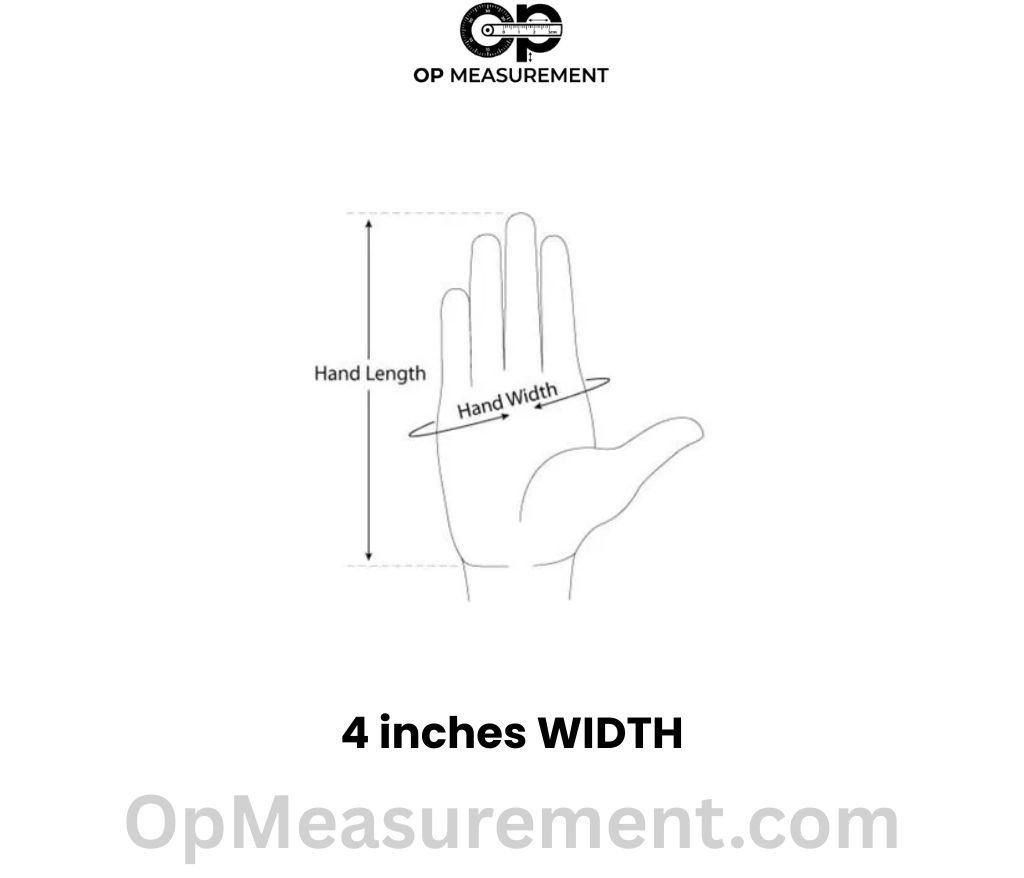
The span across four fingers — index through pinky, measured at the bottom knuckles with the thumb excluded — averages 4 inches for most adults. Women’s hands often come in slightly narrower, around 3.5 to 3.8 inches. Larger male hands can reach 4.2 to 4.5 inches.
Still, this is close enough for most practical estimates. And unlike every other reference on this list, this one is attached to your body. You can use it without finding, picking up, or locating anything. That makes it worth knowing and worth testing on yourself right now.
12. A Large Grocery Store Lemon
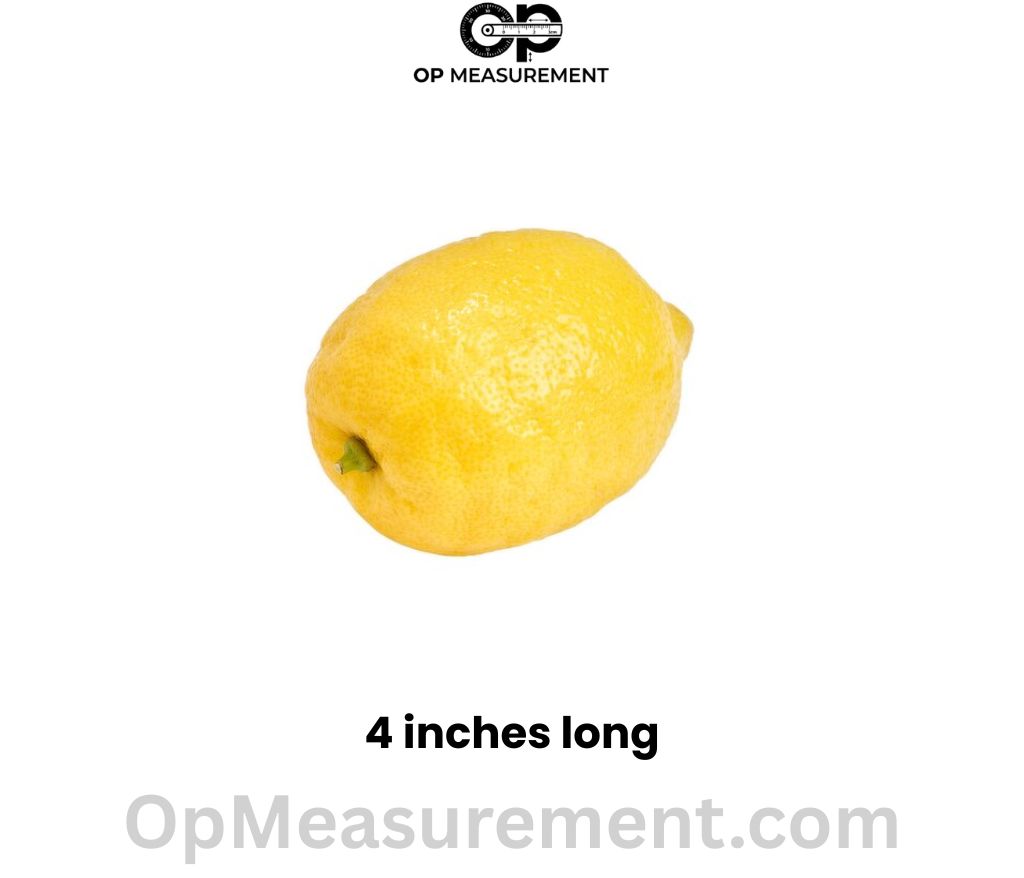
A fully ripe, standard-sized lemon from a grocery store — the regular eating kind, not decorative miniatures — runs tip to tip at roughly 4 inches when fully grown. Smaller lemons sit around 2.5 to 3 inches. The big ones hit 4.
Hold one lightly between two fingers. The weight, firmness, and size together make the dimension feel real in a way that flat objects don’t. Lemons are sold at this size partly because they fit standard kitchen tools — juicers, zesters, storage bags — and partly because they fit the hand naturally at this length.
13. Half of a Standard Red Brick
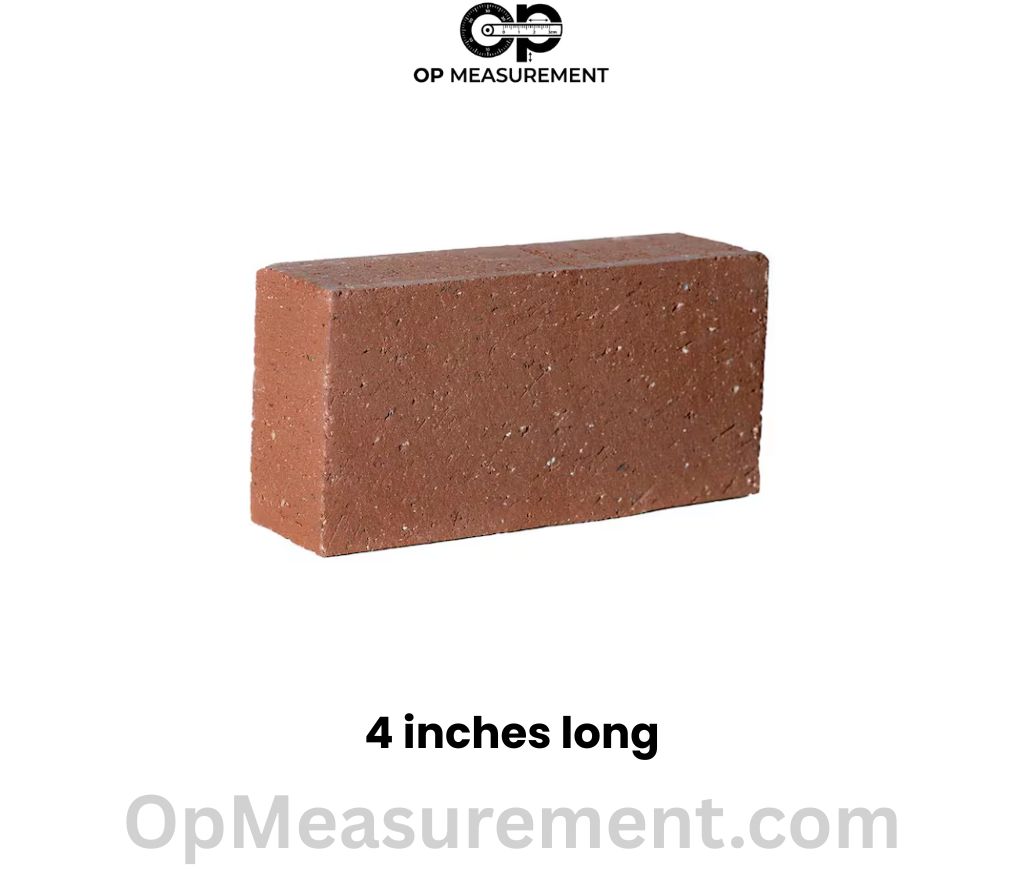
Brick sizes vary. An eight-inch nominal modular dimension can include a mortar joint, so the physical brick may be shorter. Half of a brick is four inches only when the actual brick measures eight inches and the cut is accounted for.
If you’ve ever picked up a full brick, you know how that weight and solidity feels. Now picture half the length. Same thickness, same height, half the span. That 4-inch block is heavier than most objects at this size and more solid than all of them. It makes the dimension feel grounded and real in a physical way that lighter references can’t match.
Measuring 4 Inches Without a Ruler
Four fingers flat — press your index through pinky together and measure across the bottom knuckles. For most adults, that’s 4 inches. Test yours against a ruler once so you know your personal offset.
Credit card plus a thumbnail — a standard card is 3.37 inches wide. Add roughly the width of your thumbnail (about 0.6 to 0.7 inches) past the card edge. That combined span reaches 4 inches.
Dollar bill short side plus thumb — a US bill is 2.61 inches wide (short side). Add one thumb width laid flat — about 1.4 inches — and you land at 4 inches. Sounds fiddly the first time. After that, it becomes second nature.
How Long Is 4 Inches of Hair
At 4 inches, hair reaches roughly chin level for most people. It’s the boundary between short and medium in most hairstyle guides. A pixie cut sits around 1 to 2 inches. A short bob starts at 4 to 6 inches. Four inches of length is just enough for visible wave or curl texture, enough to tuck behind an ear, but not yet enough for a full ponytail on most people.
Growing from a buzz cut, 4 inches takes around 8 to 10 months. Hair grows roughly half an inch per month on average. It’s a real milestone — the point where styling options begin to open up and length starts to feel intentional rather than accidental.
Where 4 Inches Appears Without You Noticing
Photo prints. The short side of a standard 4×6 photo print is exactly 4 inches — the format sold in every drugstore and printed from every home printer. When people search for “how long is 4 inches picture,” this is the most direct real-world answer.
Tile and flooring. Many standard ceramic tiles are sold in 4-inch square formats, especially for backsplashes and bathroom borders. The 4-inch tile size is one of the most common in residential construction.
Cabinet hardware. Drawer pulls and handles are often listed in 4-inch center-to-center spacing — the distance between the two screw holes. If you’ve ever bought drawer hardware, that measurement is probably 4 inches.
Common Measuring Mistakes
Ruler edge vs. zero line. Many rulers have a small physical gap between the end of the ruler and where the zero mark actually begins. Aligning an object to the ruler’s physical edge instead of the zero line adds 1 to 3 millimeters to your reading. Small gap, real consequences in woodworking and framing.
Width vs. height confusion. A 4-inch height and a 4-inch width look completely different on the same object. A mug that’s 4 inches tall looks compact and proper. A mug that’s 4 inches wide looks like a bowl. Always confirm the direction of your measurement.
Screen diagonal vs. straight measurement. Phone and monitor screen sizes are measured diagonally — corner to corner. A 4-inch screen is smaller than a phone that’s 4 inches wide. This trips people up constantly when buying devices or selecting picture frames.
Read more:
FAQ about 4 Inches
How can I estimate 4 inches without a ruler?
One of the easiest methods is using your hand. For many adults, the width across the four fingers (without the thumb) is close to 4 inches. A large square sticky note is another quick reference because it measures 4 inches on each side.
Is 4 inches considered long or short?
It depends on what you’re measuring. For a mug or bar of soap, 4 inches feels fairly large. For furniture, sports equipment, or room dimensions, 4 inches is quite small. Context makes a big difference in how the size appears.
What is 4 inches in centimeters?
Four inches equals exactly 10.16 centimeters. This is based on the international standard that defines 1 inch as exactly 25.4 millimeters.
What everyday object is closest to exactly 4 inches?
A large square Post-it note is one of the most accurate everyday examples because it is manufactured to a standard size of 4 inches by 4 inches. It provides a clear visual reference for both length and width.
Is 4 inches longer than 9 centimeters?
Yes. Four inches equals 10.16 centimeters, which makes it about 1.16 centimeters longer than 9 centimeters.
Quick question before you go: Which is longer — 4 inches or 9 centimeters?
Most people guess they’re close. They’re not. 4 inches equals 10.16 cm — over a centimeter more than 9 cm. Unit confusion is more common than people think, and that gap is bigger than it sounds when you’re measuring something physical.
For another size reference, see How Long Is 5 Inches?
Conversion reference: NIST unit definitions and conversion factors. Rounded values are for comparison; product dimensions and weights should be checked against the specific item.

Vera loves exploring the size and dimensions of everyday objects. She shares practical, visual guides to help readers understand measurements clearly. With a focus on accuracy and usefulness, Vera creates content that informs, engages, and supports learning for all.