16 inches equals exactly 40.64 centimeters (1 foot 4 inches). Compare the dimension described below, rather than assuming every object has a standard size. Screen sizes refer to the diagonal, not width or height. A ruler or tape measure gives a more reliable result than hand or body estimates.
16 inches = 40.64 cm | 406.4 mm | 1 foot and 4 inches
Stretch both hands flat and press your thumbs together. For most adults, that combined span lands right around 16 inches. No ruler needed — your own hands just became your measuring tool.
That’s the kind of size this is. Big enough to notice. Practical enough to show up in your kitchen, your bathroom, your kid’s bedroom, and your laptop bag — all at once.
How Big Is 16 Inches?
It sits just past the one-foot mark by four full inches. On a tape measure, you’d watch the numbers climb past 12, past 13, 14, 15 — and stop at 16. That extra stretch beyond a standard ruler is what makes people underestimate it.
Hold a typical hardcover book in your hands. Most run about 9 to 10 inches tall. Now imagine adding roughly six more inches on top. That’s where 16 inches lands. It’s a confident, visible length — not something you’d call small by any stretch.
Against the human body, this dimension runs from an average adult’s wrist to just beyond the elbow. On a child, it’s closer to the full length of their arm. For hair, it falls past the shoulders, somewhere near the shoulder blades — what stylists typically call a “medium-long” length.
16 Inches Measurement to other units
| Unit | Exact Value | Physical Feel |
| Inches | 16 in | Base unit |
| Centimeters | 40.64 cm | About 4 hand-widths |
| Millimeters | 406.4 mm | Width of a narrow doorframe trim |
| Feet | 1 ft 4 in | One ruler + four finger-widths |
| Yards | 0.444 yd | Less than half a yard |
| Meters | 0.4064 m | Just under half a meter |
All conversions use the International Yard and Pound Agreement (1959), which fixed one inch permanently at 2.54 centimeters.
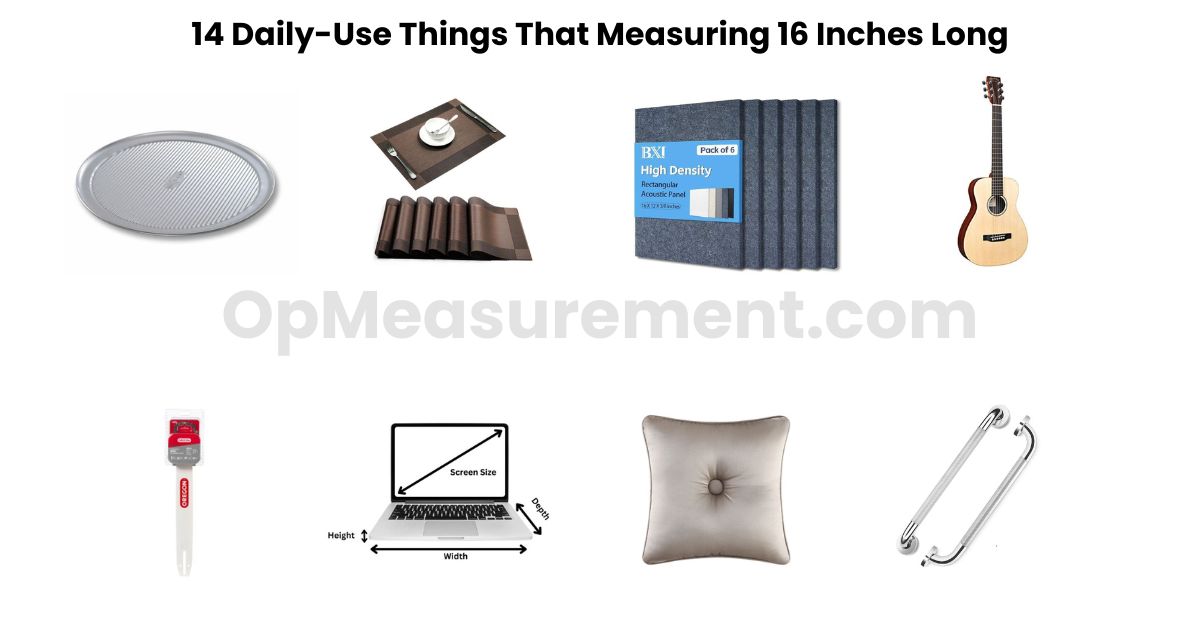
14 Daily-Use Things That Are 16 Inches Long
These aren’t pulled from a list for the sake of it. Each one measures at or right around this length by design — through manufacturer standards, industry norms, or physical necessity.
| Object | Category | Dimension |
| Chainsaw Bar | Tools / DIY | 16 in length |
| Children’s Bicycle Wheel | Daily Life | 16 in diameter |
| Rear Windshield Wiper | Automotive | 16 in length |
| Laptop Sleeve | Tech | 16 in interior length |
| Laptop Screen | Tech | 16 in diagonal |
| Wall Clock | Home Decor | 16 in diameter |
| Bathroom Grab Bar | Home Safety | 16 in length |
| Throw Pillow | Daily Life | 16 × 16 in |
| Pizza Pan | Food | 16 in diameter |
| Cutting Board | Kitchen | 16 in length |
| Dining Placemat | Kitchen | 14 × 16 in |
| Acoustic Guitar Body | Music | 16 in width |
| Decorative Plate Hanger | Home Decor | 16 in span |
| Acoustic Foam Panel | Studio / DIY | 16 × 16 in |
1. Homeowner Chainsaw Bar
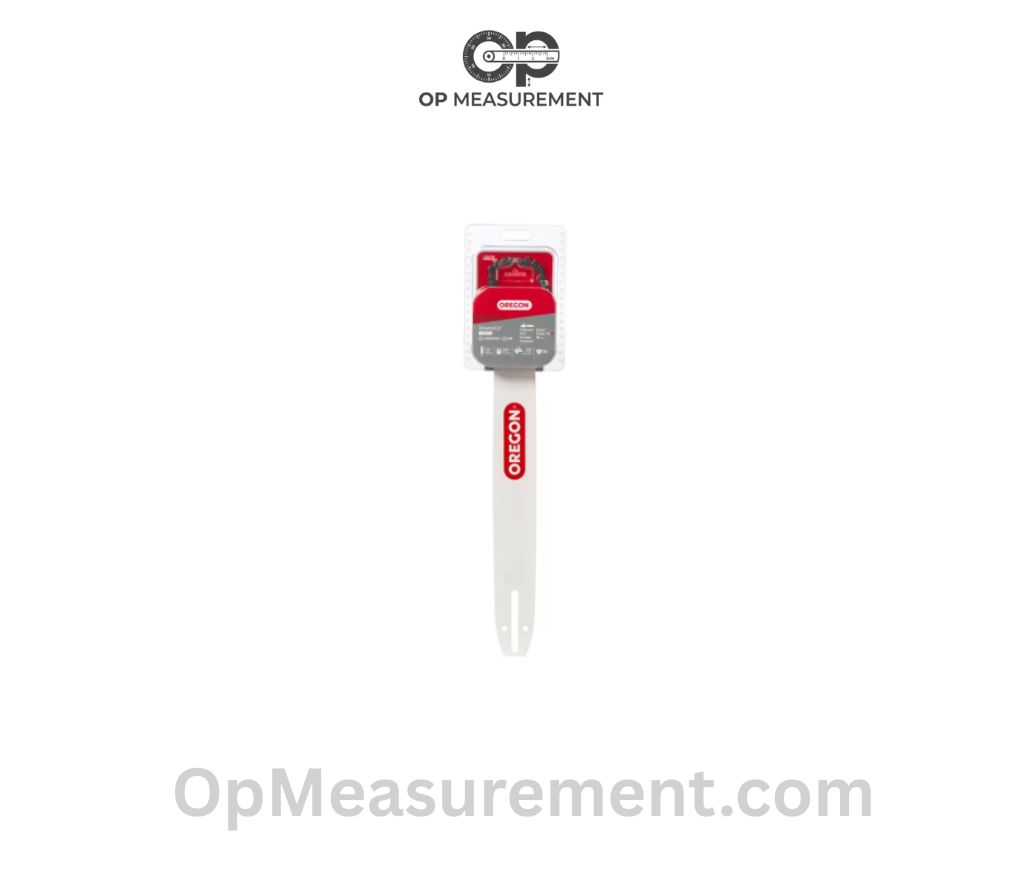
Walk into any hardware store and look at the mid-range chainsaws on the shelf. The bar — the long metal guide that the chain runs around — is almost always 16 inches on the models marketed to homeowners. Not 14, not 18. This specific length became the default because it handles most backyard jobs well. Thick branches, small logs, storm cleanup — a 16-inch bar manages all of it without being awkward to control.
Professional loggers run longer bars. But for someone trimming trees on a weekend, this length sits in what the industry calls the “sweet spot.” It’s enough reach without the weight penalty.
2. Children’s Bicycle Wheel (Ages 4–6)
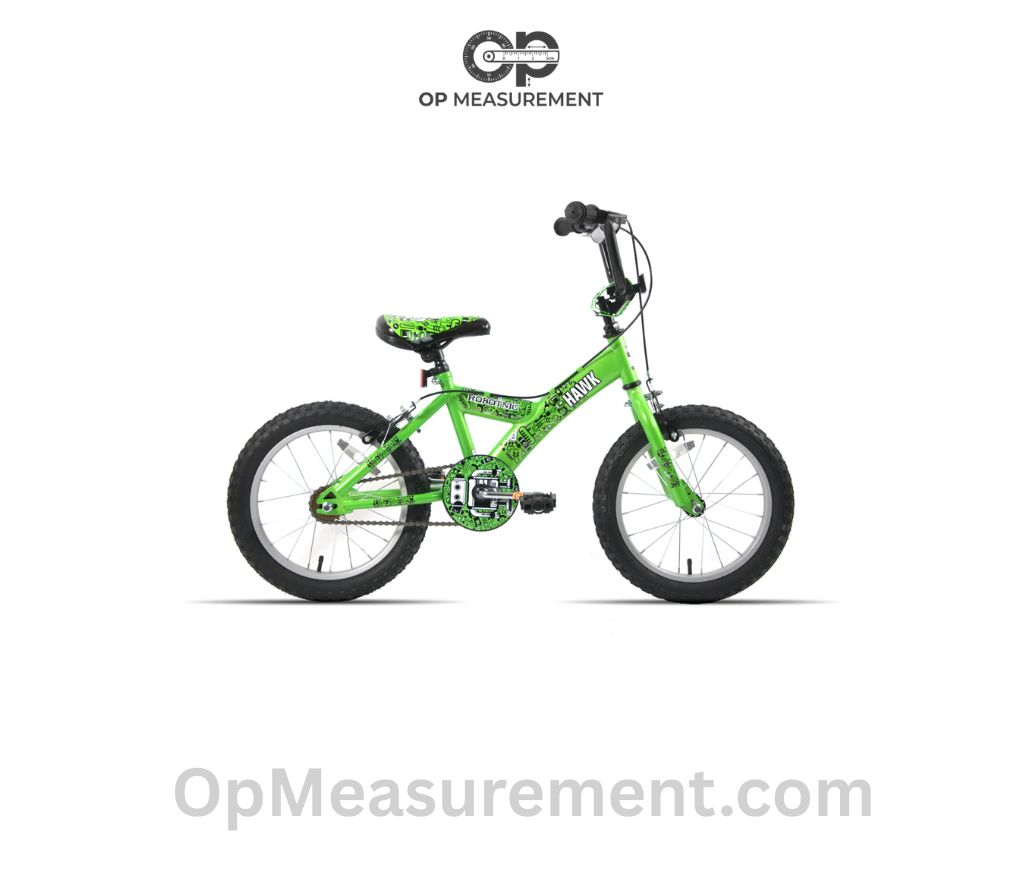
When a kids’ bike says “16-inch,” that number describes the diameter of the wheel — measured straight across the center, rim to rim. Bikes in this wheel size are the standard for children around four to six years old, typically when they’re moving off training wheels for the first time.
The size matters beyond just fitting the child’s height. A 16-inch wheel rolls smoothly enough to build confidence but stays low enough that a kid can get a foot down fast when they wobble. It’s a safety dimension as much as a sizing one.
3. Rear Windshield Wiper Blade
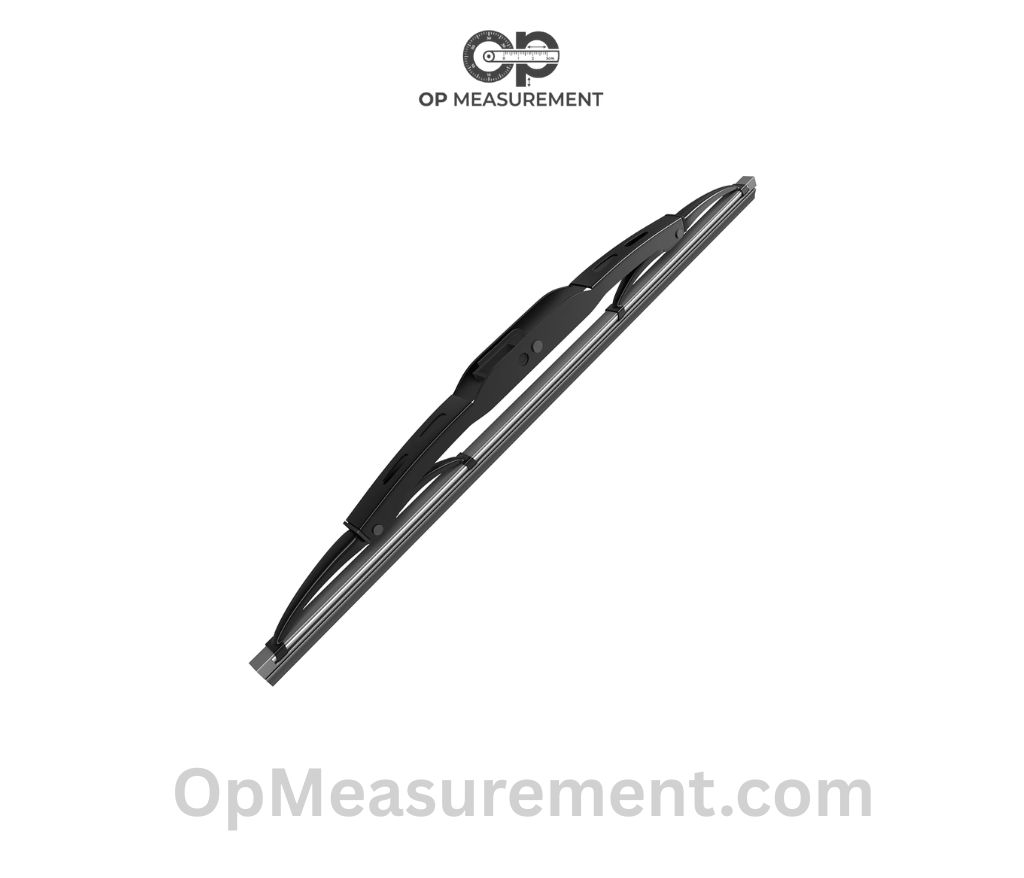
Check the rear window on a compact car or small SUV. The wiper blade sweeping that back glass is very often 16 inches. Unlike front wipers, which come in varying sizes matched to the windshield curve, rear wiper blades are more standardized — and 16 inches lands right in the most common replacement size for this position.
Next time you replace a rear blade, check the packaging. It tells you the exact length. A large percentage of small vehicles will call for this exact size.
4. Laptop Sleeve Interior Length
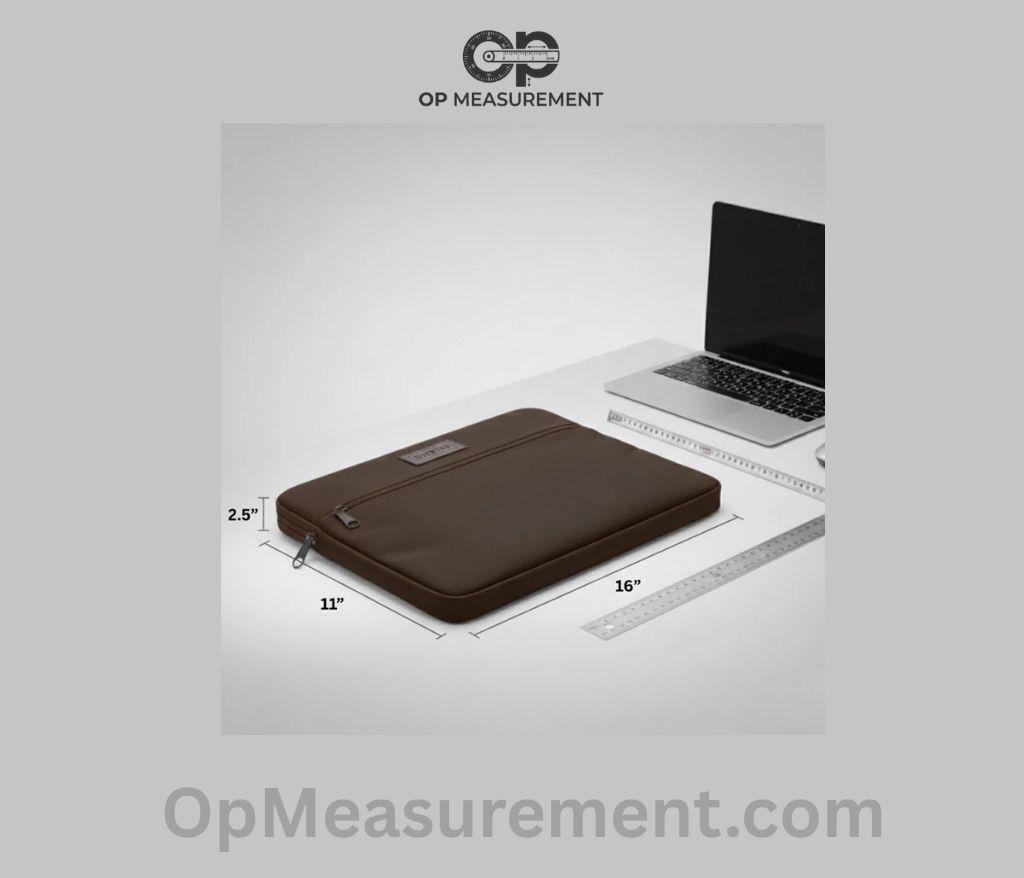
A sleeve sold as “fits 16-inch laptops” is built around one specific measurement: the diagonal of the screen, not the body. The screen diagonal on these laptops runs exactly 16 inches corner to corner. The sleeve itself ends up slightly longer — usually 17 to 18 inches — to account for the bezel, hinge, and body edges.
This distinction trips people up when buying cases. The “16 inches” is about the screen measurement. The physical laptop body will always be bigger than that number suggests.
5. Laptop Screen (Diagonal Measurement)
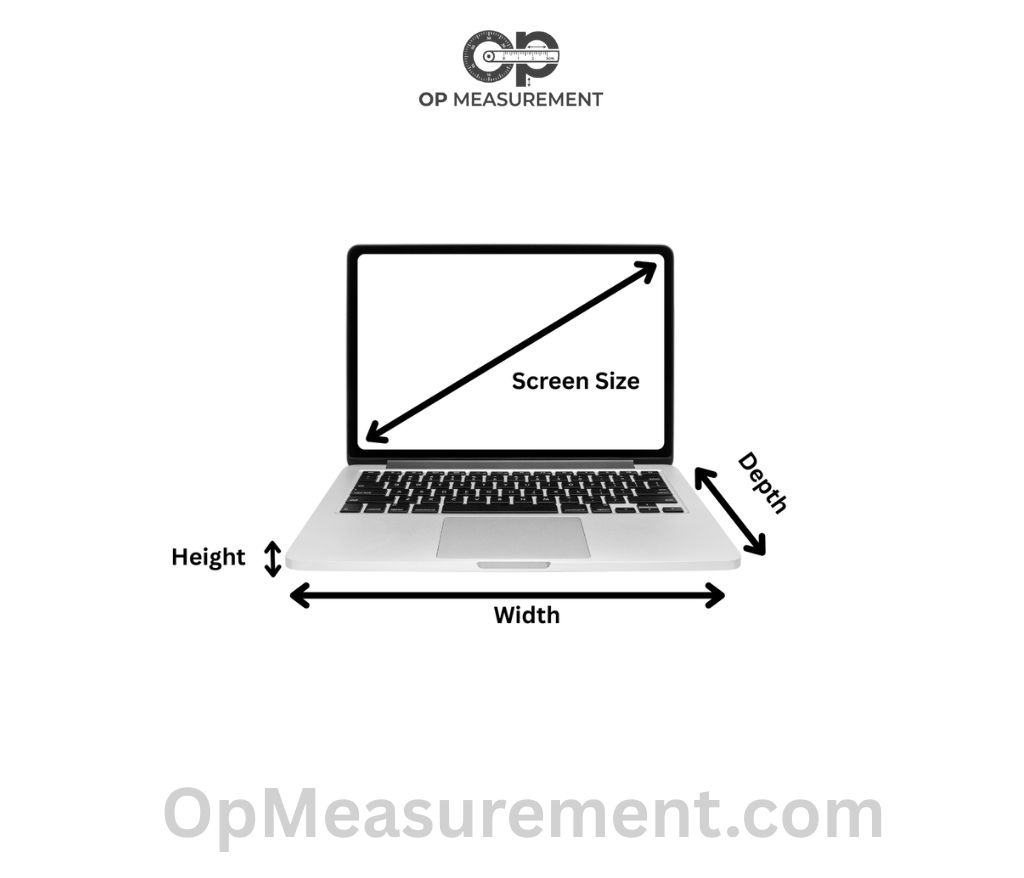
Modern large-format laptops carry a 16-inch screen measured diagonally — bottom-left corner to top-right corner of the display panel. This is the only way the industry measures screen size, not width, not height. Just the diagonal.
At a 16:10 aspect ratio (common on newer models), the actual screen width is around 13.6 inches and height is around 8.5 inches. So “16 inches” doesn’t tell you how wide the screen is — it tells you the hypotenuse of the display rectangle. Keep that in mind when shopping.
6. Medium Decorative Wall Clock
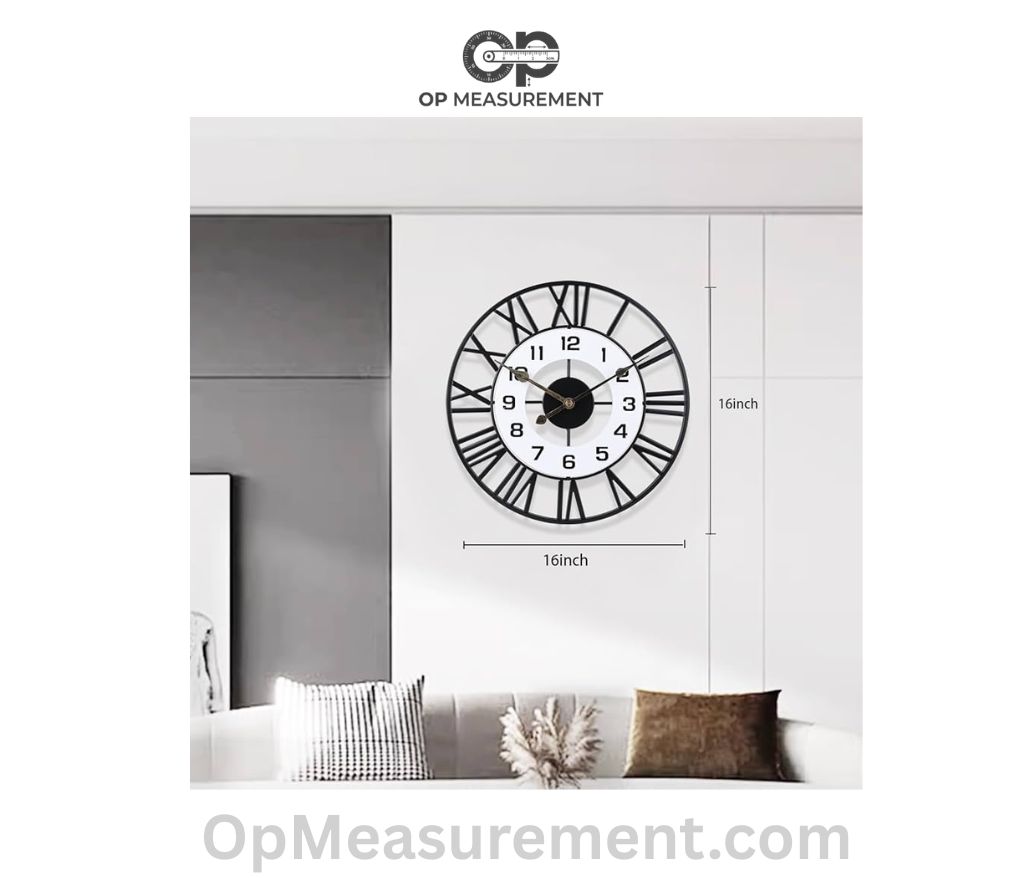
A wall clock with a 16-inch diameter doesn’t look oversized. It doesn’t look small either. It fills a wall space the way a confident piece of decor should — visible from across the room, readable without walking up to it, proportional above most furniture.
This diameter is a manufacturing sweet spot for decorative clocks. It’s large enough to be a visual anchor in a room but won’t overwhelm a standard 8-foot wall the way a 24-inch clock might.
7. Bathroom Grab Bar
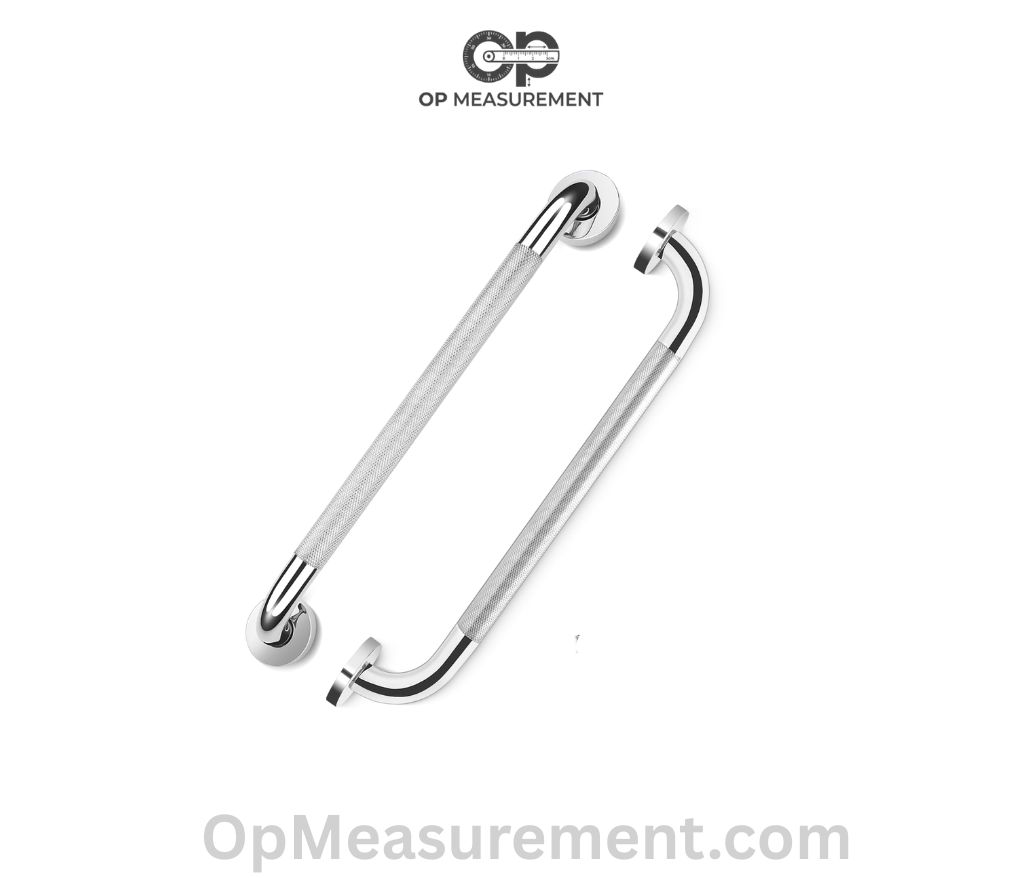
The 16-inch grab bar is one of the most common lengths used in residential bathroom safety installations. It fits neatly on the side wall next to a toilet, or horizontally inside a shower stall, without requiring a long stretch of wall.
What makes this length work practically is the stud spacing in most home construction. Standard wall studs run 16 inches apart — which means a 16-inch bar, mounted correctly, can anchor into two studs at once. That’s a structural advantage, not a coincidence.
8. Square Throw Pillow (16 x 16 inches)
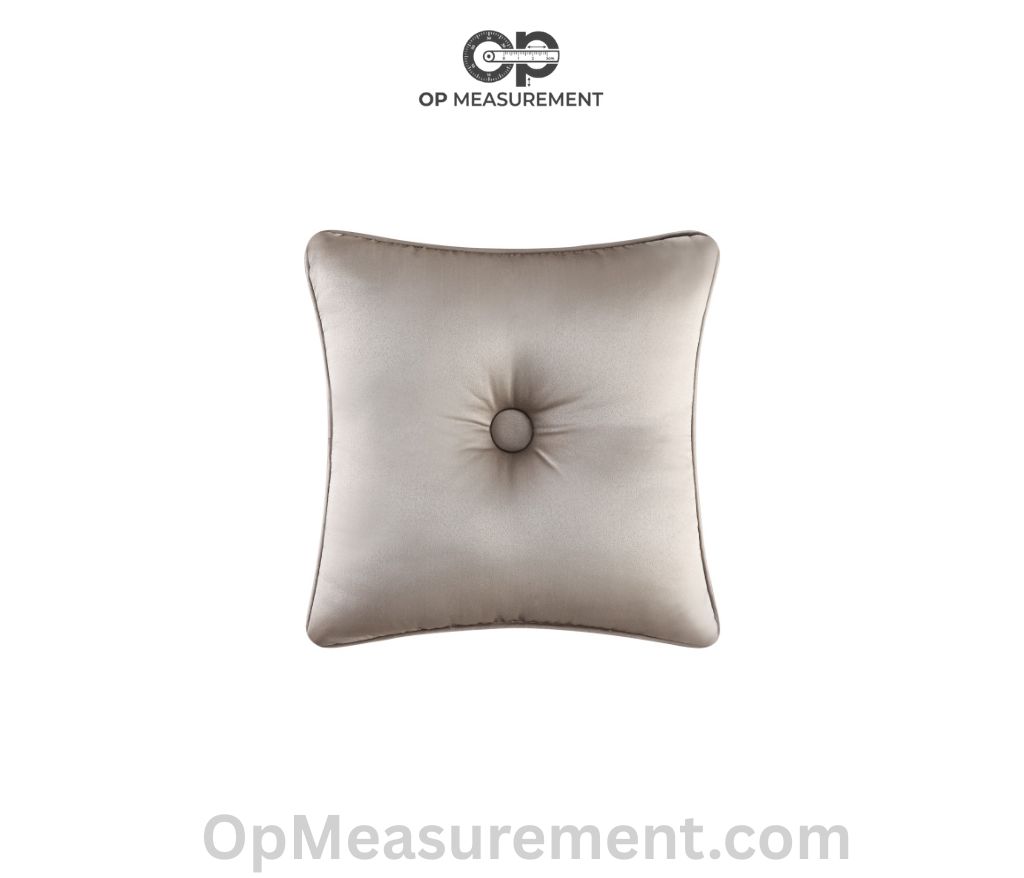
Pull the tag off a decorative pillow on most sofas and you’ll often find 16×16 inches on the label. This square size became a universal decorative standard because it works proportionally on almost every furniture scale — not too wide for a chair arm, not too small to look intentional on a large sectional.
The 16-inch square pillow also fits the most common insert size sold at home goods stores, which reinforces the standard. When a pillow cover and insert both exist in the same size, that size sticks around.
9. Large Pizza Pan
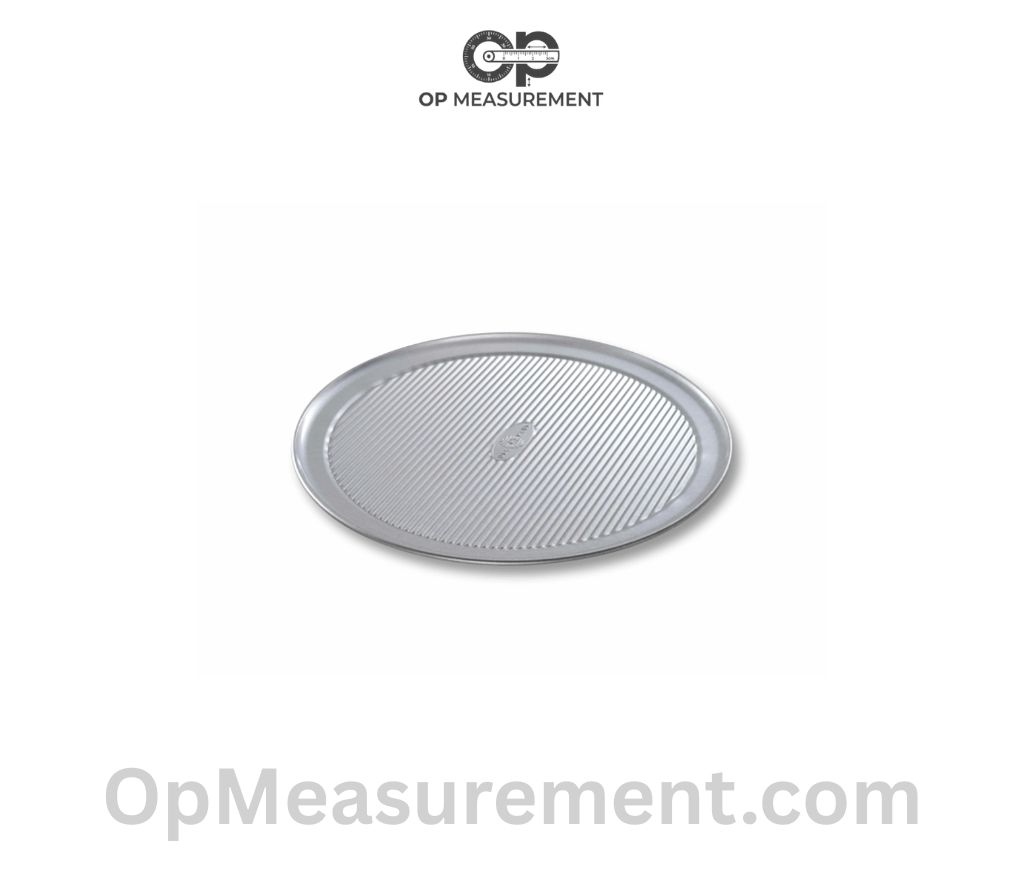
A 16-inch pizza pan measures 16 inches across its full outer diameter. A pizza baked on it — if the dough spreads to the edges — will be close to this diameter as well, though the actual pizza sometimes runs 14 to 15 inches depending on how far the dough is stretched.
This pan size typically serves five to six people and is considered large-to-extra-large in both commercial and home baking. Laid flat on a table, it covers roughly the same area as an open laptop. The size is visually substantial — you notice it when it comes out of the oven.
10. Professional Kitchen Cutting Board
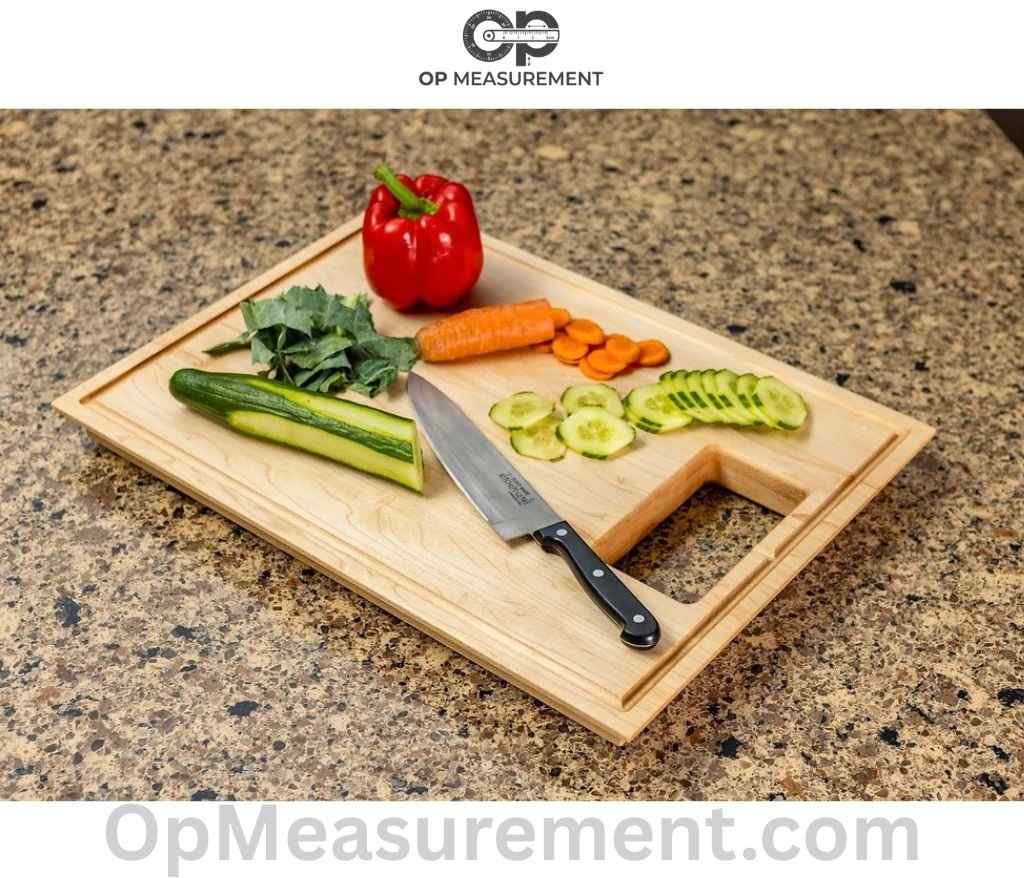
High-quality cutting boards in the “large” category are frequently built with one dimension at exactly 16 inches — usually the length. The reason is practical: a 16-inch board gives enough runway to slice a baguette in one clean pass, break down a whole chicken without the pieces falling off the edges, or work with large vegetables like butternut squash or cabbage.
Smaller boards feel cramped immediately when you’re doing real meal prep. At 16 inches, the board finally has enough surface area to let you work without constantly repositioning food.
11. Standard Dining Placemat
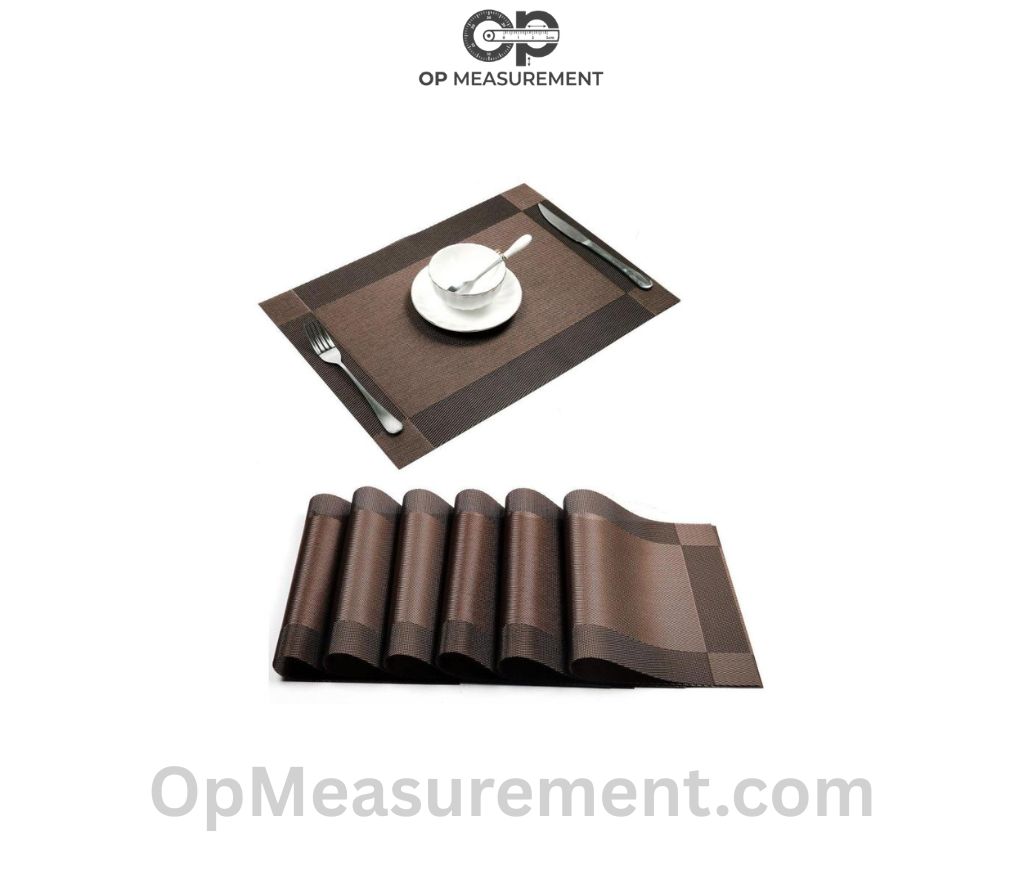
Most placemats sold for dining tables run 12×16 or 14×16 inches, with the 16-inch dimension running horizontally across the front of each seat. This isn’t arbitrary. A 16-inch placemat fits a dinner plate with room on both sides for a fork and knife, frames the place setting neatly, and still leaves visible table space between seats.
Tabletop designers settled on this length because it works across most standard table widths — 36 inches for a 2-person table, 48 inches for a 4-person, and so on — without the placemats overlapping.
Read more: How Long Is 11 Inches?
12. Acoustic Guitar Body Width
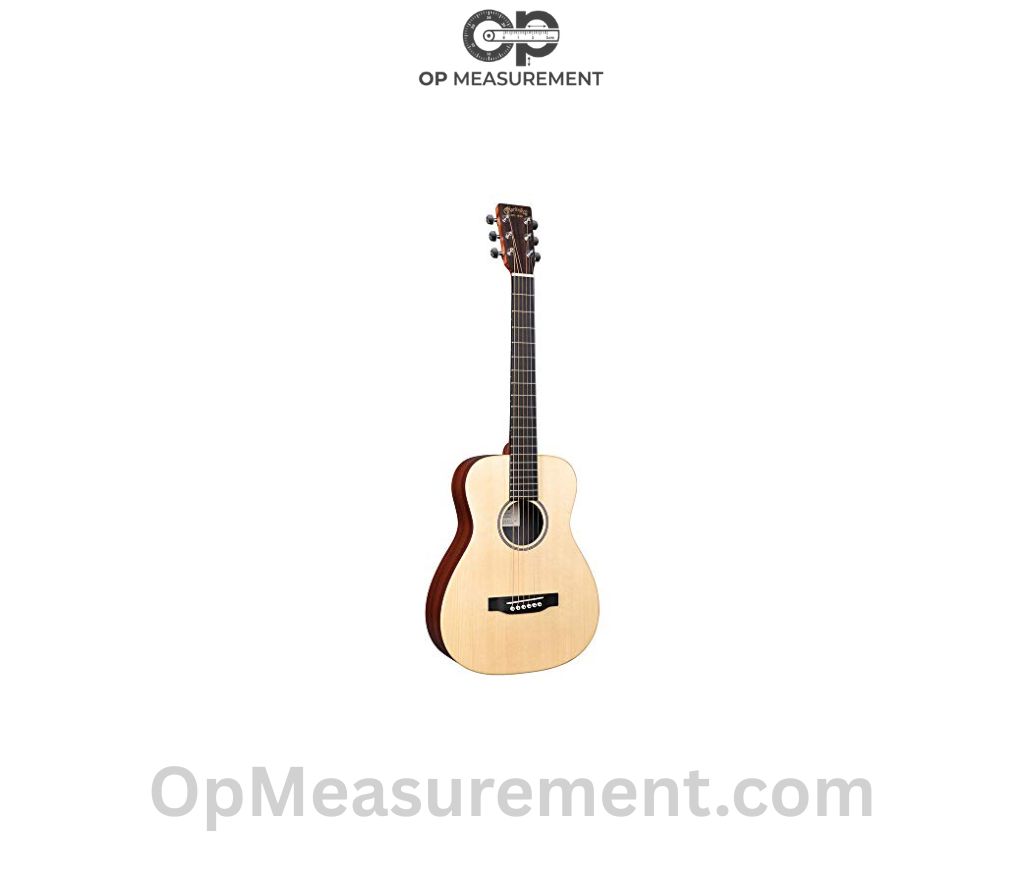
At the widest point of the lower bout — the rounder, wider half of the guitar body — a standard acoustic guitar measures right around 16 inches across. This is the measurement that determines how a guitar sits against your body when you play. Too wide and it pushes your strumming arm out awkwardly. Too narrow and it lacks the resonant volume that makes an acoustic guitar sound full.
The 16-inch lower bout width is the standard that most traditional steel-string acoustics have settled on for exactly these tonal and ergonomic reasons.
13. Large Decorative Plate Hanger (W-Type)
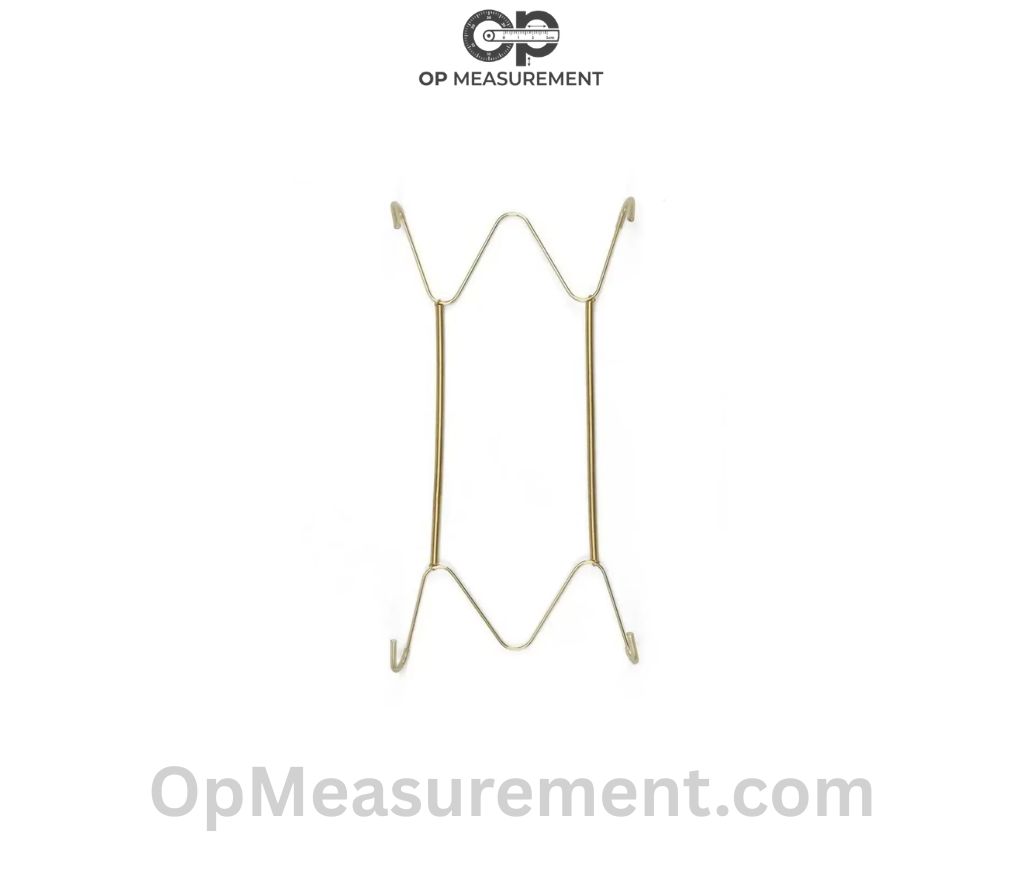
The spring-loaded W-type hangers used to mount decorative plates on walls come in multiple sizes, and the large version — for plates in the 14 to 16-inch range — is built to a 16-inch span. The two spring arms grip the plate’s rim on both sides, and the 16-inch width gives enough tension to hold a heavy ceramic piece without cracking it.
If you’ve ever seen a large hand-painted plate hanging in a kitchen or dining room, this hanger is almost certainly what’s behind it. The 16-inch size handles plates that would otherwise be impossible to display safely.
14. Acoustic Foam Panel (Standard Studio Tile)

Recording studios and home podcast setups commonly use acoustic foam panels cut to 12×12 or 16×16 inches. The 16-inch tile is the larger standard and covers more wall surface per panel — important because sound treatment works by area coverage, not just by how many panels you hang.
A single 16-inch foam panel absorbs mid-to-high frequencies across a meaningful surface area. Installers often start with these because the size tiles neatly into corners, fits symmetrically between wall features, and can be trimmed if needed without losing effectiveness.
Measure 16 Inches Without a Ruler
You don’t always have a tape measure. These three methods get you close without one.
Two dinner forks end to end — A standard dinner fork runs about 7.5 to 8 inches. Place two of them tip to handle-end, lined up straight. You land somewhere between 15 and 16 inches, accurate enough for most non-critical uses.
Four credit cards in a row (lengthwise) — Each credit card is exactly 3.37 inches long. Four cards placed end to end measure 13.5 inches. Add one more and you’re at 16.85 inches. Split that fifth card’s length visually in half and mark it — that’s 16 inches.
Printer paper plus a hand-width — A US letter-size sheet of paper is 11 inches tall. Lay it down and add 5 more inches past the bottom edge. Five inches is roughly the width of four adult fingers held flat. That combined span hits 16 inches.
Common Mistakes When Measuring This Length
Measuring a laptop screen by its width — Many people grab the horizontal width of their screen and expect it to match the listed size. It won’t. The “16-inch” rating is diagonal only. Measure width and you’ll get 13 to 14 inches. This causes real problems when buying screen protectors or replacement panels.
Starting from the wrong end of the ruler — Most rulers have a small physical margin before the zero line. Measuring from the ruler’s physical edge instead of the zero mark adds 1 to 3 millimeters of error per measurement. Over a 16-inch span, that’s noticeable.
Assuming a 16-inch pizza pan means a 16-inch pizza — The pan is 16 inches. The pizza is only 16 inches if the dough stretches fully to the edges. Often it doesn’t. If the recipe matters — like matching a pizza box or a stone — measure the dough after shaping, not the pan.
How Long Is 16 Inches of Hair?
At this length, hair falls past the shoulders and typically reaches the shoulder blade area — closer to the upper-back than the mid-back. Stylists categorize this as medium-long. It’s long enough for most braid styles, half-up looks, and ponytails with volume, but doesn’t carry the weight or tangle risk of truly long hair.
For hair extensions or wigs, “16 inches” refers to the strand length from the attachment point. On someone of average height, it creates a natural, below-the-shoulder drape.
How Long Is a 16-Inch Necklace?
This length sits at the collar — just above the collarbone on most adults, hugging the base of the neck closely. Jewelers call it a “collar length” or sometimes “choker adjacent.” It’s the shortest standard necklace length for adults and the most common for delicate pendant chains meant to sit close to the skin.
On someone with a shorter neck, it can feel slightly snug. On someone with a longer neck, it sits perfectly at the collarbone. For an open neckline or V-neck top, this is the length that usually looks most intentional.
Read more:
Final Words
Understanding 16 Inches becomes easy when you relate it to real things you already use. It’s not just a measurement—it’s a practical size built into daily life, from tools to home items. Once you see it this way, you won’t need a ruler every time. You’ll simply recognize it.
For another size reference, see How Long Is 17 Inches? and How Long Is 15 Inches?
Conversion reference: NIST unit definitions and conversion factors. Rounded values are for comparison; product dimensions and weights should be checked against the specific item.

Vera loves exploring the size and dimensions of everyday objects. She shares practical, visual guides to help readers understand measurements clearly. With a focus on accuracy and usefulness, Vera creates content that informs, engages, and supports learning for all.