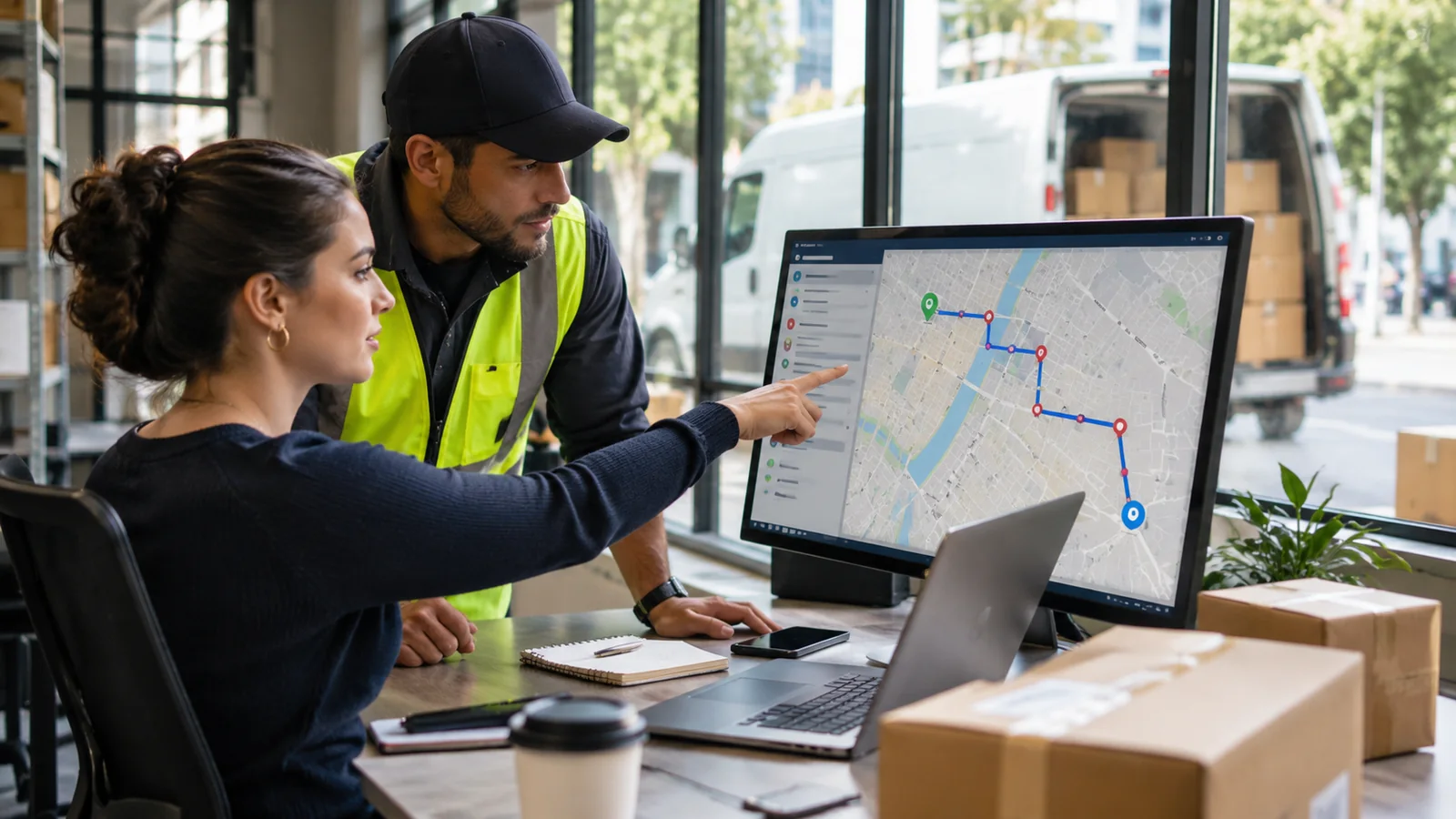
Local delivery planning has moved beyond printed maps and manually arranged stop lists. Modern systems can build routes around distance, delivery windows, vehicle capacity, customer availability, and changing road conditions, making planning more practical as delivery volume increases.
Route Planning Is Becoming Data-Driven
The shortest route is not always the best route.
A vehicle may have ten stops that appear close together on a map, but one-way streets, congestion, loading restrictions, and customer time windows can change the most practical sequence.
Modern routing systems evaluate several variables at once. Instead of looking only at geographic distance, they can account for delivery deadlines, vehicle capacity, and expected service time at each stop.
For smaller businesses that do not need a large fleet-management platform, a free delivery planner can help organize multiple stops into a workable sequence before drivers leave the depot.
This also gives managers a clearer picture of how much work can realistically fit into a shift.
Real-Time Information Makes Routes More Flexible
A route that works at the start of the day may need to change once vehicles are on the road.
Delivery platforms can combine GPS data, traffic information, order status, and driver updates to help dispatchers respond when conditions change.
An accident may block a major road, a customer may change an available delivery window, or a driver may spend longer than expected at one stop. Real-time information makes it easier to adjust the remaining schedule rather than continuing with a plan that no longer reflects conditions.
The Federal Highway Administration notes in its urban freight technology guidance that urban carriers must account for factors such as traffic, delivery restrictions, and limited access when moving goods.
Better Address Data Reduces Delivery Problems
Routing software is only as useful as the information behind it.
A street address may be technically correct while still giving the driver little guidance about where the delivery should actually happen. The loading entrance might be on another road, access may require a gate code, or receiving hours may be restricted.
Businesses can improve delivery records by storing operational details such as:
- Exact delivery entrance
- Gate or access instructions
- Loading-zone location
- Customer receiving hours
- Parking restrictions
- Average service time
- Building or unit details
If drivers repeatedly lose time accessing the same property, that information should be added to the customer record rather than staying in one person’s memory.
Delivery Windows Can Be Estimated More Accurately
Customers increasingly expect a useful arrival window rather than a vague promise that an order will arrive sometime during the day.
Technology can estimate arrival times by combining driving time with expected service time at each stop.
Suppose most deliveries take ten minutes, but one commercial customer usually requires 30 minutes for unloading and paperwork. A planning system can account for that difference when estimating later arrivals.
This also helps managers spot routes that contain more work than a driver can reasonably complete within the available time.
Mobile Technology Connects Drivers and Dispatchers
Delivery plans improve when drivers can report what is happening on the road.
Mobile apps can allow them to confirm completed stops, record failed deliveries, capture proof of delivery, add notes, and report exceptions without repeatedly calling the office.
That information gives dispatchers a current view of the route.
If a customer is unavailable, the business can decide whether to attempt delivery later or return the order to the depot. If a stop takes much longer than expected, later customers can receive updated arrival information.
This creates a direct link between the plan and what actually happens during delivery.
Historical Data Improves Future Planning
Delivery technology also makes it possible to compare planned activity with actual performance.
Businesses can review expected stop duration against actual stop time, planned arrival windows against real delivery times, and scheduled workload against what drivers completed.
Useful Delivery Metrics
Common measures include:
- Miles per delivery
- Stops completed per hour
- Average time per stop
- On-time delivery rate
- Failed delivery percentage
- Vehicle utilization
- Planned versus actual route time
The goal is not to build the largest possible dashboard. It is to identify repeat problems.
If one customer consistently requires longer unloading time, the planning assumption can be updated. If failed deliveries are concentrated within a certain time window, customer communication or scheduling may need to change.
Local Restrictions Can Be Added to the Planning Process
Urban deliveries involve constraints beyond ordinary traffic.
Drivers may have to deal with loading-zone limits, vehicle restrictions, pedestrian areas, construction, narrow streets, and permitted delivery hours.
FHWA research on urban freight highlights truck routing, parking, loading zones, congestion, and delivery restrictions as important factors in city logistics.
Digital planning tools increasingly allow businesses to account for these constraints before drivers arrive, which is especially useful in dense commercial districts where access can be more difficult than the road distance suggests.
Technology Is Becoming More Accessible to Small Operators
Advanced delivery systems were once associated mainly with large logistics companies.
Cloud software, mobile apps, and GPS-enabled phones have made similar capabilities available to smaller retailers, wholesalers, service businesses, and local couriers.
A small operation may not need an advanced fleet-control platform. It may only need a reliable way to organize 20 stops, share the schedule with a driver, record delivery outcomes, and update customer information.
The most useful technology is often the system that removes repetitive administrative work without making the delivery process more complicated.
Delivery Planning Is Becoming More Connected
The larger shift is that planning, dispatch, driver activity, and performance data are no longer separate processes.
Information collected during one day’s deliveries can improve future schedules, while live updates can help the business respond to problems as they occur.
For local businesses, that means better visibility into delivery capacity, more realistic arrival estimates, clearer driver workloads, and stronger data for future decisions.
Technology cannot remove traffic, difficult access, or unavailable customers. It can make those problems easier to identify, measure, and manage.