100 feet is 30.48 meters, 3,048 centimeters, or 1,200 inches. Walk it out at a normal pace and you’ll cross it in about 17 seconds — roughly 33 to 40 steps depending on your stride. It’s shorter than most people imagine, and once you tie it to real things you’ve already seen, the distance makes permanent sense in your head.
The 100 Feet Measurements at a Glance
| Unit | Value | Real Feel |
| Meters | 30.48 m | ~30 large adult paces |
| Centimeters | 3,048 cm | Standard metric equivalent |
| Millimeters | 30,480 mm | Engineering/precision scale |
| Yards | 33.3 yd | Slightly over ⅓ of a football field |
| Inches | 1,200 in | 100 standard rulers end-to-end |
| Miles | 0.019 mi | Less than 2% of one mile |
What 100 Feet Looks Like Standing Still
Most people overestimate this distance. They hear “100 feet” and picture something far away — a distant car, a building across a wide street. Then they walk it and feel slightly cheated. It’s genuinely not that far.
Visually, it’s about the length of two city bus lengths parked bumper to bumper. Stand at one end of a quiet neighborhood cul-de-sac and you’re often looking at roughly 100 feet to the back wall. At this distance, you can read someone’s face, recognize their clothing, and have a shouted conversation that both people can understand without straining too hard.
The reason people misjudge it is context. Open fields make 100 feet feel short. Narrow hallways make it feel endless. The space around a measurement changes how your brain reads the distance — not the measurement itself.
How Far Is 100 Feet to Walk
At a normal walking speed of about 3 to 3.5 miles per hour, 100 feet takes roughly 17 seconds. Most adults with an average stride length of 2.5 feet will hit the mark in 40 steps. If your legs are longer, closer to 33 steps.
A useful calibration: next time you’re near a measured track or parking lot with marked spaces, pace out 100 feet once with a tape measure alongside you. You’ll instantly know your personal step count — and you’ll never need a tape for rough estimates again.
11 Daily Life Objects That Are 100 Feet — Described Honestly
NBA Basketball Court
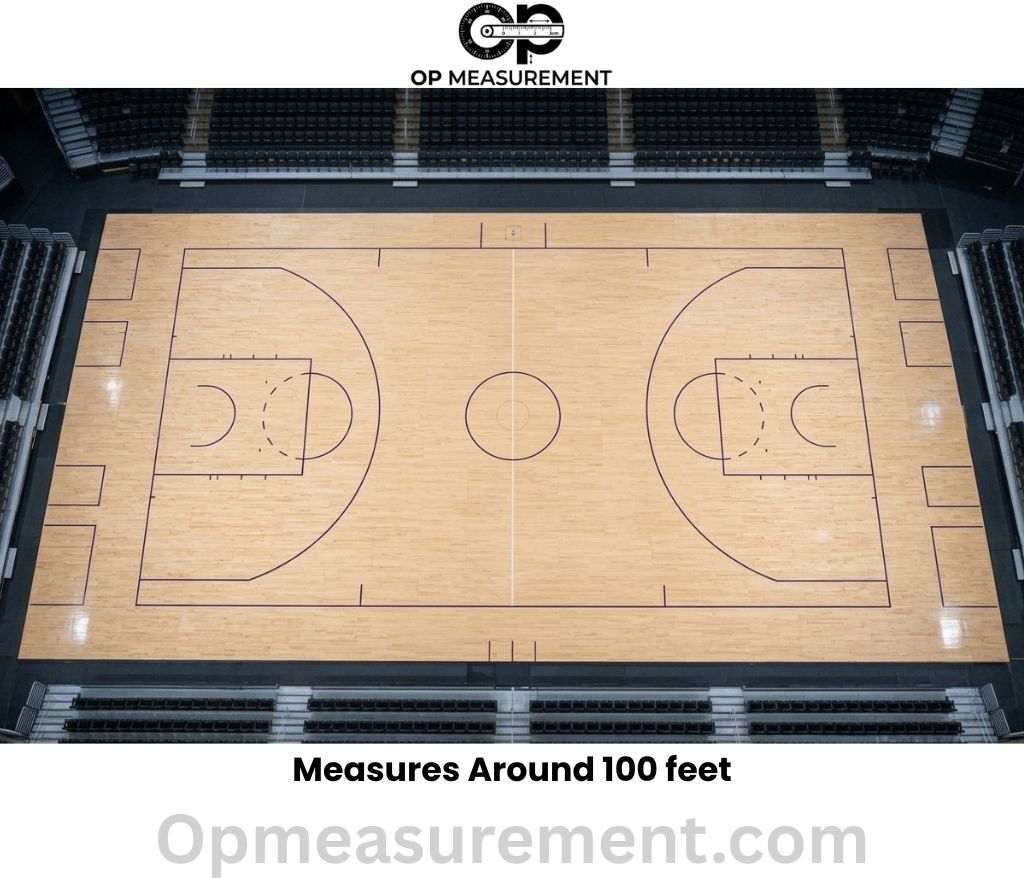
An official NBA court runs 94 feet from baseline to baseline. That’s just 6 feet short of 100 — less than one free-throw lane short of the mark. If you’ve sat in a gym, walked a school basketball court, or watched a game from the stands, you already carry an instinctive feel for this length.
To hit the full 100 feet, picture standing at one baseline and walking past the opposite baseline by about one large step. That’s it. The court itself gives you 94% of the distance already.
Ten Playground Slides End-to-End
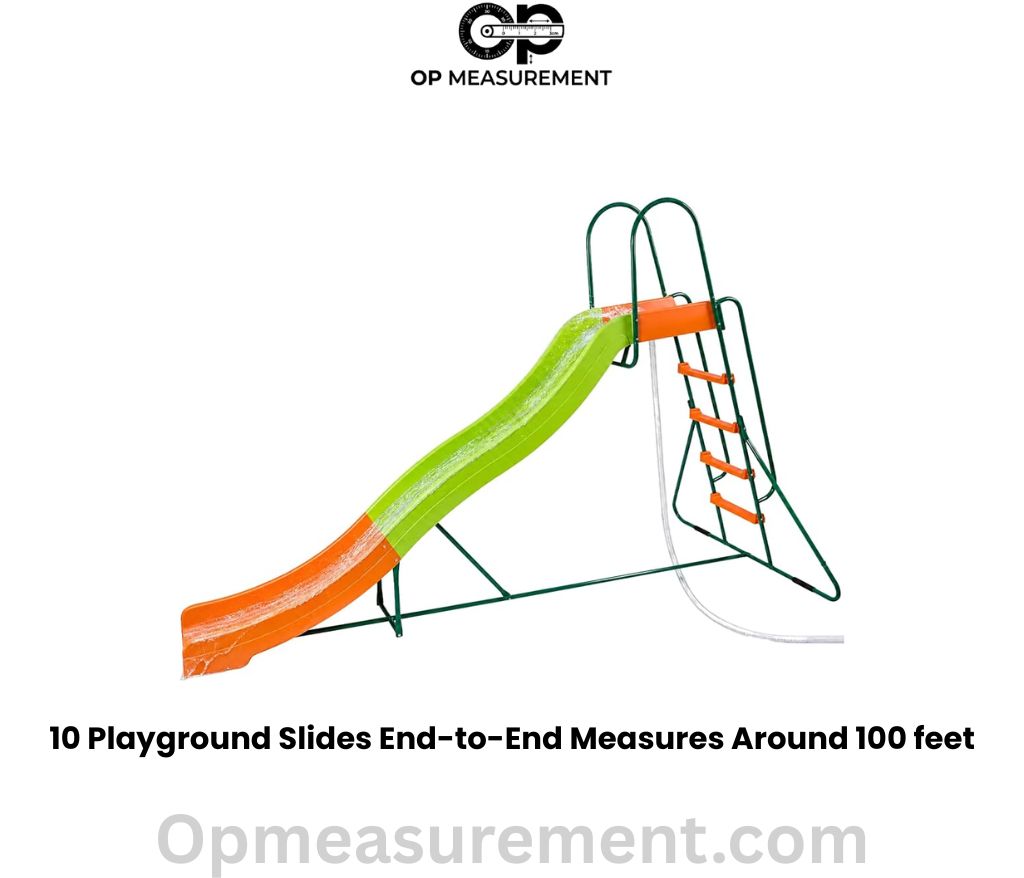
A standard playground slide — the kind in any neighborhood park, built for kids between 5 and 12 — runs about 10 feet from the platform base to the ground landing. Ten of them laid end-to-end in a straight line equals exactly 100 feet.
It’s an unusual comparison, but it sticks. Most people have a clear mental image of a single playground slide. Multiply that picture by ten, stretch it out flat — and there’s your 100 feet. The comparison works particularly well when explaining the scale to children.
Fire Truck Aerial Ladder
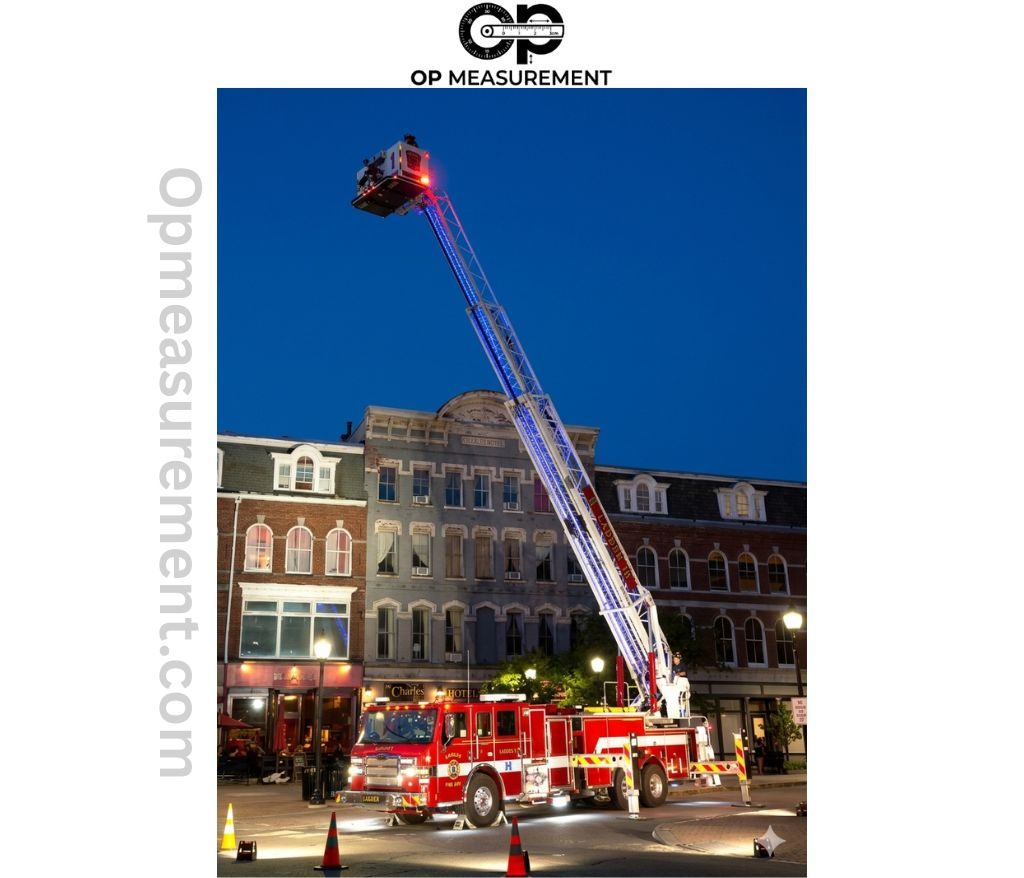
This one is exact, not approximate. Standard aerial ladders on fire apparatus extend to precisely 100 feet. The measurement wasn’t chosen randomly — fire engineers designed it specifically to reach the roof level of a standard 10-story building, which is the most common mid-rise height in American cities.
When you see a ladder truck at a station or a public event, that entire folded mechanical system sitting on the truck’s back becomes a single straight line 100 feet long when fully raised. That image is a reliable anchor for the distance.
10-Story Building

Stand outside any mid-rise office building or apartment block and look straight up. If it has 10 floors, you’re looking at almost exactly 100 feet. Architects and building codes use a standard floor height of 10 feet — that covers the actual ceiling space, the structural slab above, and mechanical clearance. Ten floors stacked up equals 100 feet, almost perfectly.
This is why fire department aerial ladders are built to exactly 100 feet. It’s not a coincidence — it’s intentional. The ladder needs to reach the top floor of a standard 10-story structure. Every time you see one of those long red ladder trucks parked outside a fire station, the folded equipment on top extends to exactly that height when deployed.
A 100-Foot Superyacht

In the marine industry, 100 feet is where a pleasure boat officially becomes a superyacht. That’s not marketing — it’s a classification used by shipyards, insurers, and port authorities. At 100 feet, the vessel requires a professional crew, different licensing, and specialized dock arrangements.
If you’ve walked along a marina and spotted those long, gleaming white boats that seem almost out of place compared to regular sailboats — a 100-footer is exactly that. You cannot easily see the bow and stern at the same time when standing alongside one. The length demands that you physically move to take it all in.
Read more: 14 Daily-Use Things That Measure 15 Feet Long or Big
Competition Tug-of-War Rope
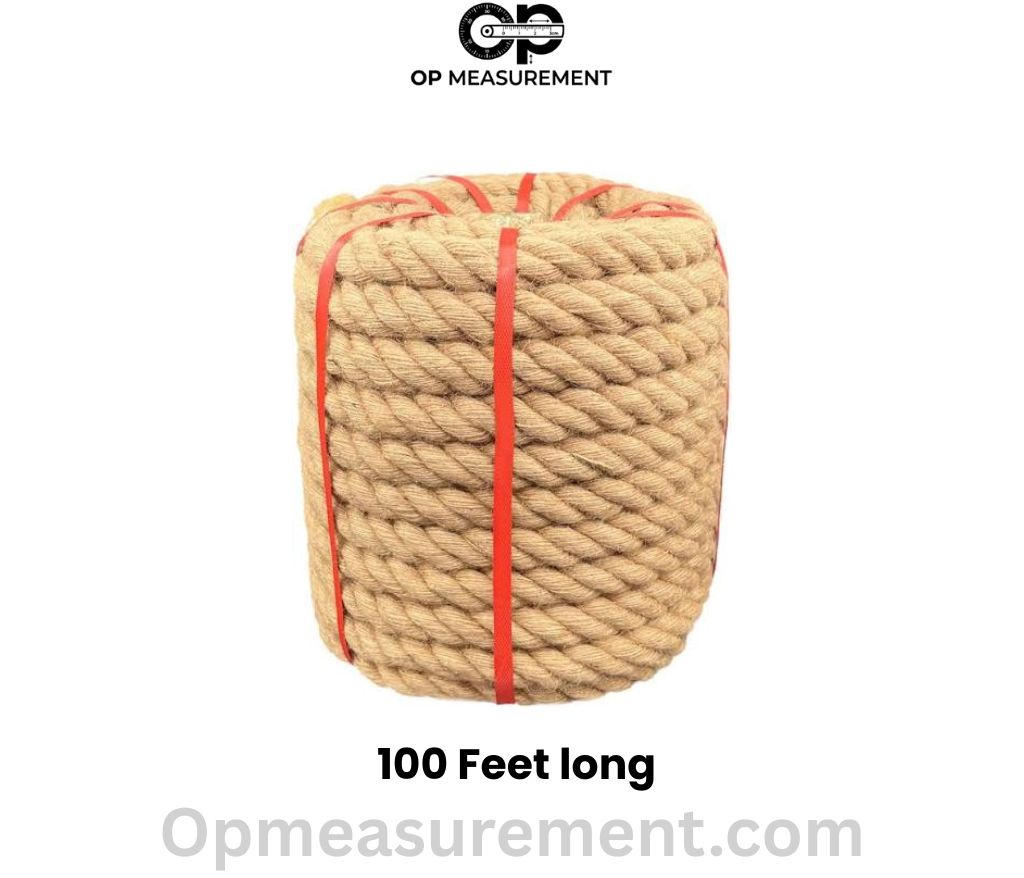
Official tug-of-war ropes used in sanctioned competitions measure around 110 feet total. The extra length beyond 100 feet accommodates both teams’ grip zones plus a marked center section. So a full competition rope is slightly longer than 100 feet — about 10 feet over.
This is a useful comparison because most people have either held a thick rope or watched a tug-of-war at some point. The full rope laid flat on a field gives a ground-level view of what 100-plus feet looks like stretched out in front of you.
Small Commercial Wind Turbine
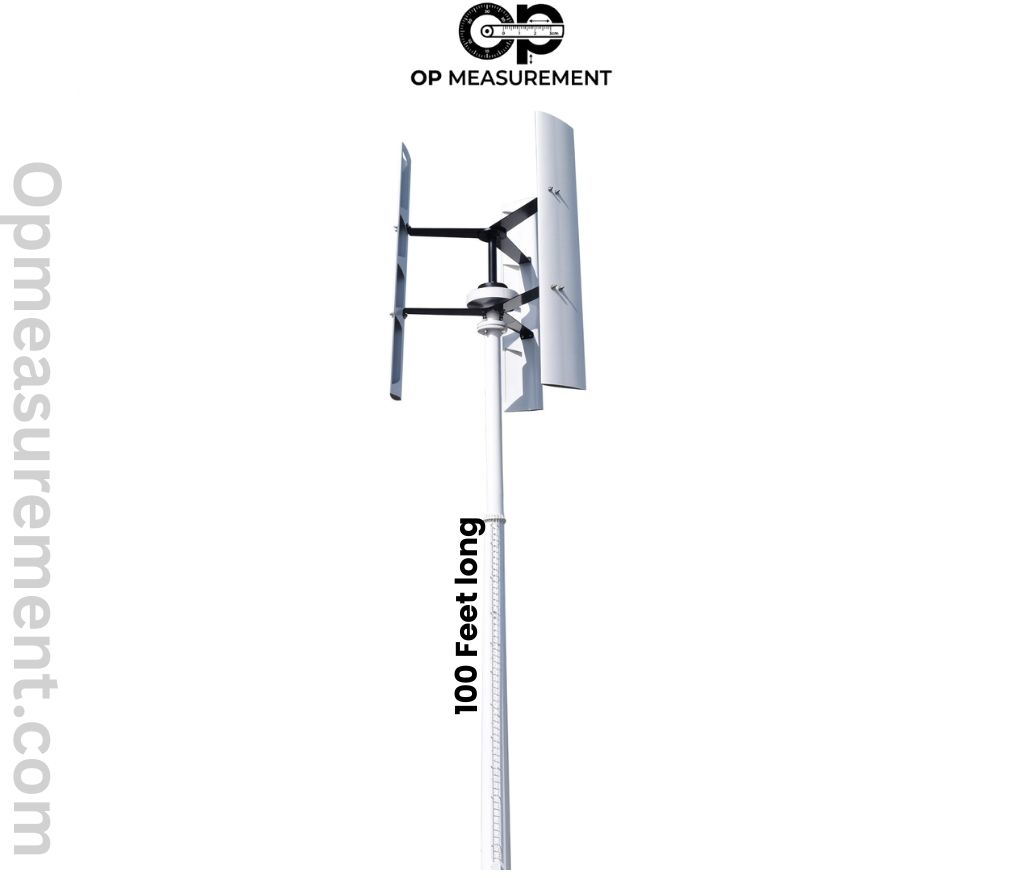
The large utility-scale wind turbines along highways have towers well over 200 feet. But the smaller commercial turbines — the kind installed on working farms, near warehouses, or at rural industrial sites — commonly have tower heights between 80 and 100 feet. That height is calculated deliberately: it puts the blades above the turbulent air caused by trees and structures, into smoother, more consistent wind.
A 100-foot wind turbine tower, standing in an open field, is striking up close. The base is narrow enough that one person can wrap both arms around it, but the top — where the blades attach — is far enough up that you cannot make out details without binoculars.
High-Voltage Utility Tower (Smaller Type)
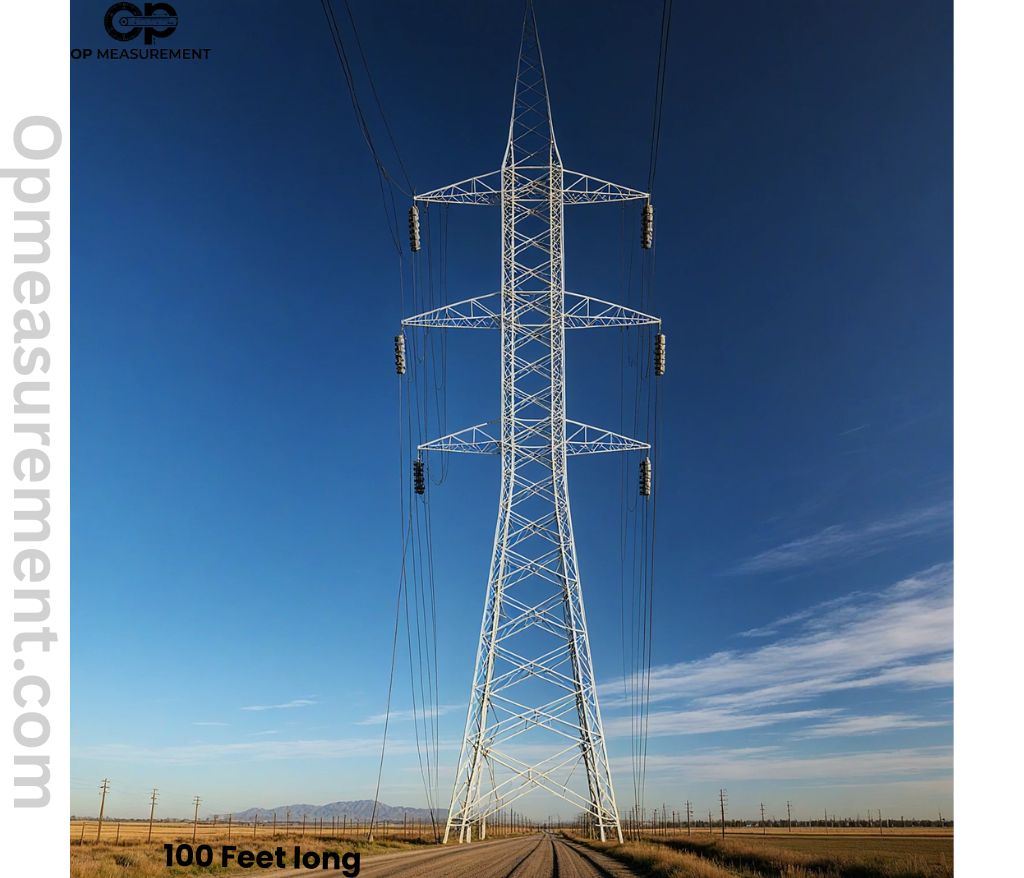
The steel lattice towers that carry high-voltage power lines across open land come in several size classes. The lower-tier structures — smaller H-frame or X-frame towers — typically stand between 70 and 120 feet. The ones in the middle of that range, carrying moderate voltage lines through suburban corridors, land right around 100 feet.
You’ve driven past thousands of these without thinking about their height. Next time you pass a row of them along a highway, pick one and really look at it. That’s 100 feet of engineered steel between the anchor bolts and the topmost cable attachment point.
Read more: How Far Is 500 Feet? 10 Everyday Things That Are 500 Feet Long
Washingtonia Palm
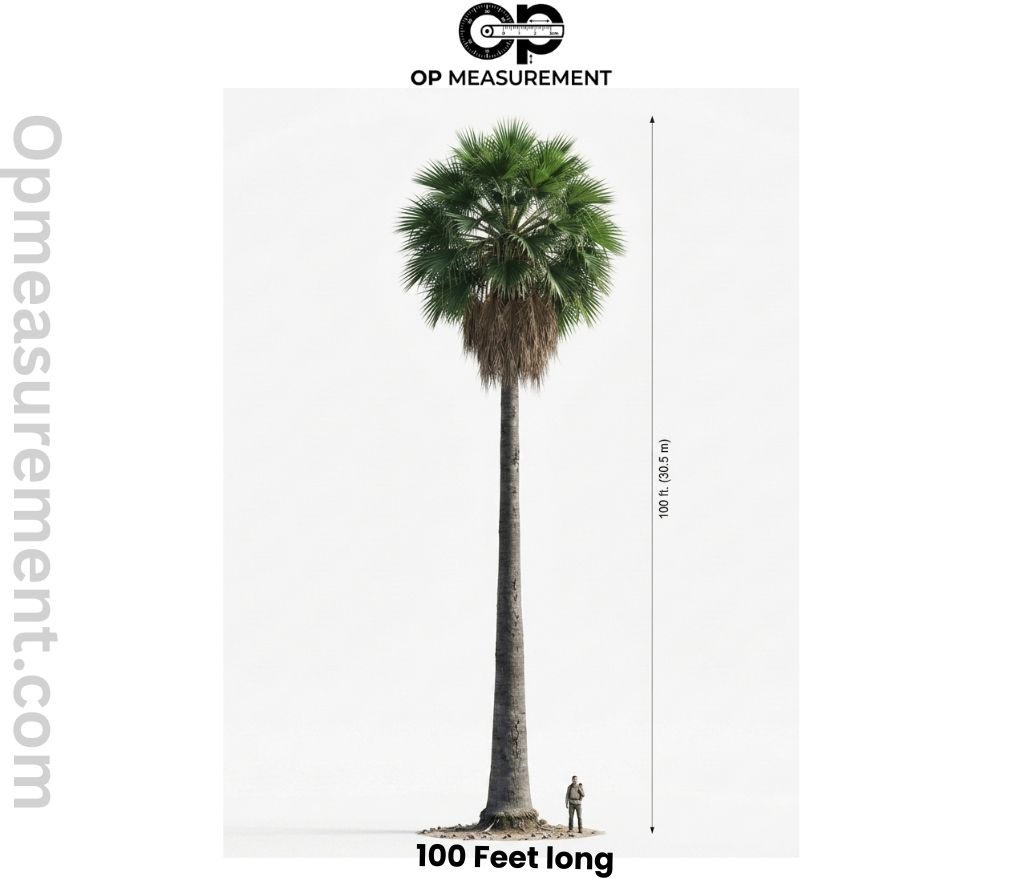
This iconic desert palm — the tall, slender one lining boulevards in Los Angeles, Phoenix, and Las Vegas — reaches a maximum mature height of exactly 100 feet. It grows remarkably straight and narrow, which makes it one of the cleanest natural references for this distance. Stand at the base and look straight up. That single uninterrupted trunk climbing skyward is your 100 feet, growing right out of the ground.
What makes it especially useful as a reference is how common it is. You don’t need to visit a stadium or a marina to see one. These palms line hotel driveways, airport roads, and city parks across the American Southwest. Next time you drive past a row of them, you’re passing a living, growing measuring stick — one that took decades to reach the exact height you were trying to picture.
Read also: 14 Common Things That Measure 50 Feet Long or Big
100 Feet of LED Strip Lights
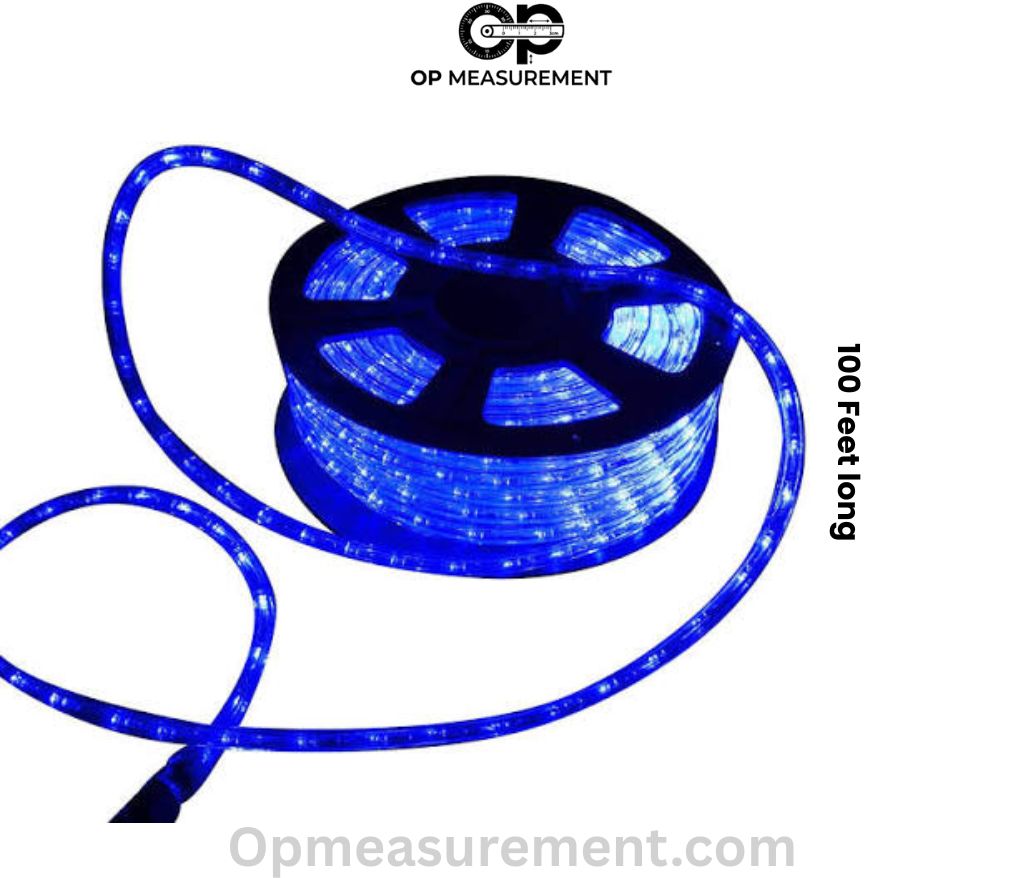
Unbox a 100-foot LED strip roll and the coil looks deceivingly compact. Stretch it out and the reality hits: it’s a long, continuous line. It can wrap the full perimeter of a 25-by-25-foot room twice. It runs the entire underside of kitchen cabinets in a 30-foot kitchen, loops back, and still has half the roll left.
People who buy 100-foot LED rolls for accent lighting often underestimate how much they’re purchasing. Plan your layout before unrolling. A strip that long, once cut in the wrong place, is harder to repurpose than most people expect.
Olympic Swimming Pool Width
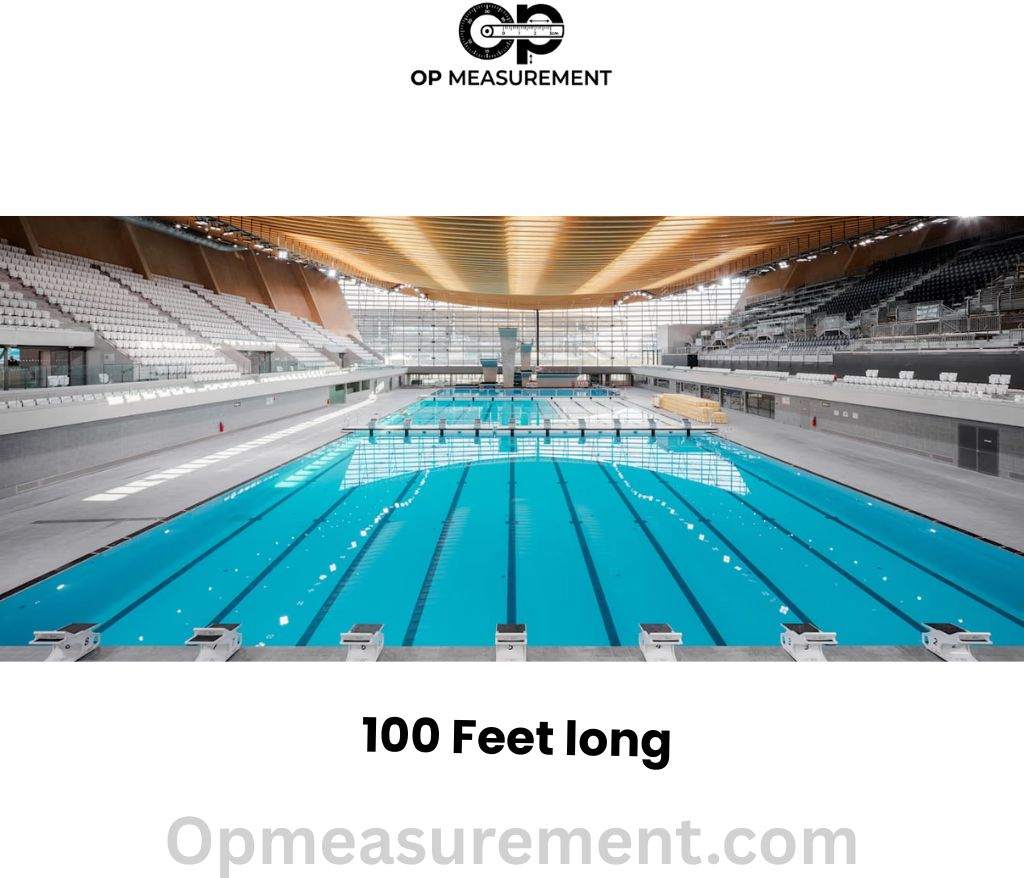
Most people know Olympic pools are 164 feet long. Fewer people think about the width: 82 feet. That’s close to 100 feet but lands about 18 feet short. Standing at one edge and looking across at the opposite lane markers — that gap in your mind is 82 feet. Add roughly the width of a generous living room past that far edge and you’ve built your 100-foot picture.
This comparison works especially well for people who swim laps. If you’ve ever done a width sprint across an Olympic pool, you’ve covered 82% of 100 feet in one push.
Read also:
12 Everyday Things That Measure 300 Feet Long or Big
How Far Is 200 Feet? 9 Everyday Things that Measure 200 Feet Long
Measuring 100 Feet Without a Tape
Walking stride method. Measure your step once with a ruler — heel to heel, one full pace. For most adults it’s between 2.2 and 2.8 feet. Divide 100 by that number to get your personal step count. Once you know it, you carry a built-in measuring tool everywhere you go.
Standard garden hose. The most common hose lengths sold at hardware stores are 50 feet and 100 feet. A full 100-foot hose, stretched flat, is your measurement. A 50-foot hose doubled back on itself gives you the same result with a visible midpoint.
Smartphone AR ruler. The built-in Measure app on iPhones (and equivalent apps on Android) uses the camera to estimate distance. For spans longer than 15 or 20 feet, walk the length in segments and add the readings. It won’t be perfect, but for estimating 100 feet it’s accurate enough for most practical decisions.
100 Feet in Miles — How Small Is It Really?
100 feet is 0.01894 miles. One mile contains 5,280 feet, so 100 feet represents less than 2% of a single mile. If you ran a 5K race (3.1 miles), you covered 100 feet in the first 17 seconds and never thought about it again.
This comparison matters for people working with property lines, setback requirements, or drone regulations. A “100-foot buffer zone” sounds significant — but in miles, it barely registers. It’s a reminder that scale depends entirely on what you’re measuring against.
How Tall Is 100 Feet Next to a Person?
The average adult stands between 5.5 and 6 feet tall. 100 feet is approximately 17 times that height. Stack 17 adults head-to-toe vertically and the top person stands 100 feet off the ground.
Another way to feel it: you could lie down on the ground 16 to 17 times end-to-end and cover the same distance. At 100 feet above you, details on a building facade start to blur. Window frames, signage, and decorative elements become harder to read without squinting.
Common Measuring Mistakes
Confusing 100 feet with 100 meters. These sound similar but differ enormously. 100 meters is 328 feet — more than three times the length. This mix-up causes real problems in cross-border construction, metric blueprint reading, and drone regulation interpretation. If a document uses meters and you’re thinking in feet, you’re working with a completely different scale.
Measuring diagonally instead of perpendicular. Property setbacks, fire codes, and neighbor fence requirements almost always mean straight-line perpendicular distance from a boundary. Diagonal measurements read longer. Someone who measures at an angle to a property line may believe they’re compliant with a 100-foot setback when they’re actually 15 feet short.
One Last Thing
100 feet catches people off guard — not because it’s complicated, but because it rarely matches what they pictured in their head. Walk it once, count your steps, and that gap between imagination and reality closes permanently.
The fire truck ladder, the basketball court, the superyacht — these aren’t trivia. They’re mental hooks. The next time a contractor quotes a 100-foot setback, a safety sign warns you to stay 100 feet back, or you’re untangling a 100-foot LED roll in your living room, you won’t be guessing. You’ll already know exactly what you’re working with.
That’s what a measurement should do. Not just convert — clarify.

Vera loves exploring the size and dimensions of everyday objects. She shares practical, visual guides to help readers understand measurements clearly. With a focus on accuracy and usefulness, Vera creates content that informs, engages, and supports learning for all.